
That's the story of three friends who discovered specialty coffee while travelling around the world. They returned home, to Seville, to celebrate the value of the coffee that had turned their worlds upside down. This is a story of reunion, but more than anything, it is the story of three coffee advocates who became part of the largest AeroPress Championship in Spain and who, nevertheless, step out of the limelight to let the producers, without whom their roastery would not exist, take centre stage.
Ineffable [adj.]: too great to be expressed or described in words. You might think that the name refers to the fact that their coffee is too good for words. And you would be right, but that’s not the only reason. “We wanted to convey that ‘ineffable’ experience, that feeling you get when you first try specialty coffee, that ‘Wow! What is this?!’ that changes how you think about coffee forever,” says Jose, one of the three founders of Ineffable Coffee Roasters, a venture launched in Seville that was inspired by their travels around the world.
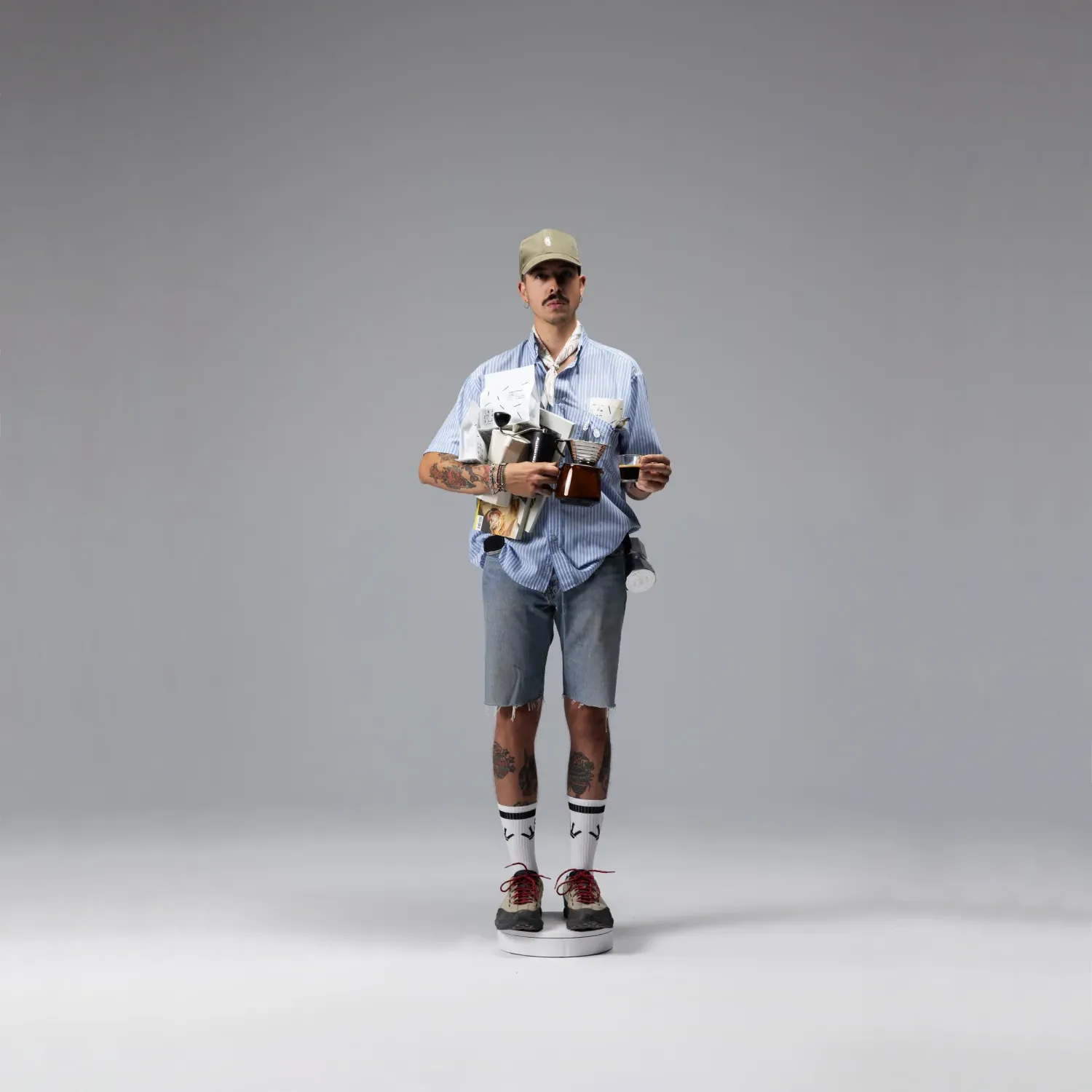
Their names are Jose, Omar and Alejandro. Omar and Alejandro are brothers, and Jose is a friend from school. Yes, this is a tale of reunion, but not one you might expect. Each of them was solo travelling around the world. Omar and Jose met by chance in Cape Town and found a city that was diverse, wild, dangerous and, as it turns out, full of great specialty coffee, due to the influence of its Australian citizens. Specialty coffee arrived in Cape Town in 2005 and Jose started working as a barista in 2010, then as a roaster. As he grew and learned, he began to select coffee, roast it and train other baristas, and was eventually invited to join a project in Istanbul, also related to specialty coffee.
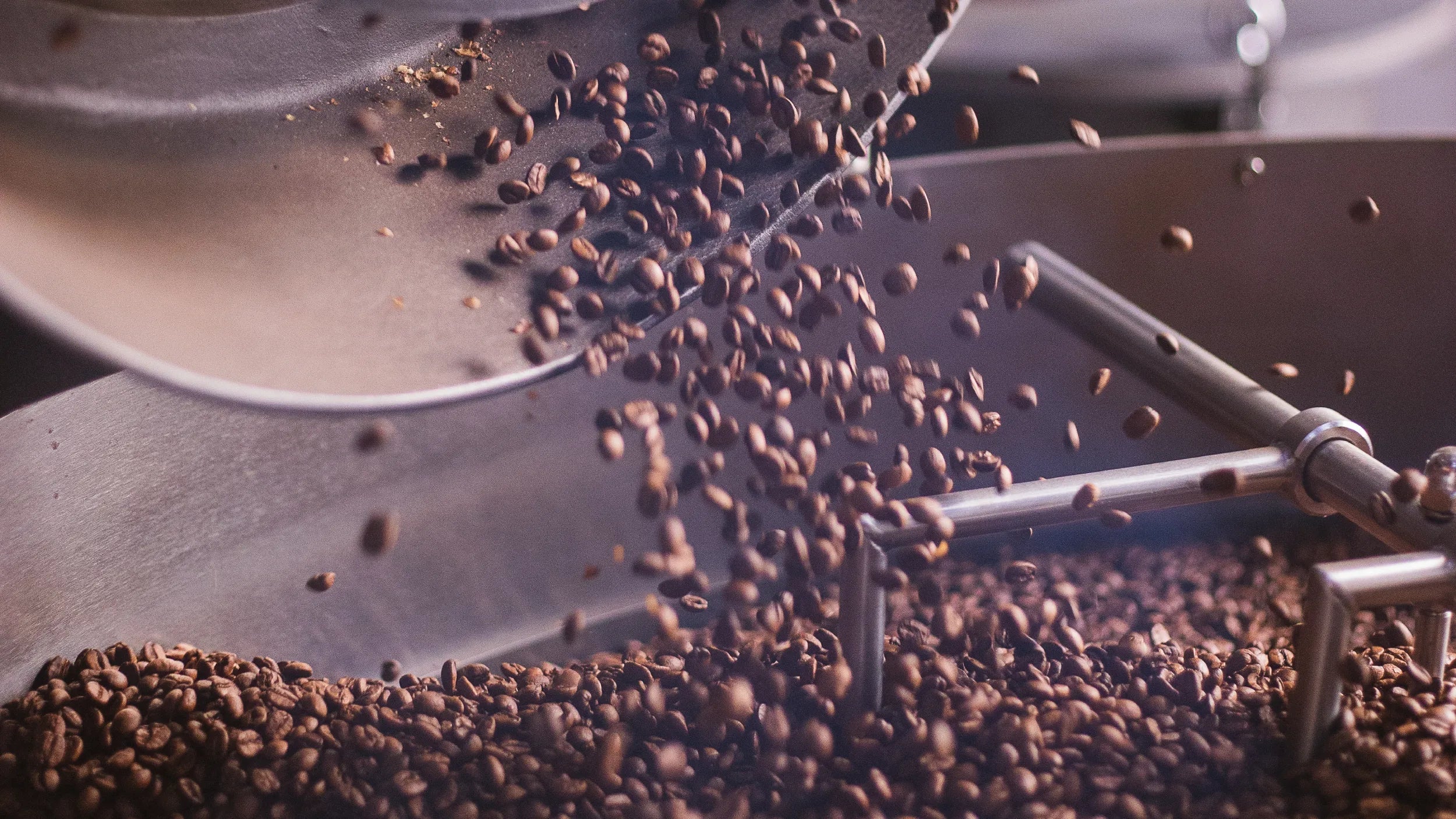
Granada, Madrid, Dubai, Logroño, Scotland, Istanbul, Mexico, Cape Town… They had lived everywhere except Seville, and yet that was the city that became the final destination to set up their own roastery. Omar returned to Spain in 2012 and realised that, for sure, it was a coffee-loving nation, but not one that loves good coffee. He spoke to Jose and Alejandro and they decided to open a specialty coffee shop. “That café didn’t last long, but it was the seed we needed to start working with coffee in a way that was new and exciting,” says Omar. That café marked a turning point: they asked themselves what they could do to change how coffee was being consumed, what they needed to do to make people appreciate specialty coffee in a city like Seville, which is swimming in torrefacto coffee (the practice of adding sugar during the final stage of roasting). They agreed they needed to get their hands dirty: select, roast and cup it themselves. And so, in 2016, they set up a roastery where roasting and cupping marked the final chapter of a story that in reality stars the coffee producers.
From the world to Dos Hermanas
Beans from Brazil, Peru, Indonesia, Colombia, Costa Rica… “Our aim is to find producers who we can develop a lasting relationship with and bring in their coffees year after year. These relationships take time, but that’s precisely what makes them so special,” says Jose. It makes a difference to coffee and their story. Coffees produced by a community of women, by cooperatives that help develop more ethical and sustainable coffees, or by one man, Rodolfo Ruffatti, who runs Producer Coffee, half-German, half-Salvadoran, with whom they deal directly. In short, coffees with a name. “A large part of our work involves reaching out to these people, because that’s what gives us quality coffee and beautiful projects.”
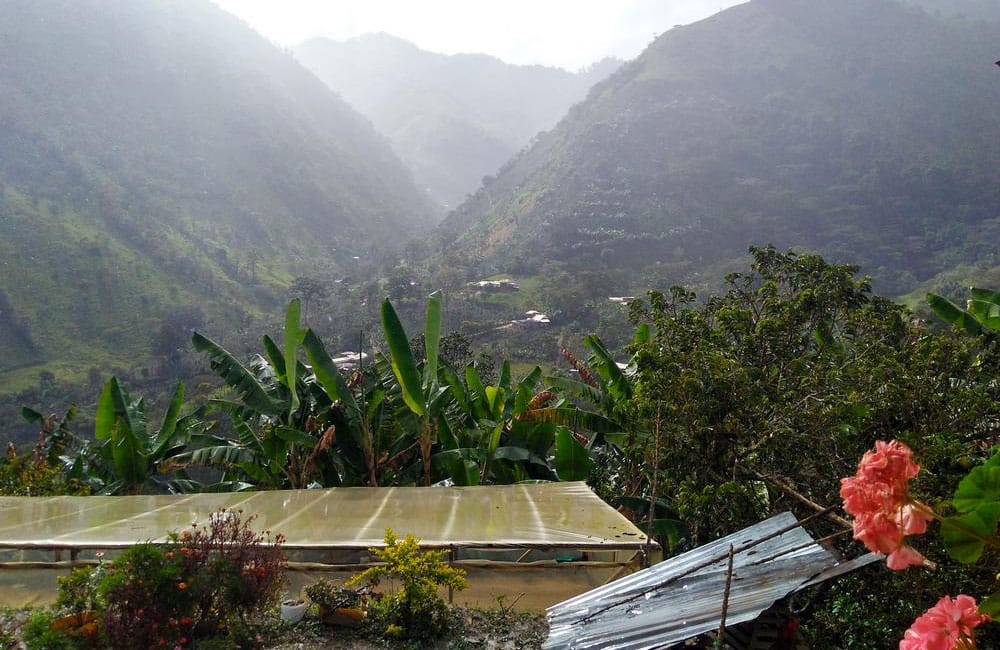
Projects such as Long Miles in Burundi. In a country where it is so difficult for producers to grow good coffee at a fair price, due to government bureaucracy and a lack of knowledge and resources, Long Miles lends them a hand by providing advice and training. They help them process their coffees and have a team of agronomists who visit the farms of small producers to advise them on how to get the most out of their trees,” explains Jose.
These ethical importers have introduced them to stories such as that of Romario Umaña, a producer they met through a project in Costa Rica called Selva Coffee. They buy his entire crop: five bags of exquisite coffee. “We have and continue to do a lot of research into producers, but there is still work to be done to create links between producers and roasters. These relationships are not hard to build in South and Central America, but in Africa, for example, it is much more complicated. Coffees from Africa aren’t normally named after their producer because they don’t own the farms. There are a lot of cooperatives, as the government makes these relationships very difficult; there is a tremendous number of opportunities to be discovered there,” says Omar.
The war on torrefacto
Ineffable’s research into producers is geared towards finding ethical coffee for their roastery, but also towards establishing ethical relationships, both human and economic. As Jose says, “we are pleased to see the price of coffee is rising, as it also suggests an improvement in quality”, i.e., things are being done well.
However, anyone working in specialty coffee fights a common battle: torrefacto. And it’s not all down to its taste and quality. The problems surrounding torrefacto coffee are far-reaching. “These companies offer the least amount of information possible, so that you know the bare minimum, which makes the contracts between the coffee shop and the roaster very complex.” It is an opaque relationship, as Omar points out, in which the producer is at the mercy of the buyers, who pay a fixed price per batch. “What we are trying to do with specialty coffee is the opposite. We work directly with that farmer so that they have the resources they need to improve the quality of their coffee. By raising the quality, they receive more money to continue to improve processing techniques, as well as their quality of life. All these factors combined are what gives you a quality cup of coffee,” explains Jose.

They don’t know if specialty coffee is strong enough to get rid of torrefacto, but they will do their best. That’s why, since they opened, they have been organising public cuppings, cuppings in cafés, training courses and workshops. And since 2018, they have been organising the Andalusia AeroPress Championships, the biggest in Spain. Each of the four championships held so far has produced new coffee enthusiasts, new synergies and new businesses. “In Andalusia, it takes very few resources to serve very good coffees, and very good baristas and cafés are cropping up and doing things very well,” says Omar.
Jose has also noticed a change in people’s homes. “We sell online, so we have been able to see a change in what customers are buying. At the beginning, it was mostly ground coffee for the Italian Moka Pot, but now our customers are buying all kinds of accessories, filter coffees with special processes, they write to us, they give us feedback, they have an AeroPress, they have a kettle… And a lot of this is happening in Andalusia. Specialty coffee is in people’s homes.” Reaching households is a dream come true for these roasters.
Among the ebbs and flows of coffee trends, and after crossing halfway around the world to get to Seville, Ineffable’s focus is sustainability. “We seek to generate as little impact as possible, and we do what we can, such as changing the packaging. It has been biodegradable for a year now. It’s funny because that’s all that’s really said about the matter, ‘it’s biodegradable’. It seems like a given, but behind that one word are two years of trial and error. But we’ve done it because it makes a significant impact,” Omar says. It might not be glamorous, but it is yet another necessary step, to which we must add all the origins which, thanks to the production of specialty coffee, have improved their ecosystems, land quality, biodiversity and the lives of local residents. Ineffable’s future lies in pursuing these synergies and even in using renewable energy.
Connecting with the origin
You can draw a line from Seville to Peru, to El Salvador, and to Burundi, a line that connects coordinates and represents a story of creation: the person that sows the seeds, the person that prunes the plants, the person that takes the coffee to the washing station, the importer, the roaster and the café. These lines are represented on the bags of Ineffable’s seasonal (an important detail) roasted coffee. They point back to the origin and promote traceability.
In the future, there will be more lines pointing in more directions as they work with new origins. “We’re always looking for different flavour profiles, from a classic Brazil to one from Indonesia, which we’ve just started working with. Or even one from India, which we had for the first time last year. We’re always on the lookout,” explains Jose.
The search for producers has made these lines visible, just as it has done for Ineffable Coffee Roasters. You might think that a roaster’s mission is simply to roast, but Ineffable’s mission is to effect change. In the future, the three friends see themselves expanding their idea of specialty coffee across Europe, where each morning, Czech, Belgian, French and Irish households are already serving cups of ineffable coffee.
This article was published in SOLO magazine, issue number 10.
Text: María G. Aguado
Photography: Bárbara Lanzat