




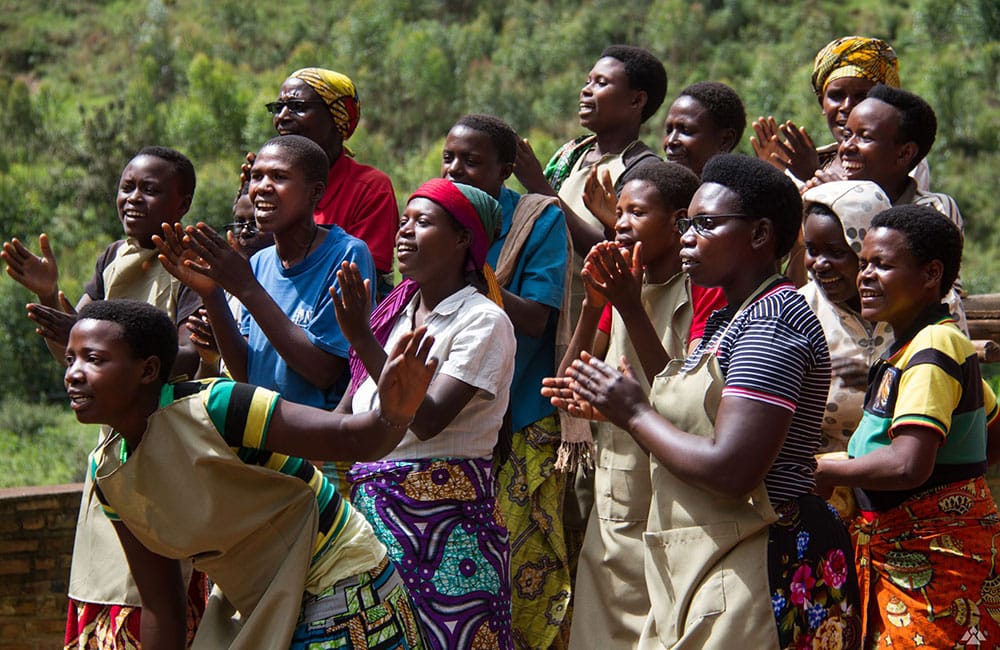
The Heart of Africa Where Burundian Coffee Grows
Burundi, often nicknamed the “Heart of Africa”, is a small mountainous nation where coffee is not just a staple product, but a way of life.
Its coffee history is relatively recent, as it was Belgian colonisers who introduced coffee cultivation in the 1930s.
However, in a short time, the Arabica variety adapted perfectly to the country’s fertile volcanic soils and high altitude, becoming the engine of its economy.
Today, Burundian origin coffee is appreciated worldwide for its clean cup, bright acidity and delicate fruity notes.
Burundian coffee is the country’s main export product and the livelihood of hundreds of thousands of smallholder farmers who cultivate this black gold with artisanal dedication.
The History of Coffee Cultivation in Burundi

The arrival of coffee in Burundi is a story that begins at the start of the 20th century, but became established under Belgian colonial administration in the 1930s.
Unlike Ethiopia, where the plant grew wild, in Burundi its introduction was deliberate. The Belgians saw the rich volcanic soils and high altitude of the Burundian hills as the ideal place to grow the prized Arabica variety.
At first, coffee cultivation was imposed on farmers and the focus was on volume production.
After independence in 1962, coffee continued to be managed by the government, and its history has been marked by political ups and downs and the constant need to reform the sector.
However, in recent decades, the country has made a huge effort to privatise and deregulate the industry, allowing farmer cooperatives and washing stations to take a more active role in improving quality.
Today, coffee’s colonial heritage has given way to an identity of its own, with the quality of its beans recognised as among the best in East Africa, demonstrating the resilience and commitment of Burundian coffee farmers.
Black Gold: The Importance of Coffee in Burundi’s Economy and Culture

If we had to choose an economic symbol for Burundi, it would undoubtedly be coffee. This small landlocked nation, with a developing economy, depends on this crop for a large part of its foreign-exchange earnings.
Burundian coffee represents the country’s main export, accounting for between 50% and 80% of total exports, depending on the year and harvest. This economic weight means that fluctuations in global coffee prices have a direct and significant impact on people’s lives.
Culturally, coffee does not have the same ancestral ritual as in Ethiopia, but it is very important. More than 800,000 Burundian families depend on coffee cultivation, meaning that the livelihood of a large part of the country is intrinsically linked to this plant.
Coffee is a crucial source of income that allows these families to access education, healthcare and other basic necessities.
In addition, coffee quality has become a source of national pride, and washing stations, where the beans are processed, play an important role as key community and technological centres.
Without a doubt, Burundian origin coffee is an economic pillar and a social bond that brings hundreds of thousands of smallholder farmers together around a common goal: producing the best possible cup.
The Evolution of Coffee Cultivation, Production and Varieties in Burundi

Since its introduction, Burundi’s coffee sector has evolved considerably, moving from imposed cultivation towards a focus on quality.
Initially, the predominant variety was Bourbon, which adapted perfectly to Burundi’s altitude and climate.
Today, 95% of the coffee produced in the country is still the Bourbon variety, specifically Red Bourbon, known for its complex flavour notes, silky body and vibrant acidity.
The most significant milestone in Burundian origin coffee production has been the focus on specialty coffee.
Historically, coffee was processed using a “dry” or natural method, with variable quality. However, investment in washing stations has revolutionised the industry.
These stations, often managed by cooperatives or private companies, allow for strict quality control during wet or washed processing, which has dramatically elevated the profile of Burundian coffee on the international market.
This change has led to greater traceability, better prices for farmers and recognition of Burundi as a producer of gourmet origin coffees.
It is an evolution towards quality that continues to set the pace in the agriculture of this nation.
Coffee Cultivation Methods in Burundi

Cultivation methods in Burundi are almost entirely artisanal and naturally sustainable, contributing greatly to its reputation for specialty coffee.
The vast majority of coffee is grown on small family plots, which average less than half a hectare.
Farmers typically have between 150 and 300 coffee trees, often intercropped with crops such as bananas, cassava and potatoes. This polyculture model ensures food security for families while also enriching biodiversity and soil health.
Burundian coffee is grown at high altitudes, generally between 1,200 and 2,000 metres above sea level, which slows the ripening of the cherries and allows sugars and nutrients to concentrate, resulting in a denser and more complex bean.
Fertilisation is mainly carried out using organic fertiliser or coffee pulp residues, while the use of pesticides and herbicides is minimal, if not non-existent.
For this reason, much of Burundi’s coffee could be considered organic de facto. The cherries are hand-picked selectively, with only ripe fruit being harvested, which is the foundation of the exceptional quality of Burundian Red Bourbon.
The Main Coffee Regions of Burundi

Burundi is divided into several coffee-growing regions that offer different nuances in their beans due to their varying microclimates and altitudes.
Although the country is small, its mountainous topography creates unique terroirs. Burundian coffee beans are distinguished by their citrus acidity, sweet caramel and chocolate notes, and often a touch of spice or florals.
Knowing the different regions will give you a good idea when choosing the cup that best suits your tastes.
Burundi Buyenzi Coffee-Growing Region
- Location: located in the north, bordering Rwanda. It is a high-altitude region on the Central Plateau.
- Key areas: includes areas such as Ngozi and Kayanza, very well known for the quality of their washing stations.
- Production: one of the country’s most productive regions, contributing a significant share of national production.
- Variety: almost exclusively Red Bourbon.
- Altitude: high altitude, generally between 1,500 and 2,000 metres.
- Climate: temperate and humid, ideal for the slow ripening of Bourbon.
- Type of cultivation: coffee gardens on small family plots.
- Processing method: mainly processed using the washed method at the numerous well-managed washing stations, resulting in a very clean and bright coffee.
Burundi Mumirwa Coffee-Growing Region
- Location: located in the west, along the Great Rift Valley, near Lake Tanganyika.
- Key areas: includes the provinces of Bubanza and Cibitoke.
- Production: produces significant volumes, although altitude and climatic conditions can be more variable than in Buyenzi.
- Variety: the Bourbon variety predominates.
- Altitude: coffee is grown at slightly lower altitudes than in Buyenzi, ranging from 1,200 to 1,700 metres.
- Climate: warmer due to its proximity to Lake Tanganyika.
- Type of cultivation: mainly small farms and gardens.
- Processing method: both the washed method and the natural or dry method are used, offering coffees with fruitier profiles and more body.
Burundi Bweru Coffee-Growing Region
- Location: located in the north-east of the country, a region with more rolling terrain.
- Key areas: includes provinces such as Muyinga and Kirundo.
- Production: a region with potential, although sometimes less focused on premium quality than other areas, depending on the altitude of the plot.
- Variety: mainly Bourbon.
- Altitude: altitudes vary more, with some lower areas around 1,400 to 1,700 metres.
- Climate: a climate with clearly defined dry and wet periods.
- Type of cultivation: small plantations.
- Processing method: generally washed, although management of the washing stations may vary.
Other Coffee Regions and Growing Areas in Burundi

Burundi coffee is also grown in the fertile hills surrounding Lake Tanganyika, where regions such as Bujumbura, Bururi, Gitega, Karuzi, Makamba, Muramvya, Mwaro and Rutana produce Arabica beans of exceptional quality.
Grown between 1,200 and 2,000 metres, these coffees stand out for their bright acidity, silky body and sweet aromas with notes of red fruit, honey and flowers.
Muramvya and Gitega are particularly appreciated for their complex and balanced profiles, while Makamba and Rutana contribute sweeter and fruitier nuances.
Together, they reflect the great quality and diversity of Burundian coffee.
The Coffee Harvest Season in Burundi

The coffee harvest season in Burundi is a crucial event and defines the quality of the annual production.
The cycle in this East African country is strongly influenced by the dry and wet seasons. Generally, the main harvest takes place once a year, between March and June.
However, in high-altitude areas, the ripening process is slower, so harvesting can extend into early July.
Harvesting is an entirely manual task that requires a large workforce. During these months, thousands of people move through the coffee trees, selecting cherry by cherry only the deep-red fruits that indicate optimum ripeness.
This selective harvesting is essential, particularly for coffee that will be processed using the washed method, as the presence of green or overripe cherries would negatively affect the quality and clean flavour profile being sought.
Once harvested, the cherries are delivered that same day to the nearest washing stations to begin the pulping, fermentation and drying process.
Proper management of the time between harvesting and processing is one of the most important factors distinguishing Burundian premium coffee.
The Strength of the Community: Farmers and the Coffee Supply Chain

Burundi’s coffee farmers are the foundation of the country’s economy and coffee quality. As we have already mentioned, they are mainly smallholder farmers who cultivate their plots using traditional methods.
To gain a stronger voice and greater bargaining power, they organise into cooperatives. These groups are vital, as they allow farmers to access financing, purchase equipment collectively and, most importantly, manage their own washing stations.
By owning or participating in these stations, farmers have greater control over processing and quality, which translates into better prices and, therefore, higher incomes.
The supply chain also includes other key players.
After the cooperatives, export companies and, in some cases, intermediaries who purchase processed coffee become involved.
In the past, the industry was heavily centralised under the role of the Burundian government, which sometimes limited farmers’ freedom and the prices they could obtain. Today, although the government continues to maintain a degree of oversight to ensure quality and tax collection, the door has been opened to privatisation.
Coffee export companies, both local and foreign, are now responsible for bringing coffee to the global market. These companies compete to obtain the highest-quality lots, further encouraging farmers and cooperatives to continue improving their processes.
This model, although it still faces challenges, is leading Burundian origin coffee towards a more prosperous future and greater quality within the specialty coffee sector<.
Where to Buy the Best Coffees from Burundi
We hope this article has helped you get to know Burundian coffee better, an origin that is gaining more and more fans thanks to its distinctive notes and great quality.
If you want to experience the characteristic notes of specialty coffees from East Africa, you can find them at Ineffable, freshly roasted in Seville with the expertise they deserve to preserve their value throughout the supply chain.
Visit our shop to discover some of the spectacular high-altitude African coffees available both ground and as whole beans, and enjoy an excellent cup of espresso or filter coffee, just the way you like it.


