




Kenyan Coffee: Tradition, Flavour and Culture in Every Cup
Talking about Kenya means talking about movie-like landscapes, wildlife we have all seen in documentaries… and coffee too.
This East African country, famous for its endless savannahs and national parks, has established itself as one of the world’s major producers of high-quality Arabica coffee.
Coffee cultivation arrived in Kenya at the beginning of the 20th century and has since become a key part of its economy, culture and even its gastronomic identity.
Today, Kenyan coffee is synonymous with high-quality beans, intense flavour profiles and highly appreciated fruity notes among baristas and coffee lovers around the world.
History of coffee cultivation in Kenya
Coffee is not native to Kenya, although many people believe it is because of the country’s proximity to Ethiopia, considered the birthplace of coffee.
In this case, it was French missionaries from the Order of the Holy Spirit who brought the plant from their colonies in the Bourbon Islands, first introducing it to Tanzania in 1893 and later expanding its cultivation in Kenya at the beginning of the 20th century.
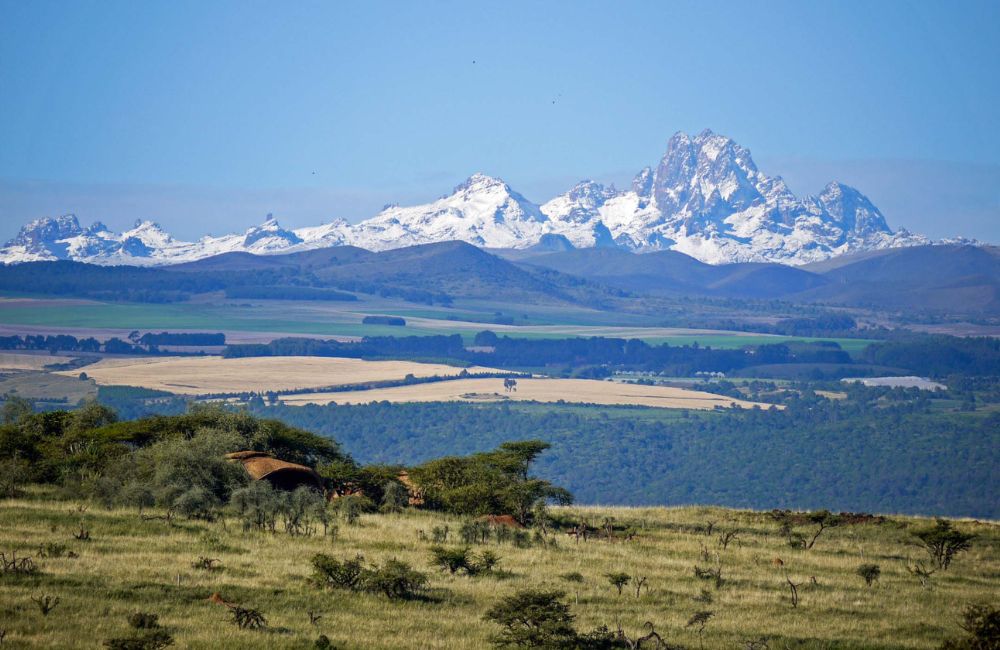
By 1910, the mission fields near Nairobi already had a plantation of 15,000 coffee trees on the fertile lands surrounding Mount Kenya, taking advantage of the unique conditions of its volcanic soil and temperate climate.
When Kenya became a British colony in 1920, the plantations came under government control and were distributed among settlers interested in cultivating them.
For decades, coffee cultivation was controlled by large colonial estates, while small local farmers played a secondary role. But with the country’s independence in 1963, production changed hands and Kenyan farmer cooperatives began to emerge to manage the plantations.
Over the years, Kenya has gained worldwide recognition thanks to its coffee auction system, which allows international buyers to access exclusive lots and ensures competitive prices for farmers.
This system has been key to positioning Kenyan coffee among the most sought-after coffees worldwide, especially in specialty markets that prioritise quality over quantity.
Importance of coffee in Kenya’s economy and culture

Coffee is not just an agricultural crop in Kenya; it is also an economic and social driver. It represents one of the country’s main exports, generating vital income for hundreds of thousands of families. According to recent estimates, more than 600,000 smallholders depend directly on this activity.
Culturally, coffee has become part of everyday life in Kenya. Although tea remains the most widely consumed beverage, coffee culture is growing increasingly in cities such as Nairobi and Mombasa, with specialty coffee shops serving espresso and filter coffee made with local beans.
In addition, Kenyan origin coffee is a source of national pride. It is considered a product with its own identity, distinguishing Kenya within the international coffee scene.
The reputation of its beans, known for their bright acidity and notes of citrus fruits and berries, has placed the country at the forefront of the specialty coffee world.
Evolution of coffee cultivation, production and varieties in Kenya

Since the first coffee trees were planted in Kenya, production has gone through various stages. During the early decades, it was controlled by large estates, but today most production comes from smallholders organised into cooperatives.
The most widely cultivated varieties in Kenya are Arabica hybrids developed specifically for local conditions, such as SL28 and SL34, both known for their excellent cup quality. These varieties, along with others such as Ruiru 11 and Batian, have adapted very well to the climate and volcanic soils of the country’s coffee-growing regions.
So, what do the AA, AB or PB labels found on many Kenyan coffee bags actually mean? They have nothing to do with the coffee variety, but rather refer to a classification based on bean size and quality.
Kenya AA coffee has the largest beans, Kenya AB is slightly smaller, while PB refers to Peaberry, a rounded coffee bean.
The country has always focused on producing less quantity and more quality. This means that volumes are not as high as in other producing countries, but Kenyan coffee has enormous demand in specialty markets. This strategy has helped maintain relatively high prices and preserve the prestige of Kenyan origin coffee.
Coffee cultivation methods in Kenya

Kenyan coffee is mainly grown on small plots of between half and two hectares, managed by farming families. These plots are usually located at high altitudes, between 1,500 and 2,000 metres above sea level, which favours slower bean development and therefore a greater concentration of aromas and flavours.
The cultivation methods combine traditional practices with modern innovations. Many farmers still carry out manual work, such as selectively picking ripe cherries, which ensures a higher-quality product.
In addition, the use of organic fertilisers and soil care are essential in these areas, where fertility depends largely on the volcanic richness of the land.
Processing also plays a fundamental role: most Kenyan coffee undergoes the washed process, considered one of the most effective methods for highlighting acidity and fruity nuances. Although this system requires more water and labour, it guarantees clean beans with a very defined profile.
Main coffee-growing regions in Kenya

Let’s now look at the most relevant information about the main regions where exceptional coffees are produced, which you may find under names such as Murang’a Kenya or Kiambu Kenya, among others.
The Central Province of coffee cultivation in Kenya H3
- Location: around Mount Kenya and the Aberdare Hills
- Areas: Nyeri, Kirinyaga, Murang’a
- Share of production: around 55% of national production
- Coffee variety: mainly Arabica SL28, SL34 and Batian
- Altitude: between 1,500 and 2,100 metres
- Climate: temperate, with bimodal rainfall
- Cultivation type: small family farms in cooperatives
- Processing: mainly washed process
Northwest region of Nairobi of coffee cultivation in Kenya H3
- Location: areas near Kiambu and Thika
- Areas: Kiambu, parts of Machakos
- Share of production: approximately 25%
- Coffee variety: Arabica SL28, SL34 and Ruiru 11
- Altitude: between 1,400 and 1,800 metres
- Climate: rainy, with well-defined seasons
- Cultivation type: a mix of large farms and cooperatives
- Processing: washed at community stations
Western region of coffee cultivation in Kenya H3
- Location: Bungoma and Kakamega regions, near Lake Victoria
- Areas: Vihiga, Kisii, Bungoma
- Share of production: around 15%
- Coffee variety: resistant Arabica hybrids such as Ruiru 11 and Batian
- Altitude: between 1,300 and 1,700 metres
- Climate: humid, influenced by the lake
- Cultivation type: independent smallholders
- Processing: washed and, to a lesser extent, natural
Other regions such as the Coastal Province also produce coffee, although on a smaller scale, with different characteristics due to the area’s warm and humid climate.
Coffee-growing regions of Embu, Meru, Nakuru and Kisii

Finally, we want you to discover other notable areas such as Embu, Meru, Nakuru and Kisii, which make very interesting contributions to the diversity and exceptional character of Kenyan coffee.
On the fertile slopes of Mount Kenya, Embu and Meru produce exceptionally high-quality Arabica beans, with bright acidity, medium body and citrus and fruity notes.
Further west, Nakuru offers balanced coffees grown at moderate altitudes, with sweet and floral nuances.
Kisii, in the Nyanza region, stands out for its complex profile, with flavours of red berries, wine and cocoa. Together, these areas reflect the geographical and sensory richness of Kenyan coffee.
Kenyan coffee harvest season

The harvest season in Kenya varies depending on the region, although it is generally divided into two main periods.
The main harvest, known as the “main crop”, usually takes place between October and December. A second, smaller harvest known as the “fly crop” takes place between June and August.
These differences are due to the country’s bimodal rainfall pattern, which directly influences the growth of coffee trees. In higher-altitude areas, the main harvest produces higher-quality beans, while in lower regions production can be more irregular.
Thanks to this distribution of harvests, Kenyan coffee maintains a relatively consistent supply throughout the year, increasing its appeal to international buyers looking to secure a stable supply of Kenyan origin coffee.
Kenyan coffee growers and other industry players

Most coffee growers in Kenya are smallholders who depend directly on this crop to generate income. Many are organised into cooperatives, allowing them to access shared washing stations, negotiate better prices and have stronger representation in the market.
The income they earn varies considerably, as it depends on auction prices and the quality of the lot. Even so, coffee remains one of the main sources of livelihood for thousands of rural families.
In addition to farmers, there are other key players:
- Intermediaries and cooperatives, which connect smallholders with the market.
- The Kenyan government, which regulates production through organisations such as the Coffee Board of Kenya.
- Export companies, which play a fundamental role in bringing Kenyan coffee to Europe, the United States and Asia.
Together, they form a complex but highly efficient system that has helped establish Kenyan origin coffee as a global benchmark for quality.
Where to buy the best coffees from Kenya

We hope you have enjoyed this article and are now eager to try this origin that has won over coffee lovers around the world.
As it is one of our favourite origins, at Ineffable Coffee we always try to source some of the best lots of coffee from Kenya or other excellent African origins.
You will find them in the online shop, freshly roasted in Seville, available both ground and as whole beans, and delivered to your home fresh so you can enjoy a delicious coffee with complete confidence.
Whether you are a fan of a good espresso or prefer filter coffee, with a coffee from Kenya you are sure to brew an excellent cup.


