

Mexico is a country of contrasts and vibrant traditions, and its coffee is no exception. With its arrival in the 18th century, coffee cultivation quickly took root in the mountainous regions of the south, blessed with the perfect climate and altitude.
What began as a marginal crop soon became one of the country's major sources of agricultural income.
Today, Mexican origin coffee is famous worldwide for its smoothness, light body and delicate acidity, standing out particularly in the organic coffee niche.
For millions of farming families, this bean is not just a crop, but the engine of their livelihood and a key element of their regional identity.

A French seed: the history of coffee cultivation in Mexico
The history of coffee in Mexico does not go back to ancient legends like those of Africa, but rather to European influence.
The first coffee plant is believed to have arrived in the country at the end of the 18th century, specifically in 1790, brought by Spanish settlers from the Caribbean, but it was not until the mid-19th century that cultivation truly took root.
The real coffee boom came with the migration of European settlers, particularly the French, who established large plantations or farms in states such as Chiapas and Veracruz, areas offering an ideal high-altitude tropical climate.
During the government of Porfirio Díaz, export agriculture was promoted and coffee became the country's flagship product. However, most of the land was in the hands of a few large landowners, generating considerable social tension.
After the Mexican Revolution, the large estates were divided into ejidos and smallholdings, transforming the Mexican coffee landscape into what we know today: a mosaic of smallholder producers.
This shift towards small-scale agriculture is what defines the quality, variety and social nature of Mexican coffee today.

The importance of Mexican origin coffee in the economy and culture
Coffee is much more than a product for Mexico; it is the economic and social backbone of the mountainous regions of the south.
Coffee is the livelihood and main source of income for around 500,000 farming families, most of them Indigenous and rural smallholder producers.
Although its export volume has been affected by competition from giants such as Brazil, the country has established a strong position in the organic and certified fair-trade coffee market, directly benefiting producing communities.
Culturally, coffee is enjoyed in many different ways. The most famous is café de olla, a traditional preparation made by boiling coffee with cinnamon and piloncillo ––unrefined cane sugar or panela–– in a clay pot.
This preparation, typical of central and southern Mexico, is not just a pleasure but a symbol of tradition, warmth and family gatherings.
Coffee culture is intertwined with Indigenous languages, patron saint festivals and local cuisine, making every cup tell a story of the highlands of Mexico.

Evolution of cultivation, production and varieties of Mexican origin coffee
Coffee production in Mexico has been a story of resilience. Throughout the 20th century, the country consolidated the production of the Arabica variety, which accounts for almost all of its production.
The predominant varieties are Typica, Bourbon, Caturra and Garnica, which produce a smooth and aromatic bean.
However, in recent decades, the sector has had to face major challenges, particularly pests such as coffee leaf rust, which devastated many plantations in the early 2010s.
This challenge led to a forced evolution. With the support of research institutions, producers have begun introducing more resistant varieties such as Marsellesa and Sarchimor, without sacrificing cup quality.
But the greatest transformation has been the focus on quality and certification. Mexico has capitalised on its rich biodiversity and traditional cultivation methods to become the world's largest producer of organic and fair-trade coffee, allowing it to obtain better prices and promote social and environmental sustainability in its coffee-growing communities.

Shade-grown coffee: coffee cultivation methods in Mexico
The predominant cultivation method in Mexico is the one behind its reputation for gourmet coffee: shade-grown cultivation.
This traditional system is used in more than 85% of Mexican coffee plantations and consists of planting coffee bushes under the shade of native and fruit trees, such as banana, citrus and rainforest trees.
This shade-grown cultivation method for Mexican origin coffee has multiple benefits:
1. Regulates temperature: protects plants from high temperatures and frost.
2. Slows ripening: slower cherry ripening allows the bean to develop more complex sugars and acids, resulting in better-tasting coffee.
3. Biodiversity: creates a habitat for local wildlife and is essential for migratory birds, hence the term «conservation coffee».
As for processing, the most widely used method is washed ––wet processing––, which is preferred for high-altitude Arabica coffee. This process enhances the bright acidity, clean cup and citrus and floral notes that characterise Mexican specialty coffee.
The use of chemical fertilisers and pesticides is very low, and many farms have organic certification thanks to these ancestral practices.

The main coffee-growing regions of Mexico
Mexican origin coffee production is concentrated in the southern and southeastern states, where the mountains of the Sierra Madre Oriental and Sierra Madre Occidental meet the tropical climate.
Each region brings a unique nuance to the cup, depending on altitude, volcanic soil and microclimate.
Chiapas coffee-growing region in Mexico
- Location: the southernmost state, bordering Guatemala.
- Key areas: Soconusco ––Tapachula, Unión Juárez––, Ocosingo, Jaltenango.
- Production: it is the largest coffee-producing region in the country, accounting for around 40% of the total.
- Coffee variety: mainly Arabica ––Typica, Bourbon, Caturra––, with new varieties resistant to coffee leaf rust.
- Altitude: mainly high-altitude coffee, between 900 and 1,700 metres.
- Climate: humid tropical, with abundant shade and mist, ideal for organic cultivation.
- Cultivation type: predominantly small Indigenous producers growing coffee under shade.
- Processing method: mainly washed, producing a coffee with medium body, bright acidity and chocolate and citrus notes.
Veracruz coffee-growing region in Mexico
- Location: on the Gulf of Mexico coast, with coffee cultivation on the slopes of Pico de Orizaba.
- Key areas: Coatepec, Huatusco, Córdoba.
- Production: historically important, it is the country's second- or third-largest producer.
- Coffee variety: Arabica ––Bourbon, Caturra, Typica––, with a distinctive intense flavour.
- Altitude: medium altitude, between 800 and 1,400 metres, favouring good body.
- Climate: warm and humid, with plenty of mist in the higher areas.
- Cultivation type: medium-sized farms and smallholder producers.
- Processing method: traditionally washed, resulting in a full-bodied coffee with chocolate notes and a highly distinctive aroma.
Oaxaca coffee-growing region in Mexico
- Location: Pacific state, with growing areas in the Sierra Sur and coastal regions.
- Key areas: Pluma Hidalgo, Sierra Norte, Cuicatlán.
- Production: a key producer, famous for its «Café Pluma» denomination of origin.
- Coffee variety: Arabica ––particularly the «Pluma» Typica variety––, highly prized.
- Altitude: high-altitude, between 1,000 and 1,600 metres, especially around Pluma Hidalgo.
- Climate: diverse microclimates; temperate in the mountains and warm on the coast.
- Cultivation type: dominated by small Indigenous producers using ancestral practices.
- Processing method: almost exclusively washed, standing out for its delicate acidity, silky body and citrus and sweet notes.
Other regions such as Puebla ––Sierra Norte and Sierra Negra––, Guerrero, with its Costa Grande coffees, and San Luis Potosí in the Huasteca Potosina, also contribute to national production, offering a wide range of flavour profiles that reflect Mexico's geographical and cultural diversity.

The coffee harvest season in the different regions of Mexico
The coffee harvest in Mexico is a seasonal event that varies slightly depending on the altitude of the farm, but generally takes place during the dry and cool period of the year. The main harvesting cycle runs from October to March.
- Low-altitude regions such as the Chiapas coast or Veracruz: harvesting tends to begin earlier, in early October, and continues until January.
- High-altitude regions such as the highlands of Oaxaca and Chiapas: in the colder and higher areas, ripening is slower. Harvest begins later, between November and December, and can continue until March.
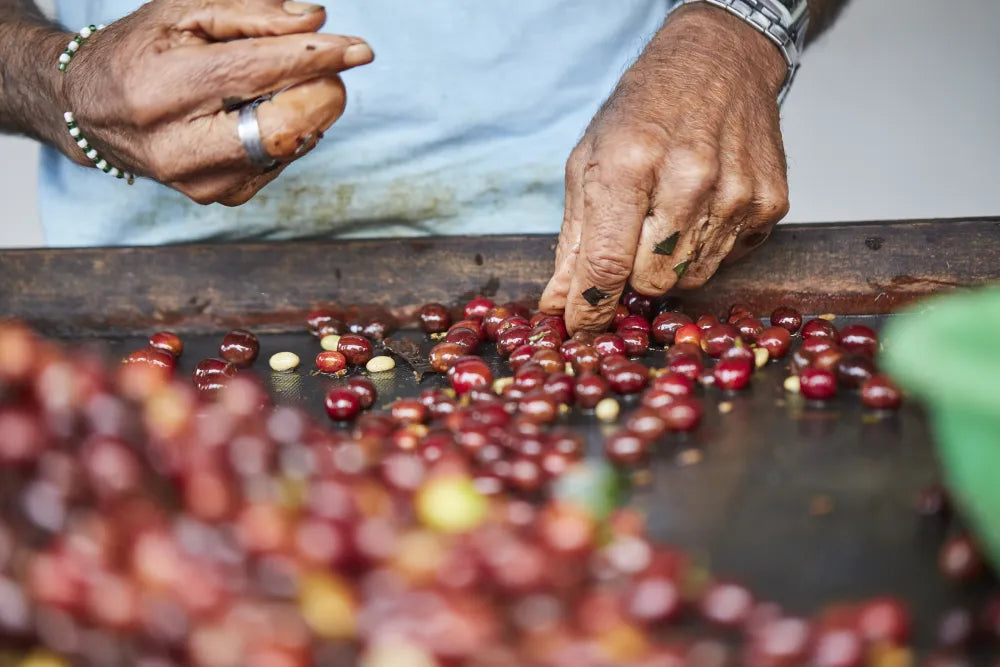
Harvesting is carried out almost entirely by hand and selectively, or selective picking. Farmers and their families go through the coffee plants several times, picking only ripe red cherries.
Given the high humidity in the producing regions and the preference for washed processing, the speed between harvesting and processing at the wet mill is crucial to ensuring quality.
The harvest is not just work, but also a period of intense community activity, during which local labourers and even migrants from neighbouring countries are hired.

Coffee growers and the coffee supply chain in Mexico
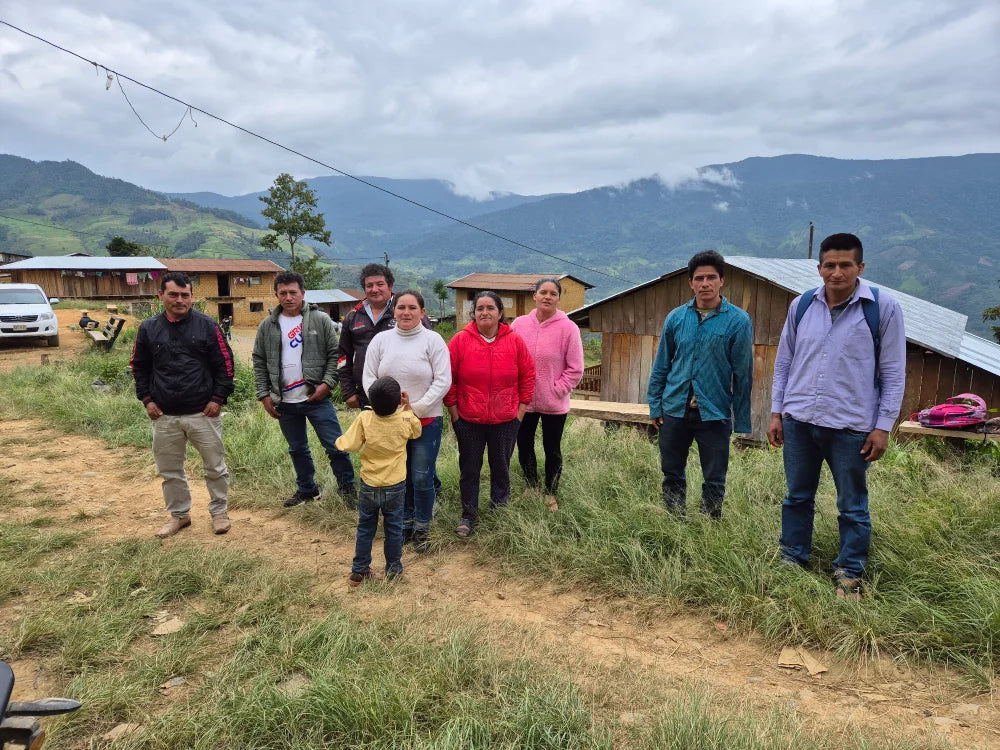
Mexican coffee is in the hands of smallholder producers. Around 90% of coffee growers have plots of less than one hectare. Their role is fundamental not only to the economy, but also as guardians of biodiversity by maintaining the shade-grown cultivation system.
To obtain better prices, many organise into cooperatives. These organisations provide technical training, access to certifications such as Organic or Fair Trade, and enable direct sales to exporters, partially bypassing intermediaries. Although volatile, their income is their main source of livelihood.
In the supply chain, the involvement of other actors is key:
- Intermediaries ––coyotes or collectors––: in some areas, they are the first point of purchase, offering farmers quick liquidity, but often at low prices.
- The role of the Mexican government: historically, the government intervened through institutions such as the now-defunct INMECAFE, which controlled production and exports. Today, support is more indirect, focusing on social programmes and subsidies for inputs, as well as research through INIFAP.
- Coffee export companies: they complete the chain. Large companies buy from cooperatives or intermediaries to export coffee to the United States, Europe and Asia. Thanks to them, high-quality coffees from Chiapas and Oaxaca reach major cities around the world, consolidating Mexican coffee as an organic and fair-trade option.
Where to buy the best Mexican origin coffees
We hope this article has helped you learn everything relevant about the Mexican coffee scene, an origin that stands out for its quality and sustainable production methods.
If you feel like tasting some of the specialty coffees from Latin America, at Ineffable Coffee you can find them freshly roasted in Seville, with the same care and attention that coffee growers put into the entire process.
Visit our shop to get your hands on some of the specialty coffees available both ground and whole bean, and prepare yourself a delicious cup of coffee, whether espresso or filter, just the way you like it.