
Talking about Peru means talking about history, spectacular landscapes and, of course, coffee. This Andean country, famous for Machu Picchu and its world-renowned cuisine, also holds a special place in coffee culture.
Peruvian coffee stands out not only for its complex and aromatic flavour, but also for its role in the national economy.
Coffee cultivation arrived in Peru in the mid-18th century and, since then, it has become one of the driving forces behind the development of rural areas, especially in the highlands and rainforest.
Today, Peruvian coffee is one of the most recognised in the world, holding a privileged position in international markets and gaining a growing reputation as a high-quality, sustainably produced product.
History of Coffee Cultivation in Peru

Coffee was introduced to Peru around the 18th century, brought by European settlers and initially spread throughout the central region of the country.
At first, its consumption was very limited and almost exclusively reserved for local elites. It was not until the end of the 19th century, with increasing demand in Europe and the United States, that Peruvian coffee began to gain prominence.
The first major expansion of coffee in Peru took place after independence, when the state promoted coffee cultivation as a source of income to replace guano, which had been the country’s main export product.
Little by little, coffee became established in the high-altitude rainforest regions, where climatic conditions were ideal.
Throughout the 20th century, coffee became a key product for rural economies. Farming communities and smallholders took centre stage, developing subsistence agriculture that gradually evolved into production aimed at export.
Today, Peru is one of the world’s leading producers of organic coffee and a reference point for sustainable practices.
The Importance of Coffee in Peru’s Economy and Culture

In Peru, coffee is not just an agricultural crop: it is part of the cultural identity of many rural communities.
For more than 200,000 farming families, coffee is their main source of income. In fact, Peruvian origin coffee accounts for around 25% of the country’s agricultural exports, making it one of the driving forces of the national economy.
Beyond economics, coffee is deeply connected to the social and cultural life of Peruvians.
In many Andean and Amazonian communities, coffee cultivation has led to the creation of coffee growers’ cooperatives that organise not only production but also community life. These cooperatives have been essential in ensuring fair prices, direct exports and sustainable practices.
In urban culture, coffee has gained ground over recent decades, with an explosion of specialty coffee shops in Lima and other cities promoting Peruvian origin coffee as a gourmet product.
This renewed appreciation has allowed local consumers to recognise the richness of their own coffee as well, something that until recently was mainly reserved for international markets.
Evolution of Coffee Cultivation, Production and Varieties in Peru

Coffee cultivation in Peru has evolved considerably over recent decades. For much of the 20th century, production was based on traditional techniques and limited access to agricultural technology.
However, since the 1990s, with the growing demand for specialty coffees, the modernisation of the sector has been promoted.
Peru is an almost exclusively Arabica coffee producer, known for its smooth flavour and fruity notes. Within this category, varieties such as Typica, Bourbon, Caturra and Catimor stand out, cultivated in different regions of the country.
The diversity of microclimates and altitudes has made it possible to develop very different cup profiles, ranging from chocolatey flavours to citrus and floral notes.
Today, Peru is considered one of the leaders in organic and fair-trade coffee. Thousands of producers have adopted certifications that guarantee environmentally responsible practices and social benefits.
This evolution has not only improved coffee quality, but also the quality of life of those who produce it.
Coffee Cultivation Methods in Peru

Peruvian coffee is mainly grown in high-altitude rainforest areas, between 800 and 2,000 metres above sea level. This mountainous belt combines a humid tropical climate with fertile soils, ideal conditions for producing high-quality coffee.
The predominant cultivation method is shade-grown coffee, where coffee plants are grown under the protection of native trees. This not only improves plant development, but also preserves biodiversity and protects the soil from erosion.
In addition, many communities practise diversified agriculture, combining coffee with other crops such as bananas, cassava or maize.
Most producers in Peru are smallholders whose plots rarely exceed two hectares.
This means that the work is highly artisanal, with much of the process carried out by hand, from planting to harvesting. Harvesting, for example, is done selectively, bean by bean, ensuring superior quality in the cup.
Main Coffee-Growing Regions in Peru
Peruvian origin coffee is produced across three major areas: north, central and south. Each offers unique characteristics thanks to its microclimates, volcanic soils and varied altitudes. This diversity gives the country one of the broadest ranges of coffee profiles in Latin America.
Northern Coffee-Growing Region of Peru
- Location: regions such as Cajamarca, Amazonas and Piura.
- Main areas: Jaén, San Ignacio and Rodríguez de Mendoza.
- Production: accounts for around 40% of Peruvian coffee.
- Varieties: Typica, Caturra, Bourbon.
- Altitude: between 1,200 and 1,900 metres.
- Climate: temperate and humid, with abundant rainfall.
- Cultivation type: shade-grown on small plots.
- Processing: traditional washed processing predominates.
Central Coffee-Growing Region of Peru H3
- Location: regions of Junín and Pasco.
- Main areas: Chanchamayo, Satipo and Oxapampa.
- Production: represents approximately 35% of the national total.
- Varieties: Caturra, Catimor, Pache.
- Altitude: between 1,000 and 1,800 metres.
- Climate: humid tropical with distinct seasons.
- Cultivation type: small farms and cooperatives.
- Processing: washed, with improvements in fermentation processes.
Southern Coffee-Growing Region of Peru
- Location: regions such as Cusco and Puno.
- Main areas: La Convención, Quillabamba and Sandia.
- Production: around 25% of national coffee production.
- Varieties: Bourbon, Typica and Catimor.
- Altitude: between 1,300 and 2,000 metres.
- Climate: mountainous with heavy rainfall.
- Cultivation type: traditional agriculture and cooperatives.
- Processing: washed and experimental microlots.
In addition, other regions such as Ayacucho and Huánuco are emerging as new producing areas with great potential for specialty coffees.
Coffee Harvest Season in Peru
The coffee harvest season in Peru varies depending on the region due to its geographical and climatic diversity. In the northern region, harvesting mainly takes place between April and September, coinciding with the dry season. In the central region, it is concentrated between May and October, while in the southern region, harvesting usually extends from June to November.
This variation means that Peru has fresh coffee available for much of the year, which is particularly attractive to international markets.
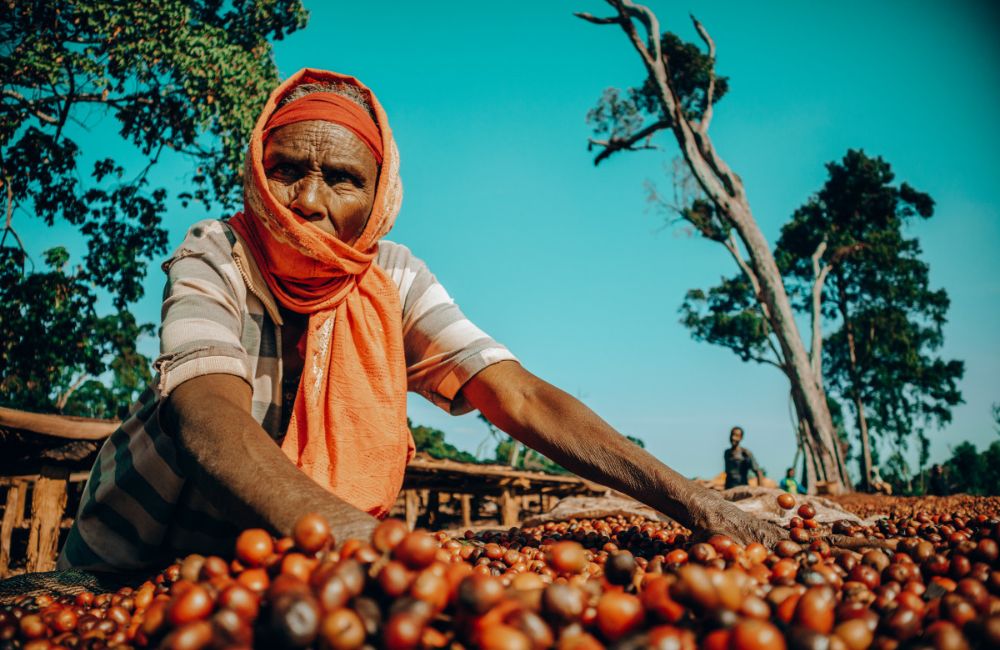
Harvesting is manual and selective, ensuring that only ripe beans are picked. Although this is more costly and labour-intensive, it ensures an exceptional level of quality in the cup.
Coffee Growers in Peru

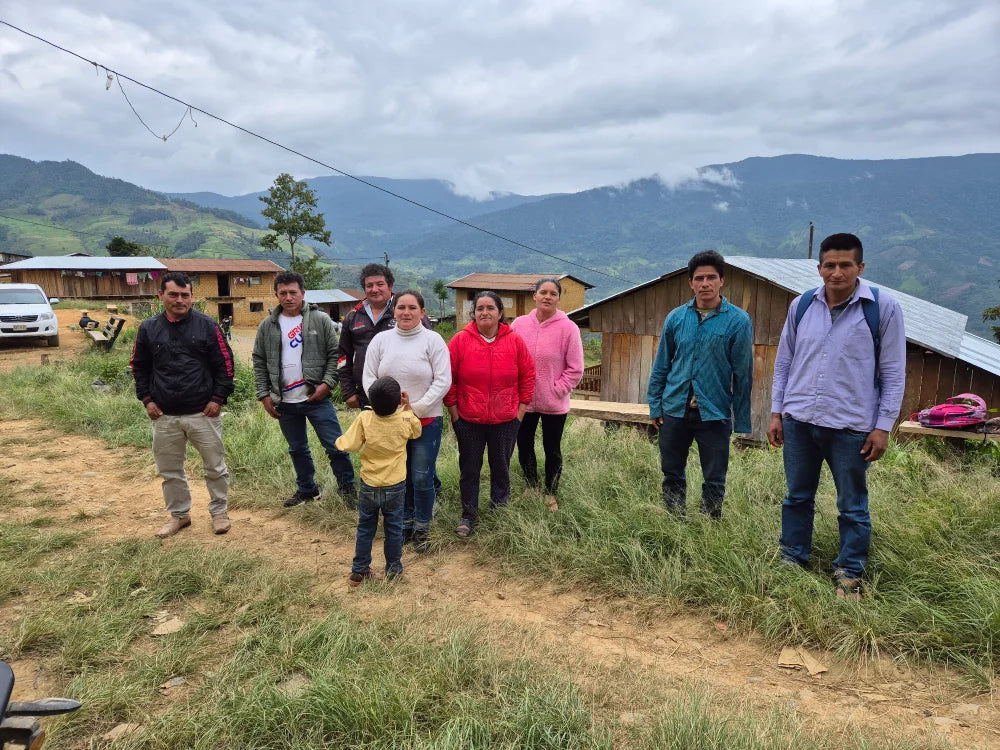
The heart of Peruvian origin coffee lies with its growers. More than 90% of national production is in the hands of smallholders with family farms of less than two hectares.
These producers not only depend on coffee as their main source of income, but also see it as part of their cultural heritage.
Organisation into cooperatives has been key to improving the position of coffee growers in the market. These associations allow them to negotiate better prices, access certifications and sell directly to international exporters. Thanks to them, many farmers have been able to enter the specialty coffee market and obtain higher incomes.
Other players also play a fundamental role: intermediaries, who facilitate marketing; the Peruvian government, which promotes technical support and credit programmes; and export companies, which position Peruvian coffee around the world.
This value chain, although it still faces challenges such as price fluctuations and the impact of pests, continues to consolidate coffee as a driver of development in Peru.
Where to Buy the Best Peruvian Coffees
We hope you now know a little more about Peruvian coffee, an origin that is gaining an increasingly strong position in the specialty coffee market.
If you are curious to taste the characteristic notes of high-altitude Latin American coffees, you can find them freshly roasted at Ineffable Coffee in Seville, with all the care and attention they deserve.
Visit our shop to discover some of the delicious Andean specialty coffees that you can find both ground and whole bean, and prepare yourself a different cup of coffee that is sure to surprise you