Skip to content

Free Cold Brew ebook with your order

Free shipping on orders over €40 for Spain (Peninsula), Balearic Islands and Portugal. Shipped within 24/48h Mon-Fri

Free shipping to Europe on orders over €99

Cart

Your cart is empty

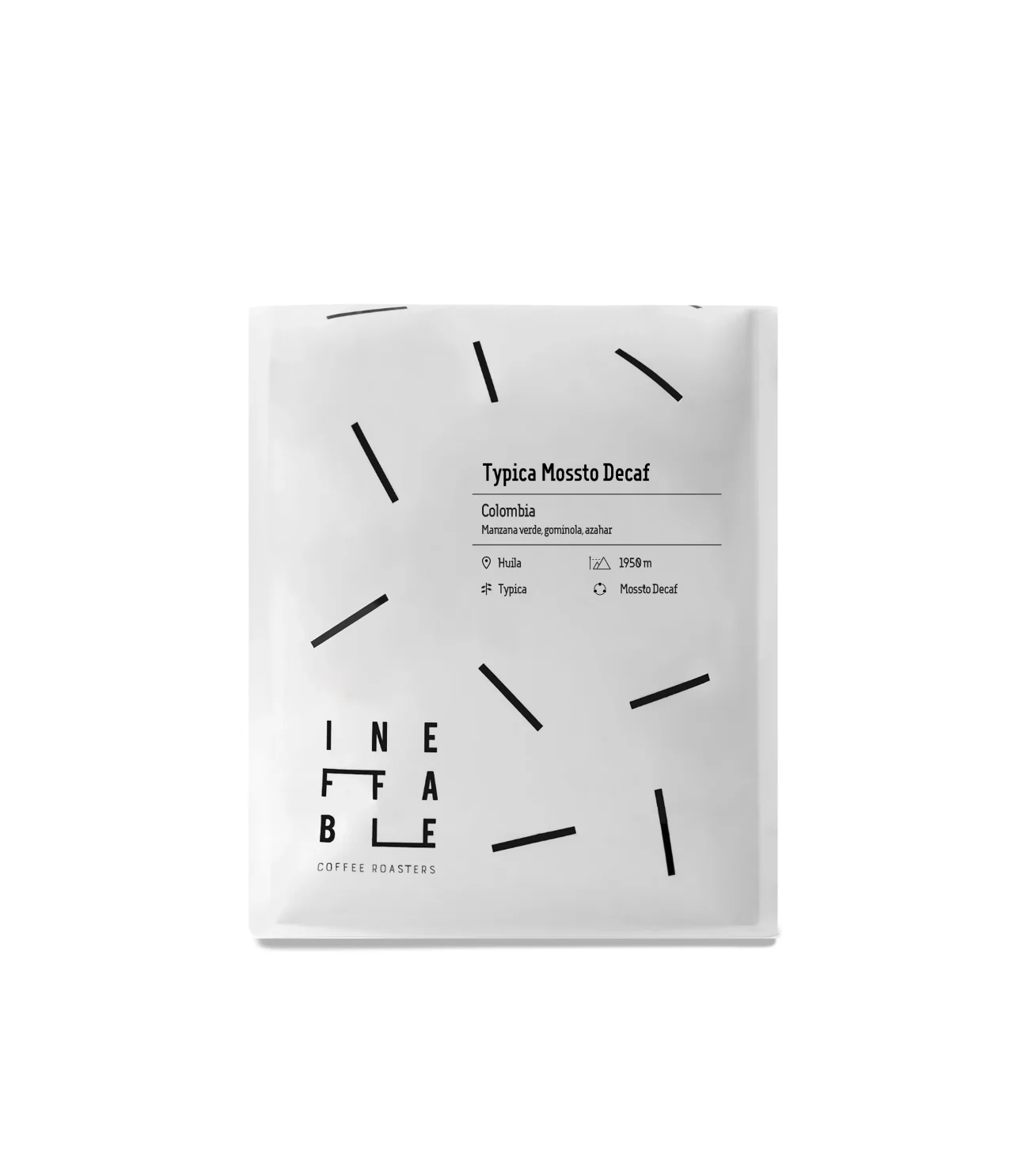
Typica Mossto Decaf

Sale price132,00€

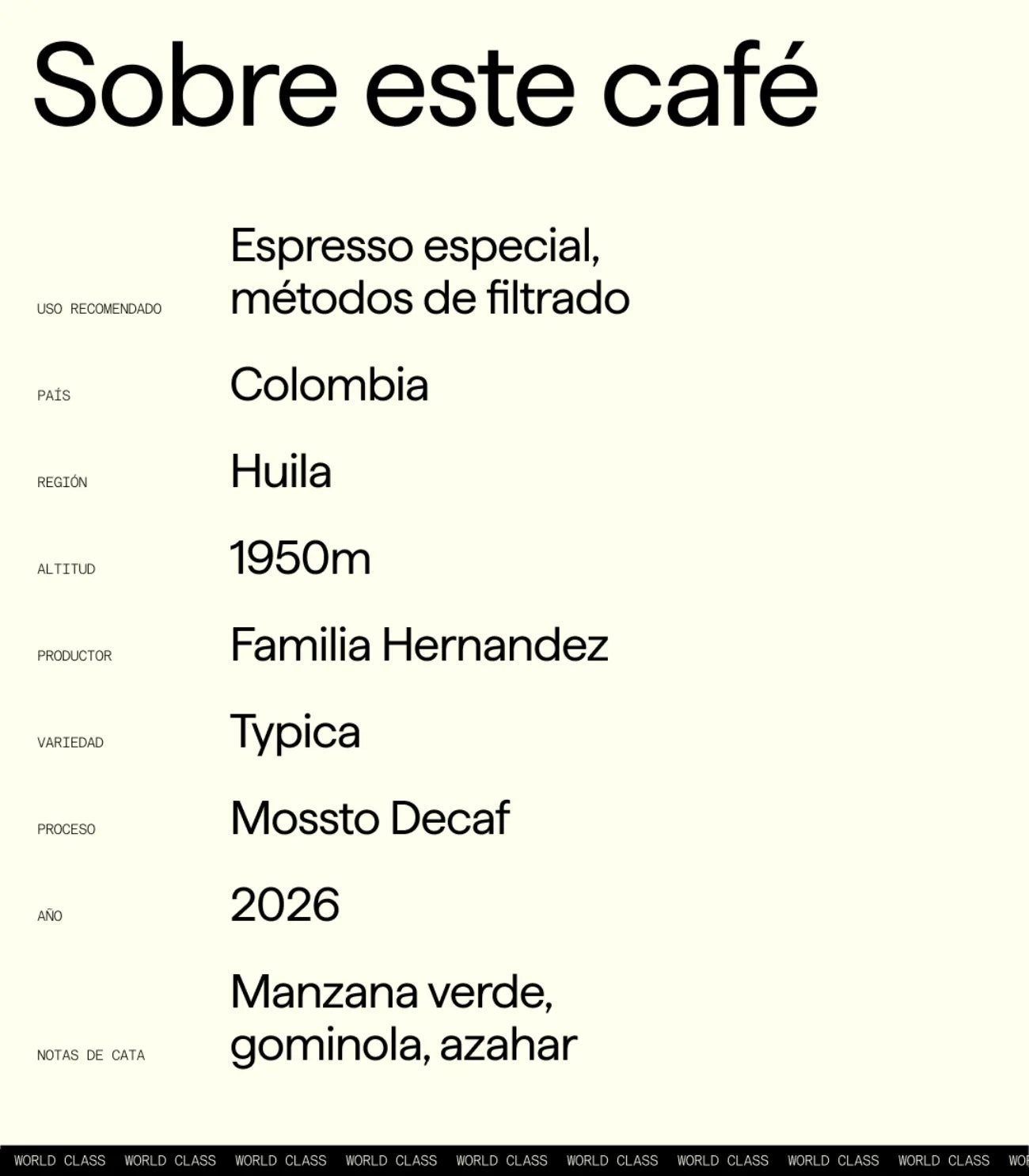
The Hernández family farm in Huila, Colombia, sits at 1,950 metres above sea level, an exceptional altitude that promotes slow cherry maturation and greater complexity in the cup.

This decaffeinated lot, processed using advanced techniques, stands out for its juicy notes of green apple and vanilla. A gummy-sweet base with hints of orange blossom. A long, fruity finish with lively acidity and a silky body.

Format:

Format:

Whole bean-Ground:

Whole bean-Ground:

Whole bean-Ground:

Cantidad

Typica Mossto Decaf
Typica Mossto Decaf Sale price132,00€

Reviews of our product

Fresh seasonal coffee

Freshly roasted in Seville

Eco-Friendly Packaging

Fair price

Caution to producers

Traceability from farm to cup

Learn more about the product

Learn about this coffee in detail

The Hernández family farm in Huila, Colombia, sits at 1,950 metres above sea level, an exceptional altitude that promotes slow cherry maturation and greater complexity in the cup. 

This microlot features the Typica variety, one of the oldest and most influential Arabica varieties, considered the genetic foundation of many modern cultivars and prized for its elegant sensory profile. 

After careful hand-picking, the cherries undergo 24 hours of fermentation, followed by thorough washing and sun-drying on African beds. 

The coffee is then decaffeinated using the Mossto Decaf process: caffeine is first extracted through hot water cycles, and complexity is later reintroduced using a natural “mosto” derived from the coffee’s own pulp. 

The result is a remarkably vibrant decaf, offering bright notes of green apple, wine gums and orange blossom.

Meet the producer

Typica Mossto Decaf: when innovation redefines coffee without caffeine

In the mountains of Huila, Colombia, at nearly 2,000 metres above sea level, a coffee is born that completely redefines what we expect from decaf. This is a Typica Mossto Decaf produced by the Hernández family, a project that brings together tradition, agronomic knowledge, and a constant drive for innovation.

The story of this farm is deeply tied to two generations: Óscar Omar Hernández, father and son. What began decades ago as a traditional coffee farm has gradually evolved into a true laboratory of experimentation. Under the vision of the younger Óscar, recognised within the industry for his expertise in fermentation, the farm has gained international attention for its scientific approach to coffee processing. Named after the imposing walnut trees that have historically provided shade to the coffee plants, the farm has become synonymous with both quality and forward-thinking.

In this privileged environment, the Typica variety is cultivated, one of the oldest and most important Arabica varieties in the world. Originally from Ethiopia and considered the genetic foundation of many modern varieties, Typica is prized for its elegance in the cup, though it presents significant challenges in the field. It is a low-yielding, delicate plant, highly susceptible to disease, and therefore often reserved for micro-lots where the focus is firmly on sensory excellence rather than volume. On the El Níspero plot, at 1,950 metres, the coffee trees benefit from a cool climate that encourages slow cherry maturation, resulting in greater complexity in the cup.

Harvesting is carried out by hand, with only perfectly ripe cherries selected. The coffee then undergoes a flotation process to ensure uniformity, followed by a 24-hour fermentation and a meticulous washing stage. Drying takes place under the sun on African beds until the ideal moisture level is reached, after which the coffee is milled to achieve Excelso grade.

What truly sets this coffee apart, however, is its decaffeination process. Far removed from conventional industrial methods that often compromise flavour, this lot undergoes an innovative approach known as “Mossto Decaf”. First, the beans are immersed in hot water in two cycles, gently removing the caffeine. Then comes one of the most distinctive elements of the Hernández family’s work: the use of “mosto”, a natural extract derived from the coffee’s own pulp. The beans rest in this liquid for 24 hours, reabsorbing compounds that enhance sweetness and complexity. After a final wash, the coffee is stabilised for several days before being prepared for export.

The result is a cup that challenges everything typically associated with decaffeinated coffee. Far from flat or muted, this Typica delivers a vibrant and expressive profile. On the palate, it is juicy, with a bright, clean acidity. Notes of green apple, jelly sweets and delicate orange blossom come to the forefront, alongside hints of mandarin, caramel and toffee, creating a refreshing yet layered sensory experience.

Best suited for filter methods, where it can fully express its clarity and aromatic depth, this coffee also performs beautifully as an espresso, offering a distinctive and surprising interpretation of what decaf can be.

This lot is more than just an exceptional decaffeinated coffee, it is a statement of intent. A clear example of how innovation, when grounded in respect for origin and deep expertise, can transform even the most established categories in coffee.

Recetas para este café

Filter Typica Must Decaf

The following recipe is a guide intended for preparing coffee at home. Results may vary depending on your equipment, settings, and all the variables that influence extraction.

For every coffee we roast, our team performs tests until they find a recipe that highlights all the coffee's qualities. The one you'll see below includes all the necessary information to replicate it. Even so, we always recommend experimenting to discover what you like best: use it as a guide and adapt it to your preference.

Remember: it's the journey, not the destination.

Note: Water is the most important factor in achieving a great cup of coffee. Depending on where you live, its composition can vary drastically. Therefore, we recommend using at least filtered water; another option is a mixture of Bezoya and Lanjarón. When adjusting the recipe, change only one variable at a time to identify how it affects the flavor.

It's common to start by adjusting the coffee-to-water ratio. Once you achieve a cup with a pleasant intensity and mouthfeel, you can modify other aspects of the extraction.

Most pour-over coffee recipes use a ratio between 1:15 and 1:17, with a brew time of 2:30 to 4:30 minutes.

Kalita / Origami / Orea

We have chosen this method to share our recipes because it is very versatile and easy to adapt to other pour-over systems. The flat bottom and wavy folds of Kalita filters create a wide surface that prevents significant flow blockages caused by fine particle migration or clogging.

Kalita/Origami/Orea

Recipe:

  • Ratio: 1:17
  • Coffee: 20g
  • Water: 340g
  • Total time: 3:20-4min
  • Temperature: 97ºC

Variables:

  • Resting time: Minimum 7 days after roasting, but best expressed after 15-30 days.
  • Water: 100% Bezoya
  • Filter: Kalita 185

Equipment:

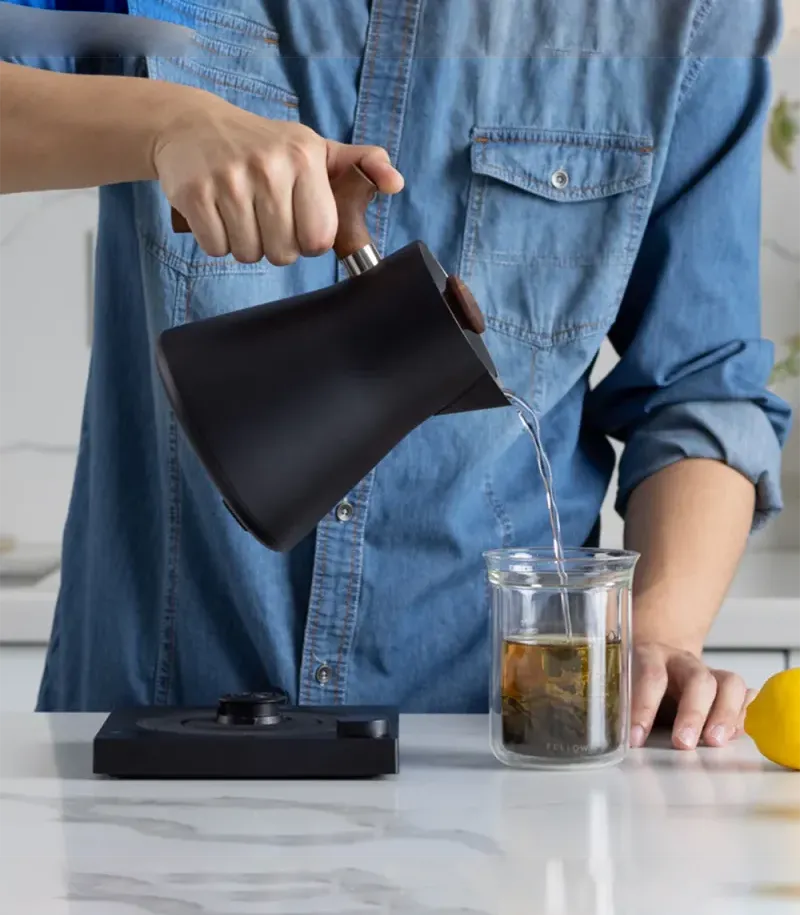
Kalita/Origami/Orea, Kalita filter, Scale, timer, grinder, cup/decanter, and gooseneck kettle.

Method:

  1. Place the Orea in a cup/decanter and insert the filter. Pour hot water through it to eliminate paper taste and preheat the equipment.
  2. Grind the coffee to a recommended level.
  3. Discard the water and place the Orea on the scale. Add the coffee, distributing it evenly. Tare the scale and start the timer.
  4. Pour 60g of water in circular motions and wait 30-40 seconds for the coffee to bloom. If the coffee has been recently roasted, allow more time.
  5. Slowly pour until approximately 200-250g of water, and swirl the Orea once to level the coffee bed and ensure it is fully saturated with water. Never fill to the brim; leave at least a 2 cm gap from the top to limit water bypass around the coffee bed, reducing extraction.
  6. Continue pouring water slowly as before until you have added the necessary amount.
  7. Swirl one last time and let the water drain.
  8. We are aiming for a total time according to the recipe. Adjust the grind size if necessary next time.

Espresso

Here's our most up-to-date recipe. It's important to remember that this recipe is a reference and that many variables will influence the final result of the espresso in your cup: from the condition of your machine and grinder, the water you use, the storage/brewing time of your coffee, to the temperature/pressure, etc. Therefore, you may need to adjust some parameters to achieve a flavorful and balanced espresso based on your specific needs and equipment.

Recipe:

  • Ratio: 1:2.1
  • Dry: 18gr
  • In cup: 38gr
  • Time: 30-36s

Variables:

  • Resting time: minimum 2 weeks
  • Temperature: 94ºC
  • Pressure: 6 bars
  • Pre-infusion: No
  • GH 60 (ppm as CaCO3) KH 30 (ppm as CaCO3)

Machinery and equipment used for this recipe:

  • Espresso machine: La Marzocco PB 2GR
  • Grinder: Mahlkonig
  • Scoop: 22gr VST (without slot)
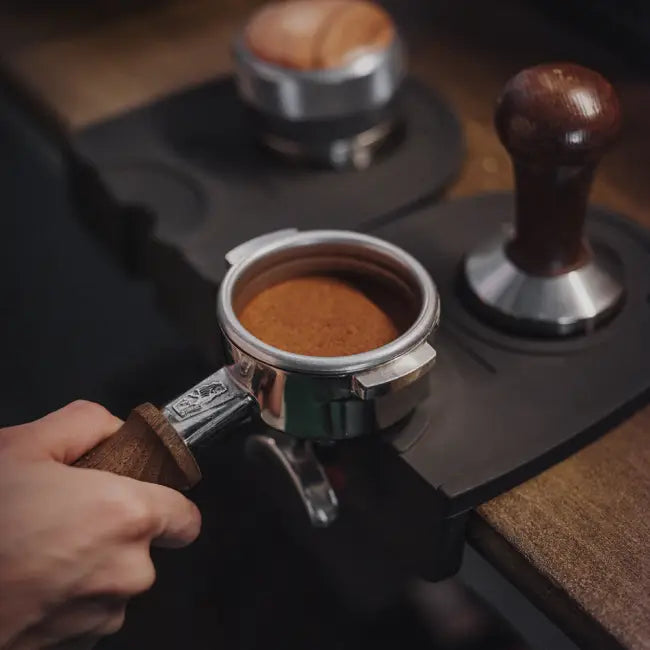
  • Extras: Barista Hustle WDT, Push Tamper (flat, 100% level)

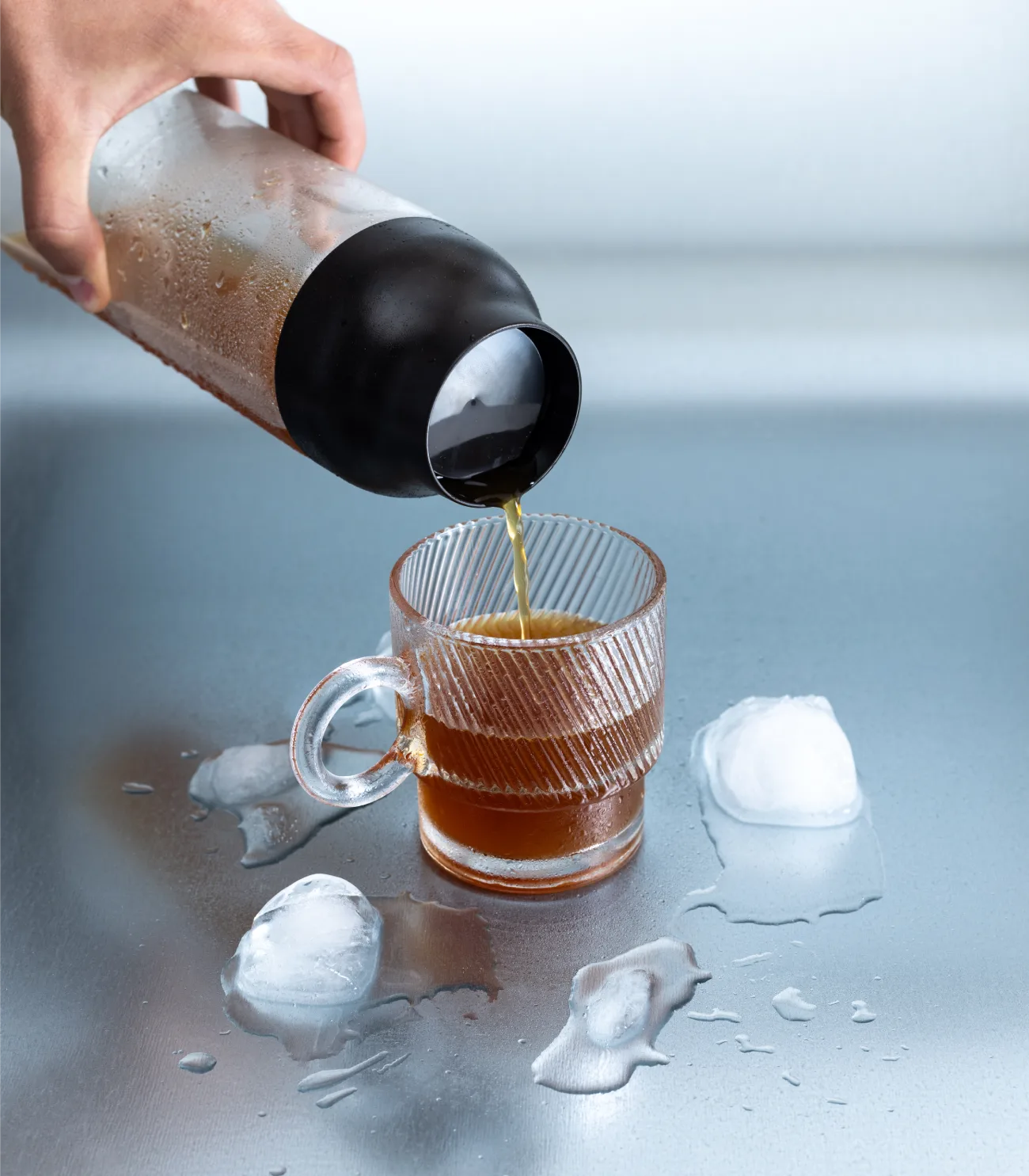
Cold brew

[ Watch the recipe video ]

When making Cold Brew, we typically make larger quantities than with other brewing methods. So, we're providing a recipe for one liter of Cold Brew. If you want to make more or less than this amount, the ratio is 1:14; 1g of coffee for every 14g/ml of water.

Recipe and equipment:

Preparation:

  • Grind the coffee to a medium/coarse grind
  • Place the coffee directly into the filter of the pitcher or bottle
  • Pour the pre-weighed water into the pitcher or bottle
  • Stir gently to saturate all the coffee
  • Cover the container
  • Let it steep for 16-24 hours in the refrigerator (be careful with strong odors!)
  • After this steeping time, remove the filter with the coffee, and it's ready.

BONUS:

Bonus 1:You can do an additional filtration with a V60 paper filter, Kalita, cheesecloth, or something similar to get a cleaner and clearer result.

Bonus 2:For the best flavor, consume as soon as it's ready, as it will oxidize over time.

Bonus 3:Do not shake or press the coffee to avoid extracting bitter flavors or sediment.

Bonus 4:You can freeze Cold Brew into ice cubes and use them to chill your Cold Brew or for making other drinks.

Bonus 5:Food safety: wash your hands and utensils properly. Keep for a maximum of 3 days in the refrigerator in a glass container, preferably closed and without additives (sugar, milk, etc.).

Related products

FREE SHIPPING

Spain (Peninsula)

>40€ / Delivery 24/48h LV

Balearics

>40€ / Delivery 3/5 days, LV

Portugal

>40€ / Delivery 3/5 days, LV

Europe

>99€ / Delivery 4/7 days, LV

See more...