Skip to content

Free shipping on orders over €40 for Spain (Peninsula), Balearic Islands and Portugal. Shipped within 24/48h Mon-Fri

Free shipping to Europe on orders over €99

Cart

Your cart is empty

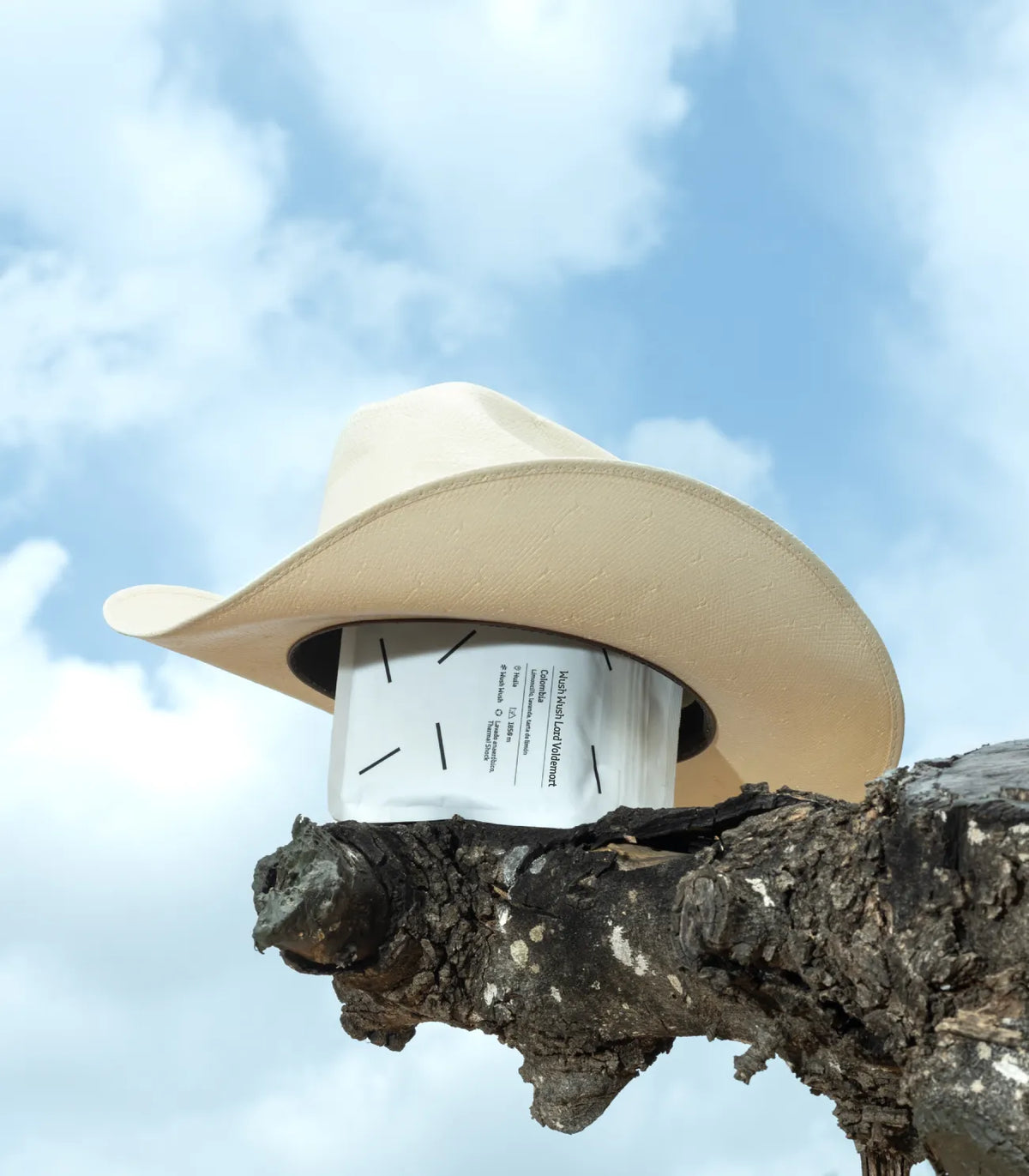
Chapoleros Wush Wush

Sale price29,00€

Chapoleros Wush Wush is the reflection of Henry Bonilla's constant work and innovative vision in Huila, Colombia, at an altitude of 1,700 meters.

This coffee offers a versatile profile with fruity notes of melon and orange blossom. A base of dried mango with a sweet vanilla background. Lasting finish with juicy acidity and a silky body.

Format:

Format:

Whole bean-Ground:

Whole bean-Ground:

Whole bean-Ground:

Cantidad

Chapoleros Wush Wush
Chapoleros Wush Wush Sale price29,00€

Reviews of our product

Fresh seasonal coffee

Freshly roasted in Seville

Eco-Friendly Packaging

Fair price

Caution to producers

Traceability from farm to cup

Learn more about the product

Learn about this coffee in detail

Chapoleros Wush Wush reflects the consistent work and innovative vision of Henry Bonilla in Huila, Colombia, at 1,700 metres above sea level.

Raised on his family farm, El Arrayán, Henry developed a deep understanding of coffee cultivation from a young age, which he now applies with a modern approach focused on quality and sustainability.

Known for his technical curiosity, he has introduced exotic varieties such as Wush Wush and refined his processes through controlled fermentations.

This lot is produced using a 48-hour anaerobic washed process, following a careful selection of ripe cherries and a prior oxidation phase that enhances aromatic complexity while maintaining clarity.

Slow drying on African beds, followed by a final resting period, ensures stability and precision in the cup.

The result is an elegant and expressive coffee, with notes of melon, dried mango and vanilla, showcasing the potential of a new generation of Colombian producers.

Meet the producer

Chapoleros Wush Wush: innovation and precision from Huila

IIn the mountains of Huila, at 1,700 metres above sea level, a coffee is produced that is far more than just a combination of variety and process. Chapoleros Wush Wush is the result of a series of deliberate decisions, where environment, producer expertise and technique come together to shape a truly distinctive cup.

Behind this coffee is Henry Bonilla, a producer based in Pitalito and heir to a family tradition rooted in coffee. Henry grew up working on El Arrayán, the family farm where he developed a deep understanding of cultivation from an early age. This knowledge, combined with a curious and forward-thinking mindset, has allowed him to evolve towards a production approach focused on quality and precision.

His farm, Chapoleros, has become a space for experimentation and continuous improvement. There, Henry not only cultivates traditional varieties such as Castillo and Tabi, but also works with more exotic cultivars like Wush Wush and Gesha. This constant exploration is driven by a clear goal: to unlock new sensory profiles and push the boundaries of his coffees’ potential.

His influence extends beyond his own farm. Henry actively shares his knowledge with neighbouring producers, promoting more sustainable practices and a more rigorous approach to post-harvest management. His work contributes to strengthening a coffee-growing community that increasingly sees specialty coffee as a genuine path for development.

In this particular lot, the Wush Wush variety plays a central role. Known for its aromatic complexity and delicate profile, it demands precise handling to express its full potential. This is where processing becomes crucial: a 48-hour anaerobic washed method that begins with the careful selection of cherries at peak ripeness.

Before fermentation, a controlled oxidation phase enhances aromatic complexity while preserving clarity in the cup. The coffee is then fermented under anaerobic conditions for 48 hours, developing deeper and more defined characteristics. After washing, it is slowly dried on African beds, allowing for even dehydration and preserving the integrity of the beans.

The process does not end there. Once dry, the coffee rests for several weeks in controlled conditions. This stabilization period is key for the flavors to integrate and be defined more clearly before milling and export.

In the cup, all this work translates into an elegant and expressive profile. Notes of melon and dried mango stand out, accompanied by a sweet vanilla background. The acidity is juicy and well-integrated, providing liveliness without being aggressive, while the body is silky and clean, reinforcing the feeling of balance.

Chapoleros Wush Wush is a clear example of how the combination of origin, variety, and process can lead to coffees with their own identity. But, above all, it is a reflection of the commitment of a new generation of Colombian producers who understand coffee as a constantly evolving craft, where every detail matters.

Recetas para este café

Filter for Wush Wush Sippers

La siguiente receta es una guía pensada para preparar café en casa. Los resultados pueden variar en función de tu equipo, configuración y de todas las variables que influyen en la extracción.

Con cada café que tostamos, nuestro equipo realiza pruebas hasta encontrar una receta que resalte todas las cualidades del café. La que verás a continuación incluye toda la información necesaria para reproducirla. Aun así, siempre recomendamos probar y experimentar para descubrir qué es lo que más te gusta: úsala como orientación y adáptala a tu manera.

Recuerda: lo importante es el viaje, no el destino.

A tener en cuenta: El agua es el factor más importante para conseguir una gran taza de café. Según el lugar donde vivas, su composición puede variar drásticamente. Por eso, recomendamos usar al menos agua filtrada; otra opción es una mezcla de Bezoya y Lanjarón. Cuando ajustes la receta, cambia solo una variable cada vez para poder identificar cómo influye en el sabor.

Lo habitual es empezar ajustando la proporción de café-agua (ratio). Una vez que obtengas una taza con una intensidad y una textura agradables en boca, podrás modificar otros aspectos de la extracción.

La mayoría de las recetas de café por percolación utilizan una proporción entre 1:15 y 1:17, con un tiempo de preparación de entre 2:30 y 4:30 minutos.

Kalita / Origami / Orea

Hemos elegido este método para compartir nuestras recetas porque es muy versátil y fácil de adaptar a otros sistemas de percolación. El fondo plano y los pliegues ondulados de los filtros Kalita crean una superficie amplia que evita bloqueos importantes del flujo, causados por la migración de partículas finas o atascos.

Orea

Receta:

  • Ratio: 1:17
  • Café: 20g
  • Agua: 342g
  • Tiempo total: 3:25min
  • Temperatura: 98ºC
  • Molinillo: 9 EK43 (más grueso que para otros drippers)
  • TDS 1.33 % EY 19.72%

Variables:

  • Tiempo de reposo: puede empezar a consumirse pasados 3 días desde la fecha tueste, pero se expresa mejor a partir de los 10-15 días (siempre que la bolsa no haya sido abierta entes, en cuyo caso, se expresaría mejor pasados menos días).
  • Agua: Bezoya
  • Filtro: Sibarist B3

Equipo:

Orea, filtro de Sibarist B3, báscula, cronómetro, molino, taza/decantador y hervidor de agua (cuello de cisne).

Método:

  1. Coloca el Orea en una taza/decantador y coloca el filtro, vierte agua caliente, así eliminamos el sabor a papel y precalentamos el equipo. 
  2. Muele el café al punto que recomendamos. 
  3. Tira el agua y pon la Orea con la jarra vacía en la bascula, añade el café distribuyéndolo uniformemente, tara la báscula e inicia el cronómetro.
  4. Vierte 60gr de agua con movimientos circulares y espera 30-40 seg para que el café desgasifique. Si el cafe ha sido tostado recientemente, déjalo más tiempo. 
  5. Vierte lentamente hasta aproximadamente 200-250g de agua y agita el Orea en círculos una vez para nivelar la cama de café y asegurar que esté completamente impregnada de agua. Nunca lo llenes hasta el borde, deja al menos un espacio de 2 cm desde la parte superior para limitar el paso del agua por la cama de café, reduciendo así la extracción. 
  6. Continúa vertiendo agua lentamente como antes hasta que hayas puesto el agua necesaria. 
  7. Agita una última vez y deja que el agua baje.
  8. Estamos buscando el tiempo total que indicamos en la receta, por lo que, si es necesario para alcanzar dicho tiempo, ajusta el tamaño de molienda la próxima vez.

Espresso

Here's our most up-to-date recipe. It's important to remember that this recipe is a reference and that many variables will influence the final result of the espresso in your cup: from the condition of your machine and grinder, the water you use, the storage/steeping time of your coffee, to the temperature/atmospheric pressure, etc. Therefore, you may need to adjust some parameters to achieve a flavorful and balanced espresso based on your specific needs.

Recipe:

  • Ratio: 1:2.2
  • Dry: 18gr
  • In cup: 41gr
  • Time: 30-36s

Variables:

  • Resting time: minimum 2 weeks
  • Temperature: 94ºC
  • Pressure: 6 bars
  • Pre-infusion: No
  • GH 60 (ppm as CaCO3) KH 30 (ppm as CaCO3)

Machinery and equipment used for this recipe:

  • Espresso machine: La Marzocco KB90 2G
  • Mill: Mythos 1
  • Scoop: 22gr VST (without slot)
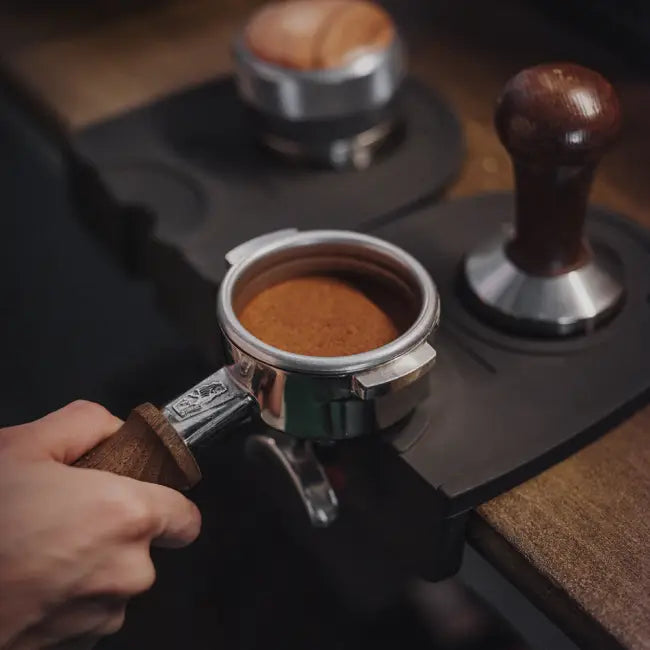
  • Extras: Barista Hustle WDT, Push Tamper (flat, 100% level)

Cold brew

That's the recipe we suggest for making 600ml of cold brew. If you want to make more or less amount, the ratio is 1:15, 1g of coffee for 15g/ml of water.

Recipe and equipment:

  • 40g coffee (Use your preferred coffee depending on your taste. We suggest choosing coffee profiles you like in filter brewing). If it has the "Cold Brew" tag, it's one of our favorites.
  • Grinding: Comandante 16 clicks.
  • Water 600g/ml at room temperature.
  • Water composition: 2 parts Lanjarón and 1 part Bezoya.
  • A mesh or silk.
  • A glass container (preferably with a lid)
  • Let it rest for 22 hours (in the refrigerator).

How to make cold brew:

  • We grind the coffee to a medium ground size (Comandante 16 clicks).
  • We pour the coffee directly into the mesh.
  • We put the mesh into the glass container.
  • We pour the water into the container through the mesh with the coffee.
  • Stir gently to flood all the coffee.
  • We close or cover the container.
  • We leave it rest in the refrigerator (beware of strong smells!).
  • After the resting time, remove the mesh with the coffee and it will be ready.
  • As an extra step, you can filter it again through a V60, Kalita or similar paper filter for a cleaner and clearer result.
  • Keep it refrigerated.
  • This recipe is meant to be undiluted, not even with ice. Adding ice will affect the flavor of your drink, as the water composition will alter the flavor. It's best to make your own ice using the same water composition we suggest. If you do use ice, you might want to lower the ratio (1:9 to 1:12).

Related products

FREE SHIPPING

Spain (Peninsula)

>40€ / Delivery 24/48h LV

Balearics

>40€ / Delivery 3/5 days, LV

Portugal

>40€ / Delivery 3/5 days, LV

Europe

>99€ / Delivery 4/7 days, LV

See more...