
Skip to content

Free shipping on orders over €40 for Spain (Peninsula), Balearic Islands and Portugal. Shipped within 24/48h Mon-Fri

Free shipping to Europe on orders over €99

Cart

Your cart is empty

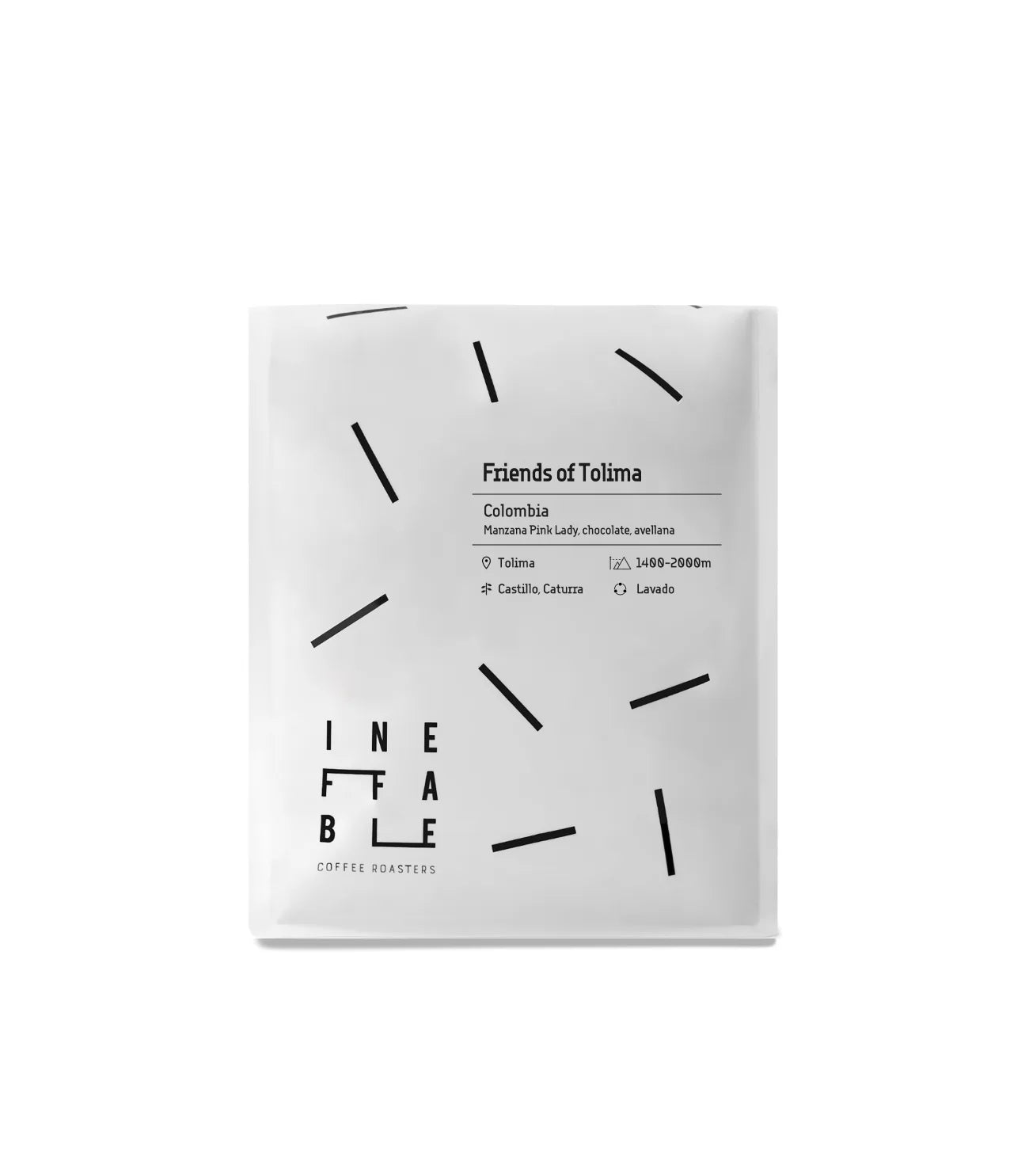
Friends of Tolima

Sale price15,00€

Friends of Tolima brings together the work of 50 small producers from the localities of San Juan de la China, Anzoátegui and Santa Isabel, in one of Colombia’s most emblematic coffee regions.

This lot offers a well-balanced flavour profile with sweet, fruity notes of Pink Lady apple and blueberry. A chocolate base is complemented by a hazelnut finish. The cup has a long aftertaste, with mild acidity and an oily body

Format:

Format:

Whole bean-Ground:

Whole bean-Ground:

Whole bean-Ground:

Cantidad

Friends of Tolima
Friends of Tolima Sale price15,00€

Reviews of our product

Fresh seasonal coffee

Freshly roasted in Seville

Eco-Friendly Packaging

Fair price

Caution to producers

Traceability from farm to cup

Learn more about the product

Learn more about this coffee.

Friends of Tolima brings together the work of 50 small producers from the localities of San Juan de la China, Anzoátegui and Santa Isabel, in one of Colombia’s most emblematic coffee regions. 

Grown between 1,400 and 2,000 metres above sea level, this coffee reflects the diversity and character of Tolima, an area defined by imposing mountains, deep agricultural traditions and a strong cultural identity.

Castillo and Caturra varieties are hand-picked and processed using the washed method, aiming for balance, clarity and consistency in the cup.

The result is a classic and comforting profile, with notes of Pink Lady apple, chocolate and hazelnut.

Behind this lot is Cafisur, a cooperative founded in 1966 that supports thousands of producers through training, technical assistance and access to resources, strengthening coffee as a driver of local development.

Meet the producer

Friends of Tolima: the coffee that brings together 50 producers in the heart of Colombia

Colombia is one of the world’s largest producers of Arabica coffee and, over time, the country has become synonymous with quality. Throughout the years, Colombia has successfully combined tradition and innovation within its coffee industry, developing new varieties and processing techniques while continuing to produce the classic, balanced profiles that coffee drinkers around the world love.

Most Colombian coffee is grown on small family farms spread across the country’s many producing regions. These farmers have dedicated generations of their lives to cultivating coffee in rural landscapes often shaped by social and economic challenges. For decades, many of these areas experienced low-intensity conflict between paramilitary groups, guerrilla movements and the government. However, the peace agreement signed in 2016 marked an important step towards reconciliation and stability, allowing many coffee-growing communities to look to the future with renewed optimism.

IIt is within this context that Friends of Tolima was created — a coffee that brings together the work of 50 small producers from three towns in the Tolima department: San Juan de la China, Anzoátegui and Santa Isabel. These communities, surrounded by dramatic mountain landscapes and lush nature, are part of one of Colombia’s most emblematic coffee-growing regions.

Tolima is located in west-central Colombia and borders well-known coffee departments such as Huila and Cundinamarca. Historically, the region was home to several indigenous cultures, and today a small indigenous population still lives there, preserving elements of their traditions. Beyond coffee, Tolima is also renowned for its music, strong cultural identity and distinctive cuisine.

The mountainous landscape of the region plays a crucial role in the quality of its coffees. The farms contributing to this lot are located between 1,400 and 2,000 metres above sea level, an ideal altitude range for Arabica coffee cultivation. Mild temperatures, fertile soils and the influence of the mountains create the perfect conditions for coffee to ripen slowly, allowing it to develop greater complexity and balance in the cup.

This lot features two varieties that are widely grown in Colombia: Castillo and Caturra. Both are valued for their adaptability to local conditions and their ability to produce balanced, approachable cup profiles. After harvesting, the coffee cherries are hand-picked to ensure that only the ripest fruit is selected. The coffee is then processed using the washed method, a traditional technique that highlights clarity, structure and cleanliness in the final cup.

The result is a classic and comforting coffee profile, perfect for those who appreciate balance and elegance. In the cup, you can expect sweet and fruity notes reminiscent of Pink Lady apple, supported by a chocolate base and a gentle hazelnut finish that adds warmth and roundness.

Behind this lot is also a key organisation supporting producers in the region: Cafisur, a cooperative founded in 1966 that now represents more than 4,000 coffee growers. Its role goes far beyond simply marketing coffee. Cafisur provides agronomic assistance, training programmes and educational opportunities for coffee-growing families, while also facilitating access to credit for farm improvements and agricultural inputs.

Thanks to initiatives like this, many small producers are able to continue cultivating high-quality coffee while strengthening the long-term sustainability of their communities. Friends of Tolima is ultimately a reflection of this collective effort — a coffee that speaks of place, cooperation and the dedication of dozens of families who continue to sustain one of Colombia’s most important traditions.

Recetas para este café

Espresso

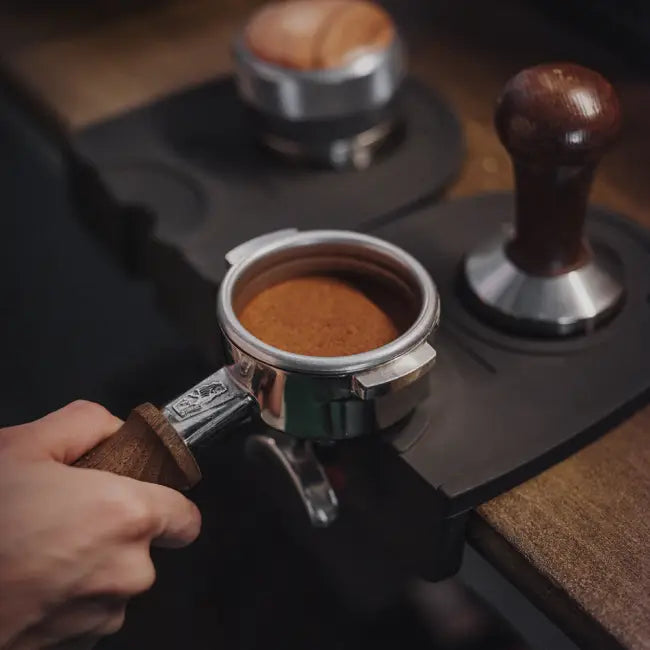
Here's our most up-to-date recipe. It's important to remember that this recipe is a reference and that many variables will influence the final result of the espresso in your cup: from the condition of your machine and grinder, the water you use, the storage/steeping time of your coffee, to the temperature/atmospheric pressure, etc. Therefore, you may need to adjust some parameters to achieve a flavorful and balanced espresso based on your specific needs.

Recipe:

  • Ratio: 1:2.2
  • Dry: 18gr
  • In cup: 41gr
  • Time: 30-36s

Variables:

  • Resting time: minimum 2 weeks
  • Temperature: 94ºC
  • Pressure: 6 bars
  • Pre-infusion: No
  • GH 60 (ppm as CaCO3) KH 30 (ppm as CaCO3)

Machinery and equipment used for this recipe:

  • Espresso machine: La Marzocco KB90 2G
  • Mill: Mythos 1
  • Scoop: 22gr VST (without slot)
  • Extras: Barista Hustle WDT, Push Tamper (flat, 100% level)

Cold brew

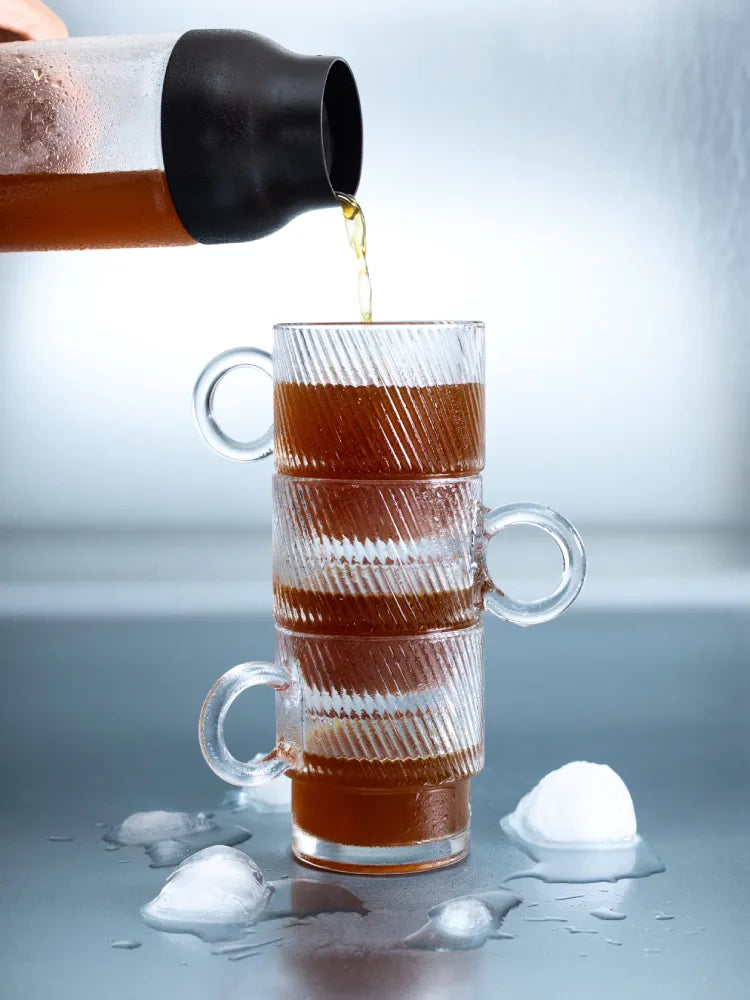
That's the recipe we suggest for making 600ml of cold brew. If you want to make more or less amount, the ratio is 1:15, 1g of coffee for 15g/ml of water.

Recipe and equipment:

  • 40g coffee (Use your preferred coffee depending on your taste. We suggest choosing coffee profiles you like in filter brewing). If it has the "Cold Brew" tag, it's one of our favorites.
  • Grinding: Comandante 16 clicks.
  • Water 600g/ml at room temperature.
  • Water composition: 2 parts Lanjarón and 1 part Bezoya.
  • A mesh or silk.
  • A glass container (preferably with a lid)
  • Let it rest for 22 hours (in the refrigerator).

How to make cold brew:

  • We grind the coffee to a medium ground size (Comandante 16 clicks).
  • We pour the coffee directly into the mesh.
  • We put the mesh into the glass container.
  • We pour the water into the container through the mesh with the coffee.
  • Stir gently to flood all the coffee.
  • We close or cover the container.
  • We leave it rest in the refrigerator (beware of strong smells!).
  • After the resting time, remove the mesh with the coffee and it will be ready.
  • As an extra step, you can filter it again through a V60, Kalita or similar paper filter for a cleaner and clearer result.
  • Keep it refrigerated.
  • This recipe is meant to be undiluted, not even with ice. Adding ice will affect the flavor of your drink, as the water composition will alter the flavor. It's best to make your own ice using the same water composition we suggest. If you do use ice, you might want to lower the ratio (1:9 to 1:12).

Related products

FREE SHIPPING

Spain (Peninsula)

>40€ / Delivery 24/48h LV

Balearics

>40€ / Delivery 3/5 days, LV

Portugal

>40€ / Delivery 3/5 days, LV

Europe

>99€ / Delivery 4/7 days, LV

See more...