Get to know this coffee in detail
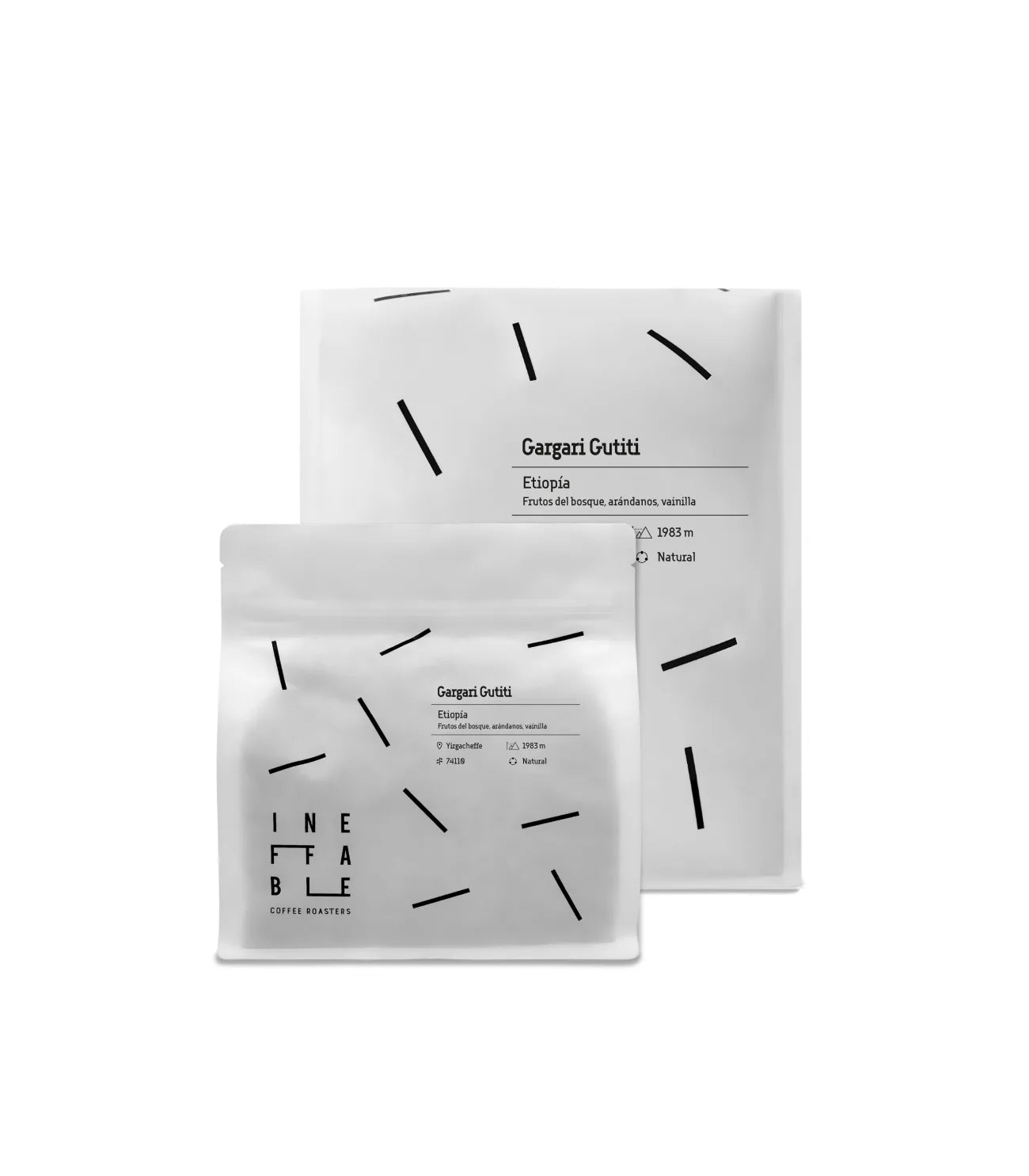
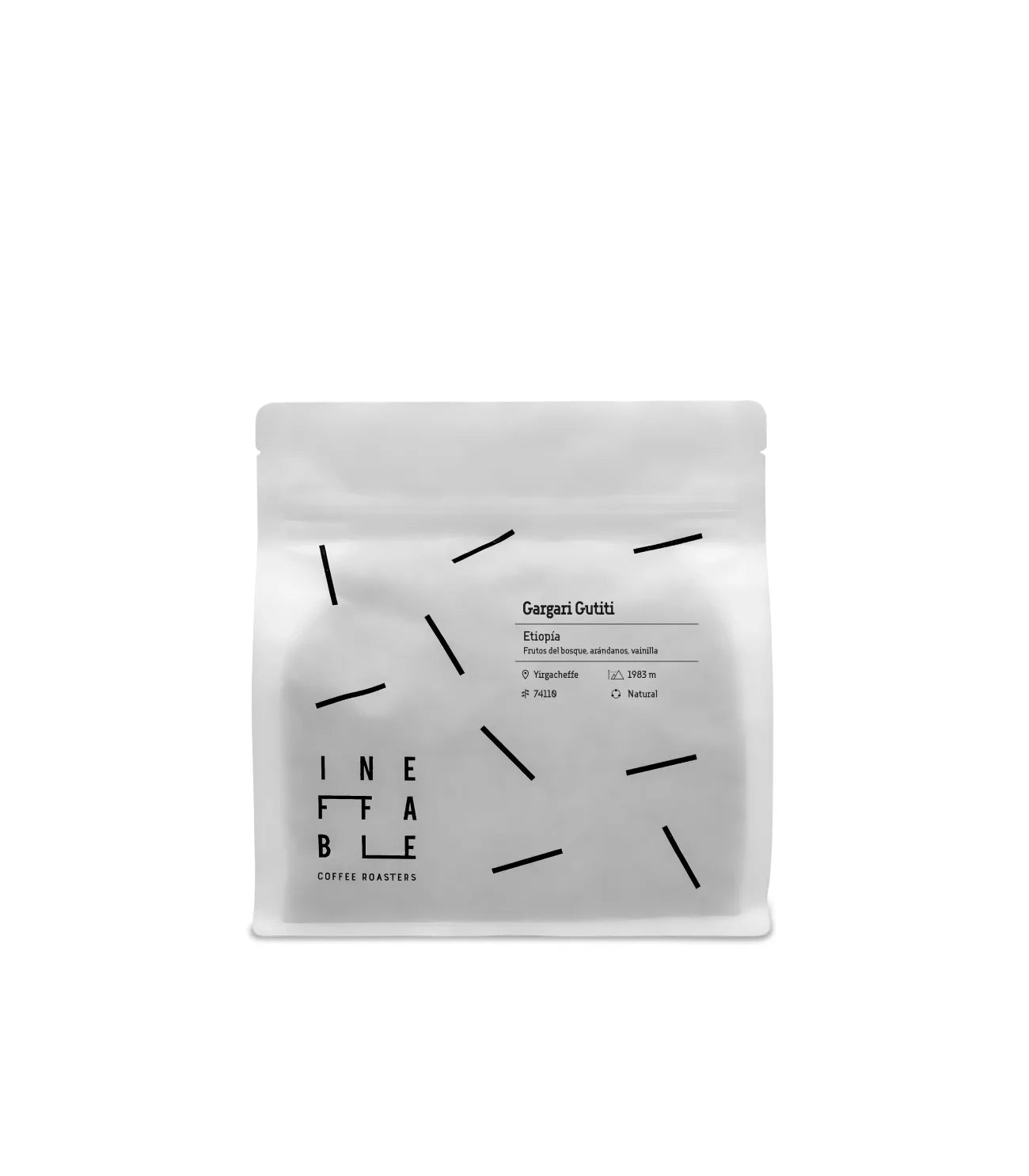
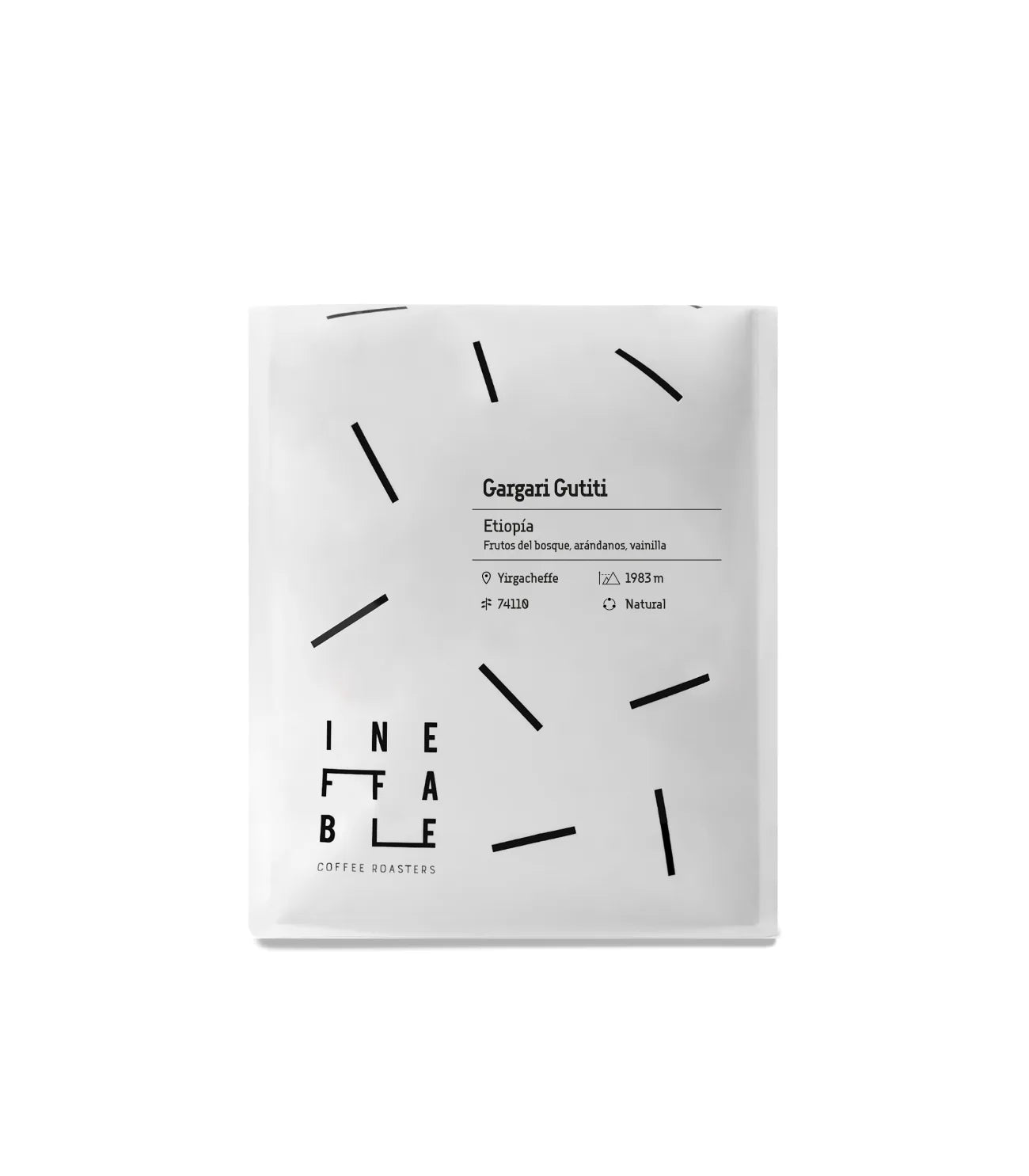
Gargari Gutiti is a coffee produced by smallholders on family farms in the Gargari village, in the Gedeb region of Ethiopia.
Producers grow their cherries on family farms, and the cherries are harvested at their peak ripeness.
They are then taken to the Yirgacheffe Gargari washing station, managed by Birhanu Geda, who oversees the entire process to ensure quality standards are maintained.
This coffee has been processed using the natural method, which means the beans are dried inside the cherry on raised beds for 19 to 25 days.
The long drying period causes the sugars to transfer from the pulp to the seed.
This translates into a very sweet cup with rich fruity notes, balanced and full-bodied.
Meet the producer
Gargari Gutiti: the essence of Ethiopian coffee at its finest
Few places in the world command as much respect among coffee lovers as Yirgacheffe, a region in southern Ethiopia widely regarded as one of the birthplaces of Arabica coffee. In this fertile, mountainous land —where altitude and climate combine to create ideal conditions— grows Gargari Gutiti, a coffee that captures the purity of the Ethiopian terroir and reflects the dedication of hundreds of smallholder farmers who have refined their craft over generations.
An exceptional origin: Gargari Kebele
Gargari Station is located in the Kebele (village) of Gargari, about 22 kilometres from the city of Gedeb, in the heart of Yirgacheffe. Sitting at 1,983 metres above sea level, the station spans 2.5 hectares and is managed by Birhanu Geda, who coordinates the work of more than 3,200 small-scale producers delivering their freshly picked cherries each week.
These small family farms mainly cultivate the 74110 variety, renowned for its resilience and its distinctive flavour profile: clean, vibrant, and naturally sweet — hallmarks of Ethiopia’s finest coffees.

The natural process: where patience defines quality
Gargari Gutiti is crafted using the natural process, a traditional method that highlights the coffee’s inherent fruitiness. After meticulous hand selection, only the ripest cherries are laid out on African raised beds to dry slowly under the sun.
For around 19 to 25 days, the cherries are carefully turned and rotated to ensure even drying. This patient process allows the beans to absorb the sugars and aromatic compounds from the fruit, resulting in a cup of remarkable depth and sweetness. The outcome is a coffee with notes of forest fruits and blueberries, complemented by a subtle touch of vanilla, a silky body, and a long, elegant finish — a perfect example of what many call “True Coffee Terroir.”

Beyond coffee: the social commitment of Primrose Coffee
Behind the production of Gargari Gutiti stands Primrose Coffee, an Ethiopian company that combines excellence in quality with a deep social commitment. Led by Abreham Mengiste and Meseret Workneh, Primrose not only focuses on producing outstanding coffees but also works to improve the well-being of the communities that make them possible.
Their initiatives go far beyond the economic sphere: they have launched social responsibility programmes that include the construction of schools and bridges, as well as providing educational materials to children in rural areas. These efforts aim to promote sustainable growth and ensure a brighter future for farming families.

A coffee that tells a story
Every cup of Gargari Gutiti reflects a community united by a shared heritage. From the highlands of Yirgacheffe, small producers work with respect for the land and for the traditions passed down through generations. Their dedication, together with the vision of Primrose Coffee, gives life to a coffee that transcends flavour — a true expression of sustainability, quality, and hope.
With its sweet, fruity profile, careful processing, and positive social impact, Gargari Gutiti stands as a perfect example of what makes Ethiopian coffee so special. A coffee not only to be enjoyed, but to be felt — because behind every sip lies a story of community, craftsmanship, and love for coffee.
Filter for Gargari Gutiti
The following recipe is a guide for preparing coffee at home. Results may vary depending on your equipment, settings, and all the variables that influence extraction.
With every coffee we roast, our team tests until they find a recipe that highlights all the coffee's qualities. The one below includes all the information needed to reproduce it. Even so, we always recommend trying and experimenting to discover what you like best: use it as a guide and adapt it to your own taste.
Remember: it's the journey that matters, not the destination.
Please note: Water is the most important factor in achieving a great cup of coffee. Depending on where you live, its composition can vary dramatically. Therefore, we recommend using at least filtered water; another option is a blend of Bezoya and Lanjarón. When adjusting the recipe, change only one variable at a time to identify how it influences the flavor.
It's common to start by adjusting the coffee-to-water ratio. Once you get a cup with a pleasant strength and mouthfeel, you can adjust other aspects of the brewing process.
Most percolation coffee recipes use a ratio between 1:15 and 1:17, with a brewing time of between 2:30 and 4:30 minutes.
Kalita / Origami / Orea
We chose this method to share our recipes because it's very versatile and easy to adapt to other percolation systems. The flat bottom and wavy pleats of Kalita filters create a large surface area that prevents significant flow blockages caused by fine particle migration or blockages.
Kalita/Origami/Orea
Recipe:
- Ratio: 1:17
- Coffee: 20g
- Water: 340g
- Total time: 4:16 min
- Temperature: 93ºC
- Grinder: 21 `Cicks´ Comondante
- TDS 1.41% EY 20.66%
Variables:
- Resting time: Minimum 3 days after roasting, but best expressed after 10-15 days.
- Water: Bezoya 2:1 Lanjaron
- Filter: Sibarist B3
Equipment:
Orea, B3 sibarist filter, Scale, stopwatch, grinder, cup/decanter and kettle (gooseneck).
Method:
- Place the Orea in a cup/decanter and insert the filter. Pour hot water over the filter to eliminate the papery taste and preheat the unit.
- Grind the coffee to a level that you recommend.
- Throw away the water and place the Orea on the scale, add the coffee, distributing it evenly, tare the scale and start the stopwatch.
- Pour 60g of water in with circular motions and wait 30-40 seconds for the coffee to degas. If the coffee has been recently roasted, give it more time.
- Slowly pour in approximately 200-250g of water and swirl the Orea once to level the coffee bed and ensure it's completely covered with water. Never fill to the brim; leave at least a 2cm gap from the top to limit water flow through the coffee bed, which can reduce extraction.
- Continue pouring water slowly as before until you have added the necessary amount of water.
- Turn one last time to let the water drain.
- We are looking for a total time according to the recipe, adjust the grind size if necessary next time.
Espresso for Gargari Gutiti
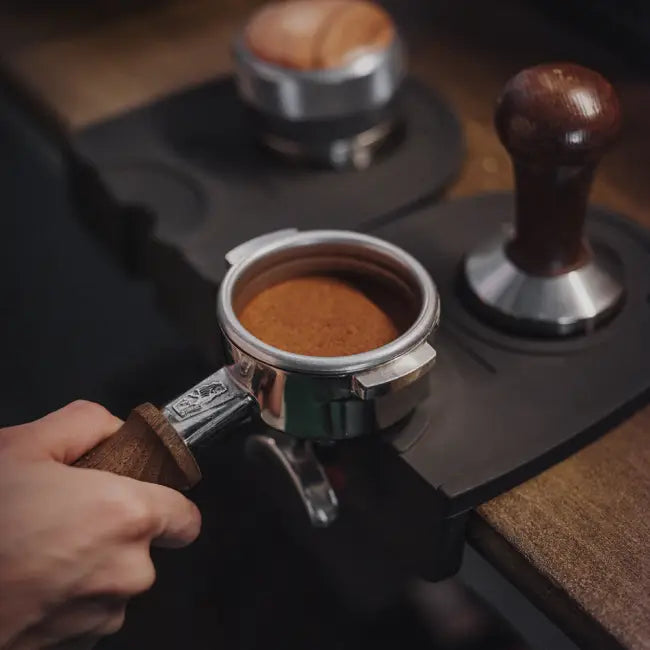
Here is the most up-to-date recipe we have. It's important to remember that this recipe is a guide and that many variables will influence the final result of the espresso in your cup: from the condition of your machine and grinder, the water you use, the storage/resting of your coffee, to the temperature/atmospheric pressure, etc. Therefore, you may need to adjust some parameters to find a flavorful and balanced espresso with your specific circumstances.
For example, here we use 6 bars of pressure on our machine; if yours is set to 9 bars, we would recommend reducing the extraction time by about 5 to 10 seconds to compensate.
Recipe:
- Ratio: 1:2.1
- Dry weight: 18g
- In a cup: 37-40g
- Time: 33-38s
Variables:
- Rest period: minimum 2 weeks
- Temperature: 94ºC
- Pressure: 6 bar
- Pre-infusion: No
- Water: GH 60 (ppm as CaCO3) KH 30 (ppm as CaCO3)
Machinery and equipment used for this recipe:
- Espresso machine: La Marzocco KB90 2G
- Mill: Mythos 2
- Scoop: 22gr VST (without slot)
- Extras: Barista Hustle WDT, Push Tamper (flat, 100% level)
Cold brew
[ Watch the recipe video ]
When making Cold Brew, we typically make larger quantities than with other brewing methods. So, we're providing a recipe for one liter of Cold Brew. If you want to make more or less than this amount, the ratio is 1:14; 1g of coffee for every 14g/ml of water.
Recipe and equipment:
Preparation:
- Grind the coffee to a medium/coarse grind
- Place the coffee directly into the filter of the pitcher or bottle
- Pour the pre-weighed water into the pitcher or bottle
- Stir gently to saturate all the coffee
- Cover the container
- Let it steep for 16-24 hours in the refrigerator (be careful with strong odors!)
- After this steeping time, remove the filter with the coffee, and it's ready.
BONUS:
Bonus 1:You can do an additional filtration with a V60 paper filter, Kalita, cheesecloth, or something similar to get a cleaner and clearer result.
Bonus 2:For the best flavor, consume as soon as it's ready, as it will oxidize over time.
Bonus 3:Do not shake or press the coffee to avoid extracting bitter flavors or sediment.
Bonus 4:You can freeze Cold Brew into ice cubes and use them to chill your Cold Brew or for making other drinks.
Bonus 5:Food safety: wash your hands and utensils properly. Keep for a maximum of 3 days in the refrigerator in a glass container, preferably closed and without additives (sugar, milk, etc.).