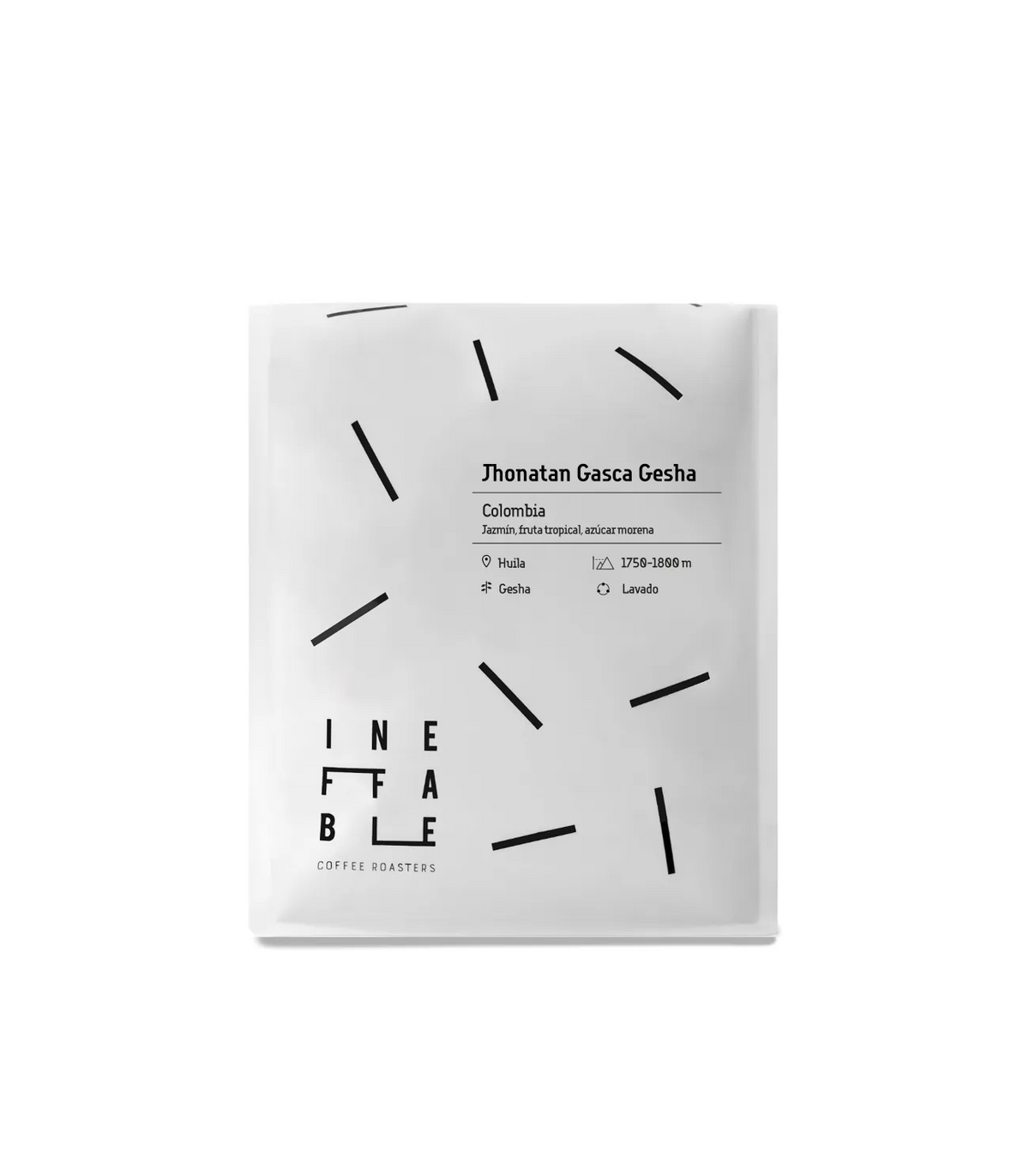
Discover this coffee in detail
Zarza Coffee is a third-generation family project located in the mountains of Bruselas, Huila, known as the Coffee Capital of the department.
Led by Jhonatan Gasca, the project combines tradition and innovation with a strong commitment to quality, traceability and sustainability.
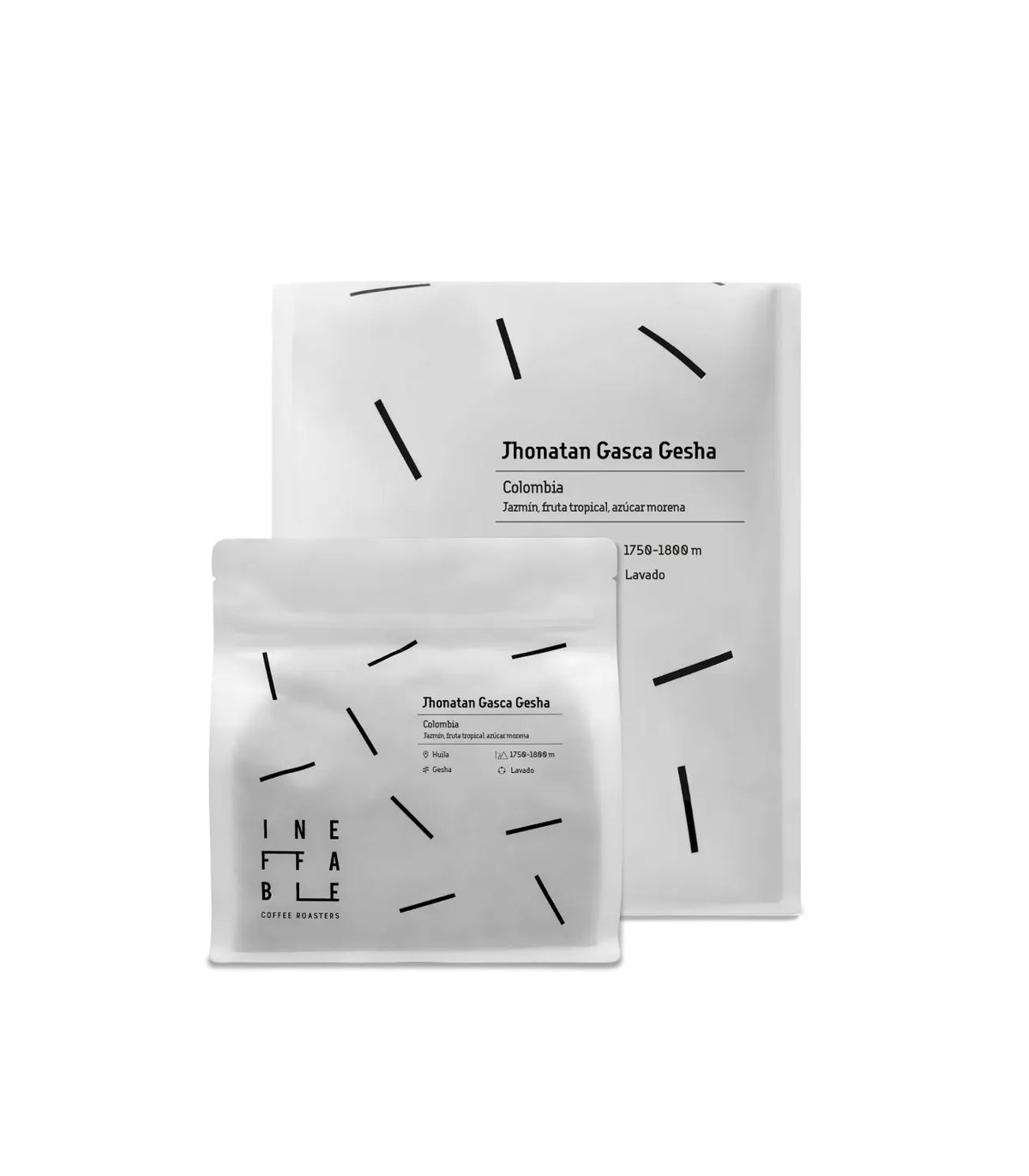
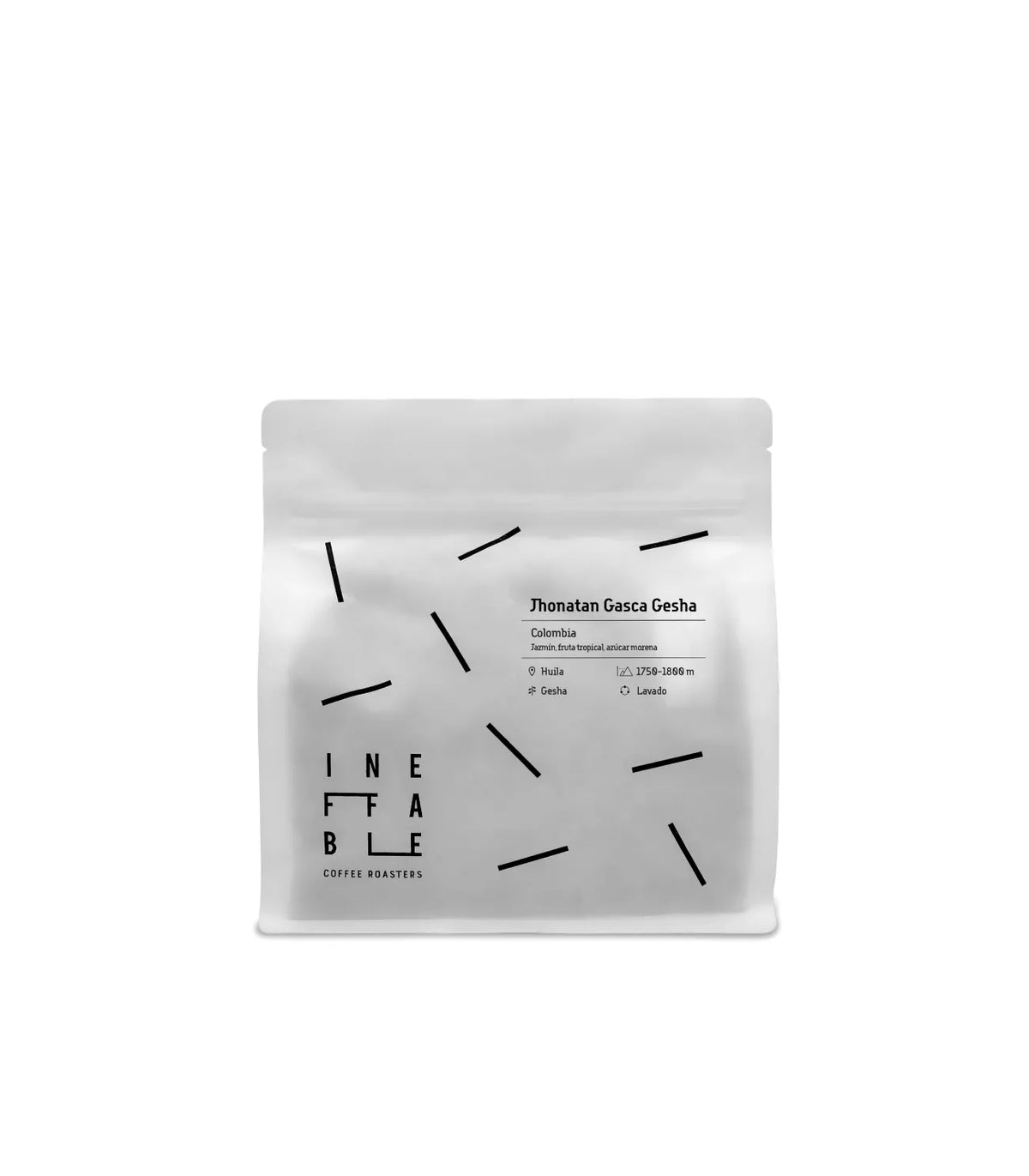
Among its coffees is this Gesha, a variety renowned for its extraordinary aromatic complexity and elegance in the cup.
The cherries are selectively harvested when they reach optimal ripeness and undergo controlled fermentation, followed by a thorough washing process that enhances the coffee’s cleanliness and definition.
Slow, controlled drying helps stabilise the sugars and preserve its juicy character before a resting period to balance the acidity.
The result is a transparent and delicate cup, with notes of jasmine, tropical fruit and brown sugar.
Meet the producer
A transparent expression of Colombian Gesha
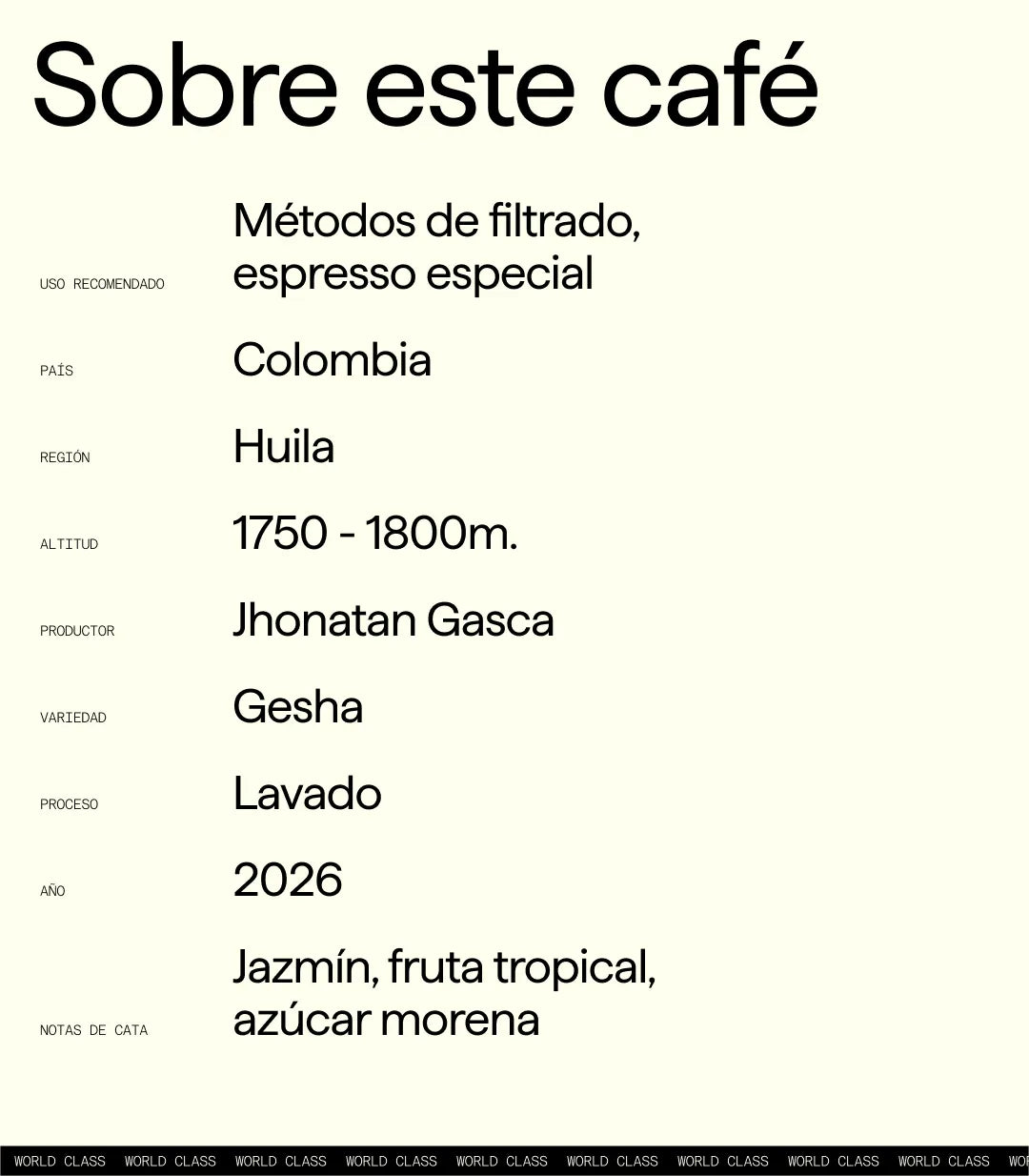
In the mountains of Bruselas, Huila — known as the Coffee Capital of the department — this Gesha from Jhonatan Gasca comes to life, a coffee that speaks both of an extraordinary variety and of a new generation of Colombian producers who understand quality from a broader perspective.
Zarza Coffee is a third-generation family project that began its current phase in 2022, although its roots go back much further. Led by Jhonatan Gasca, the project combines the knowledge accumulated by the family with a contemporary approach to coffee production. Quality, traceability and innovation are part of the same idea: producing coffees capable of clearly expressing the place they come from while taking the potential of each lot a little further.
The name itself, Zarza, is linked to the Gasca family name and represents this connection between family, territory and project. But the farm does not revolve solely around coffee. The family also incorporates beekeeping into its agricultural activities, creating an ecosystem that supports biodiversity and gives value back to the land. It is a way of understanding production in which coffee is part of something larger.

The potential of an extraordinary variety
For this lot, Jhonatan works with Gesha, one of the most recognisable varieties in specialty coffee thanks to its immense aromatic potential and profiles that can be extraordinarily floral, fruity and delicate.
Grown between 1,750 and 1,800 metres above sea level, the coffee is selectively harvested, choosing only fully ripe cherries. The goal is simple: to start with raw material that is as homogeneous and expressive as possible.
A carefully designed washed process then seeks to preserve precisely what makes Gesha special. Controlled fermentation is aimed at maintaining clarity and aromatic definition, while slow and stable drying helps preserve its sugars and that juicy sensation found in the cup. After drying, the coffee rests so that its different elements can find balance.
Rather than transforming the variety’s character, the process seeks to let it speak for itself.

A clean, floral and juicy cup
In the cup, we find a particularly transparent interpretation of Gesha. The profile begins with high, bright acidity and a citrus character, with notes reminiscent of grapefruit and orange. On this foundation comes a sweeter, fruitier layer, with peach and a sensation reminiscent of brown sugar.
The body is light to medium, but far from excessively delicate: it has a juicy, silky texture that complements the acidity and keeps the coffee vibrant. On the finish, its cleanliness becomes particularly evident, with a lingering sweetness and a citrus character that remains for a long time.
This is a coffee to slow down and focus on the details. To discover how such an expressive variety can find, through a washed process, the space it needs to show its cleanest and most precise side.
That is why, although it works particularly well with filter methods, it is also worth exploring as a special espresso. An elegant, bright and defined Colombian Gesha, where jasmine, tropical fruit and brown sugar meet juicy acidity and a delicate structure.

Special Process Coffees Filter
The following recipe is a guide designed for brewing coffee at home. Results may vary depending on your equipment, settings, and all the variables that influence extraction.
With each coffee we roast, our team conducts tests to find a recipe that highlights all the coffee's qualities. The one you'll see below includes all the necessary information to reproduce it. Even so, we always recommend trying and experimenting to discover what you like best: use it as a guide and adapt it to your liking.
Remember: the journey is more important than the destination.
To consider: Water is the most important factor for achieving a great cup of coffee. Depending on where you live, its composition can vary drastically. Therefore, we recommend using at least filtered water; another option is a mixture of Bezoya and Lanjarón. When adjusting the recipe, change only one variable at a time to be able to identify how it influences the flavor.
It's common to start by adjusting the coffee-to-water ratio. Once you get a cup with a pleasant intensity and mouthfeel, you can modify other aspects of the extraction.
Most pour-over coffee recipes use a ratio between 1:15 and 1:17, with a brew time of between 2:30 and 4:30 minutes.
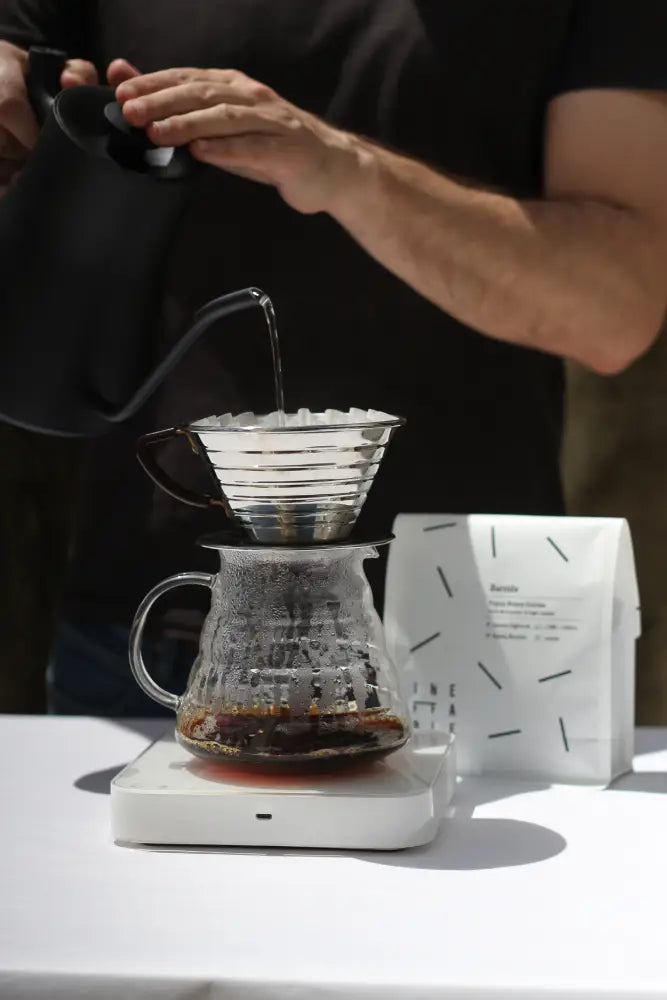
Kalita / Origami / Orea
We have chosen this method to share our recipes because it is very versatile and easy to adapt to other pour-over systems. The flat bottom and wavy folds of Kalita filters create a wide surface that prevents significant flow blockages caused by the migration of fine particles or clogging.
Kalita/Origami/Orea
Recipe:
- Ratio: 1:17
- Coffee: 20g
- Water: 340g
- Total time: 3:20-3:50min
- Temperature: 94ºC
Variables:
- Resting time: Minimum 8 days after roasting, but best expressed after 12-20 days.
- Water: 100% Bezoya
- Filter: Kalita 185
Equipment:
Kalita/Origami/Orea, Kalita filter, Scale, timer, grinder, cup/decanter, and gooseneck kettle.
Method:
- Place the Orea in a cup/decanter and insert the filter. Pour hot water to eliminate the paper taste and preheat the equipment.
- Grind the coffee to your recommended level.
- Discard the water and place the Orea on the scale. Add the coffee, distributing it evenly. Tare the scale and start the timer.
- Pour 60g of water in circular motions and wait 30-40 seconds for the coffee to degas. If the coffee has been recently roasted, allow more time.
- Slowly pour water until you reach approximately 200-250g, and swirl the Orea once to level the coffee bed and ensure it is fully saturated with water. Never fill to the brim; leave at least a 2 cm space from the top to limit water bypass through the coffee bed, which reduces extraction.
- Continue pouring water slowly as before until you have added the required amount of water.
- Swirl one last time and let the water drain.
- We are aiming for a total time according to the recipe. Adjust the grind size if necessary next time.
Espresso
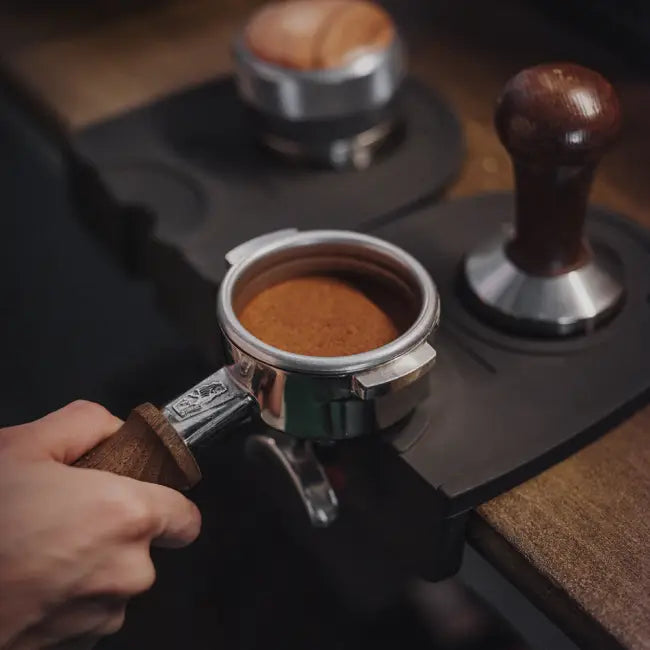
Here's our most up-to-date recipe. It's important to remember that this recipe is a reference and that many variables will influence the final result of the espresso in your cup: from the condition of your machine and grinder, the water you use, the storage/brewing time of your coffee, to the temperature/pressure, etc. Therefore, you may need to adjust some parameters to achieve a flavorful and balanced espresso based on your specific needs and equipment.
Recipe:
- Ratio: 1:2.1
- Dry: 18gr
- In cup: 38gr
- Time: 30-36s
Variables:
- Resting time: minimum 2 weeks
- Temperature: 94ºC
- Pressure: 6 bars
- Pre-infusion: No
- GH 60 (ppm as CaCO3) KH 30 (ppm as CaCO3)
Machinery and equipment used for this recipe:
- Espresso machine: La Marzocco PB 2GR
- Grinder: Mahlkonig
- Scoop: 22gr VST (without slot)
- Extras: Barista Hustle WDT, Push Tamper (flat, 100% level)
Cold brew
[ Watch the recipe video ]
When making Cold Brew, we typically make larger quantities than with other brewing methods. So, we're providing a recipe for one liter of Cold Brew. If you want to make more or less than this amount, the ratio is 1:14; 1g of coffee for every 14g/ml of water.
Recipe and equipment:
Preparation:
- Grind the coffee to a medium/coarse grind
- Place the coffee directly into the filter of the pitcher or bottle
- Pour the pre-weighed water into the pitcher or bottle
- Stir gently to saturate all the coffee
- Cover the container
- Let it steep for 16-24 hours in the refrigerator (be careful with strong odors!)
- After this steeping time, remove the filter with the coffee, and it's ready.
BONUS:
Bonus 1:You can do an additional filtration with a V60 paper filter, Kalita, cheesecloth, or something similar to get a cleaner and clearer result.
Bonus 2:For the best flavor, consume as soon as it's ready, as it will oxidize over time.
Bonus 3:Do not shake or press the coffee to avoid extracting bitter flavors or sediment.
Bonus 4:You can freeze Cold Brew into ice cubes and use them to chill your Cold Brew or for making other drinks.
Bonus 5:Food safety: wash your hands and utensils properly. Keep for a maximum of 3 days in the refrigerator in a glass container, preferably closed and without additives (sugar, milk, etc.).