
Skip to content

Free shipping on orders over €40 for Spain (Peninsula), Balearic Islands and Portugal. Shipped within 24/48h Mon-Fri

Free shipping to Europe on orders over €99

Cart

Your cart is empty

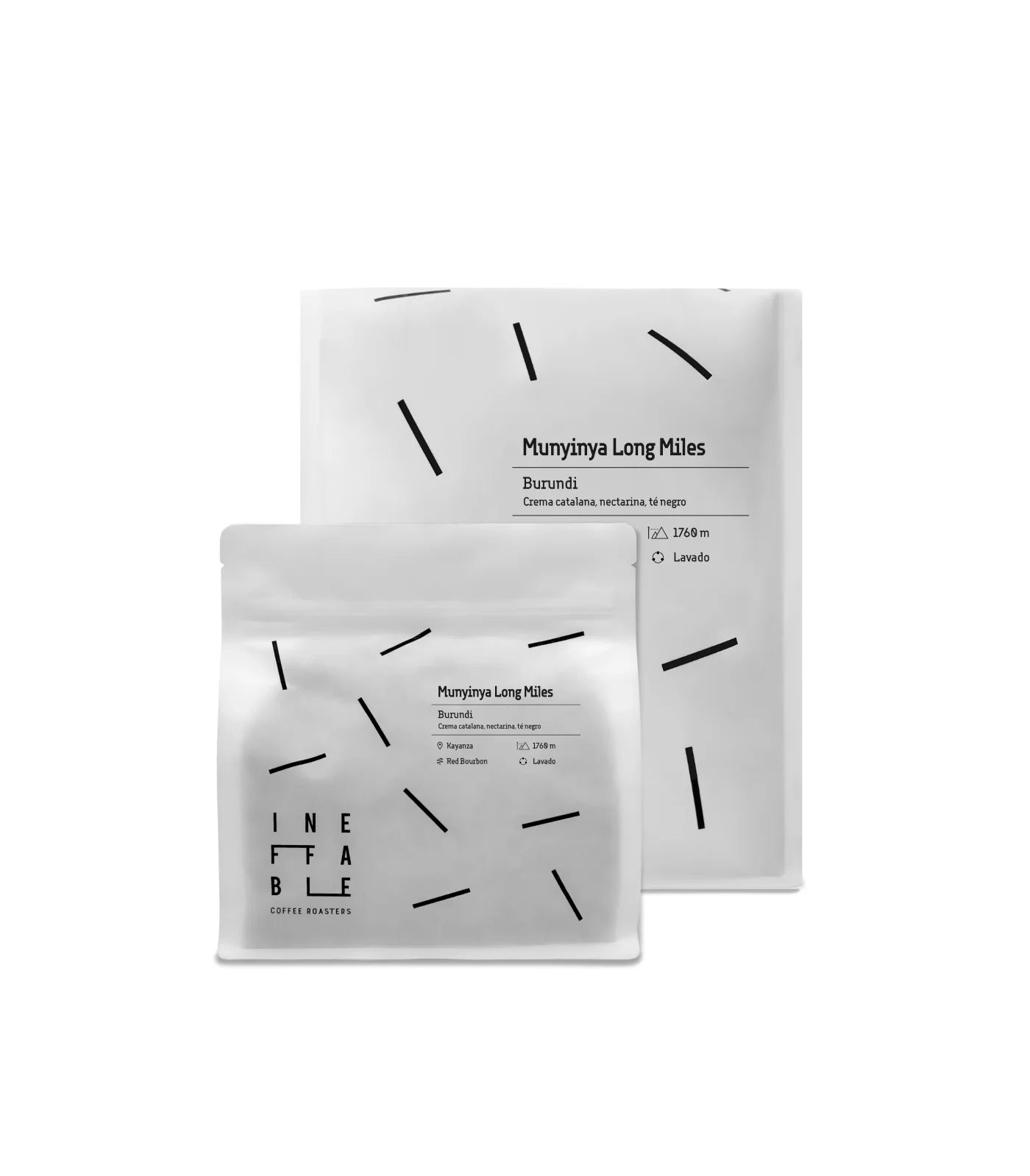
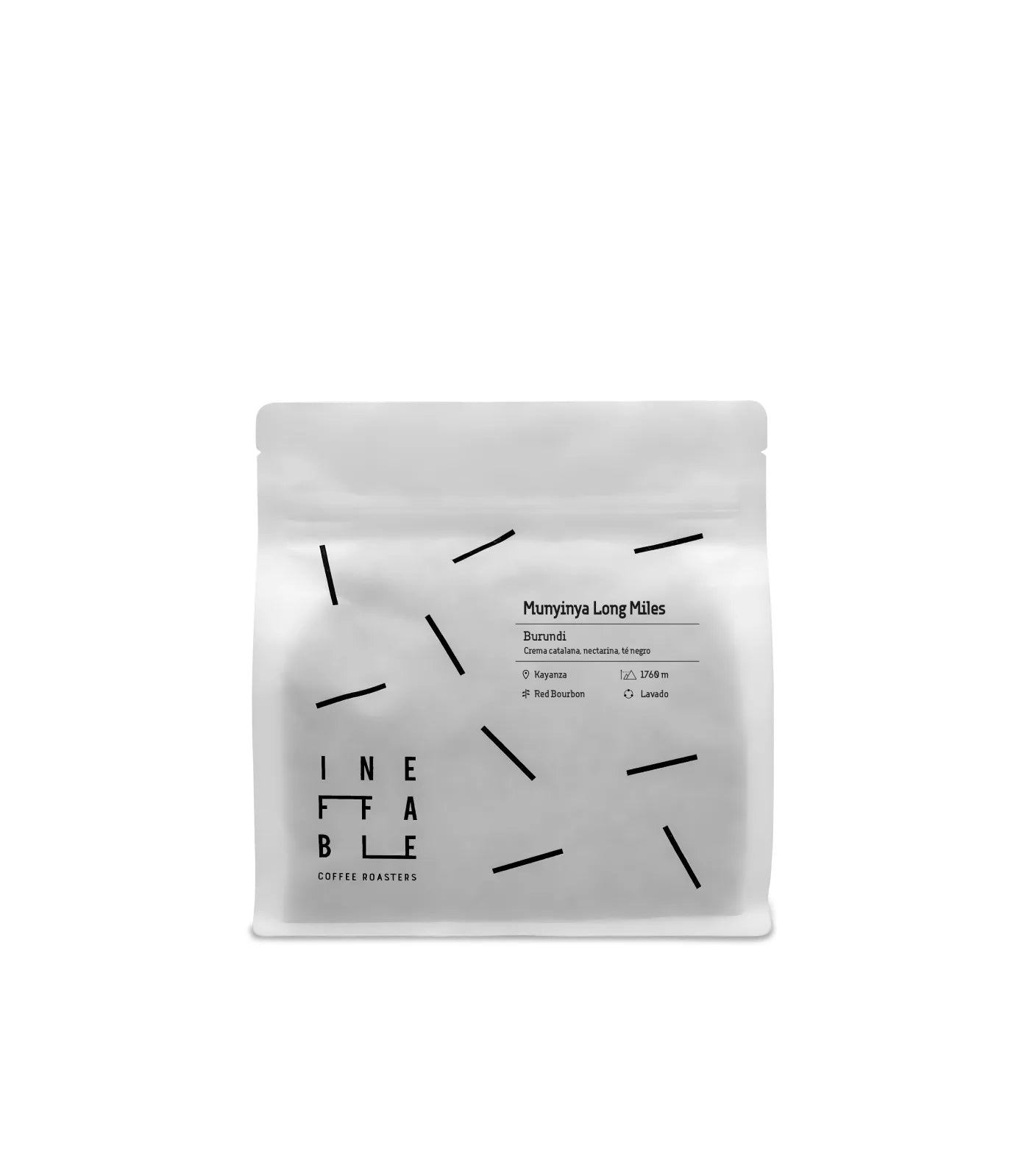
Munyinya Long Miles

Sale price22,00€

Munyinya comes from the small producers surrounding Bukeye, the village where Long Miles Coffee built its first washing station in 2013.

This washed coffee stands out in the cup with sweet notes of crema catalana. Fruity base of nectarine and lemonade with a sweet black tea undertone. Lingering finish with juicy acidity and a silky body. 

Format:

Format:

Whole bean-Ground:

Whole bean-Ground:

Whole bean-Ground:

Cantidad

Munyinya Long Miles
Munyinya Long Miles Sale price22,00€

Reviews of our product

Fresh seasonal coffee

Freshly roasted in Seville

Eco-Friendly Packaging

Fair price

Caution to producers

Traceability from farm to cup

Learn more about the product

Learn more about this coffee.

Munyinya comes from the smallholder farmers surrounding Bukeye, the village where Long Miles Coffee Project built its first washing station in 2013. 

Since then, Bukeye has become a hub of agricultural innovation: it is here that the Coffee Scouts programme was born, a team working alongside local agronomists to improve coffee quality through organic pest control, post-harvest pruning, and fertilisation and mulching campaigns.

The washed process follows Burundi’s traditional method: cherries are carefully sorted and floated before pulping, then dry-fermented for around 12 hours. This is sometimes followed by the distinctive “footing”, where a team gently agitates the parchment with their feet to remove any remaining mucilage.

After a slow drying period of 16–20 days on raised African beds, the result is a clean, vibrant Red Bourbon, with notes of crème brûlée, nectarine and black tea.

Meet the producer

Munyinya Long Miles: innovation and tradition in the heart of Burundi

In the north of Burundi, in Kayanza Province, lies the small village of Bukeye. At 1,760 metres above sea level, this mountainous region offers ideal conditions for producing high-quality coffee: altitude, fertile soils and a climate that encourages slow cherry maturation. It is here that Munyinya Long Miles is born — a washed Red Bourbon that reflects both the potential of its origin and the commitment of an entire community.

Bukeye holds a special place within Burundi’s coffee landscape. In 2013, Long Miles Coffee Project built its first washing station here: Bukeye Washing Station. Since then, it has become a true hub of agricultural innovation. What began as a processing site quickly evolved into a comprehensive model focused on quality improvement, traceability and long-term farmer support.

One of the key pillars of this work is the Coffee Scouts programme — a team of fifteen, led by Tite Ndayisenga, working alongside local agronomists. Their role goes far beyond quality control. They train farmers in best agricultural practices, lead organic composting initiatives and coordinate post-harvest pruning, fertilisation and mulching campaigns. They have also implemented an organic pesticide programme targeting antestia, the colourful insect associated with the notorious “potato defect”. The aim is clear: to raise quality standards from the very roots of production.

Munyinya is composed of lots from smallholder farmers who deliver their cherries to the station throughout the harvest season, which typically runs from April to June. Each delivery is recorded through a farmer card system, allowing the coffee to be traced right down to hillside level. This traceability ensures transparency and makes it possible to identify and reward those producing the highest quality cherries.

The processing method follows Burundi’s traditional fully washed approach. Upon arrival, cherries are carefully sorted and floated to remove lower-density fruit. After pulping, the parchment undergoes around twelve hours of dry fermentation. At times, the distinctive “footing” takes place: a team gently agitates the coffee by foot to help remove any remaining mucilage. The parchment is then rinsed with clean water — sourced from the station’s own borehole and granite-filtered well — graded by density and soaked once more before drying.

Drying is equally meticulous. The parchment first spends between six and forty-eight hours on covered pre-drying tables, where it is hand-sorted to remove any visible defects. It is then transferred to traditional African raised beds, where it dries slowly for sixteen to twenty days, depending on weather conditions, until it reaches a target moisture level of 10.5%. This slow drying process is essential in preserving clarity and vibrancy in the cup.

The result is a clean, expressive Red Bourbon that speaks of careful craftsmanship at every stage. In the cup, it reveals bright sweetness reminiscent of crème brûlée, a fruity base of nectarine and a delicate black tea finish. The acidity is juicy, the body silky, and the aftertaste elegant and lingering.

Behind every cup of Munyinya are 113 dedicated people working both during and beyond harvest season, many of them women devoted to meticulous parchment selection. It is a coffee that expresses not only its origin, but also a story of collaboration, innovation and long-term commitment to quality — a journey that begins in the hills of Kayanza and ends, finally, in your cup.

Recetas para este café

Filter for Munyinya

The following recipe is a guide intended for preparing coffee at home. Results may vary depending on your equipment, settings, and all the variables that influence extraction.

With every coffee we roast, our team conducts tests until we find a recipe that highlights all the coffee' qualities. The one you'll see below includes all the necessary information to reproduce it. Even though, we always recommend trying and experimenting to discover what you like the most: use it as a guide and adapt it to your own taste.

Remember: it's the journey that matters, not the destination.

Important note: Water is the most important factor in achieving a great cup of coffee. Depending on where you live, its composition can vary drastically. Therefore, we recommend using at least filtered water; another option is a blend of Bezoya and Lanjarón. When adjusting the recipe, change only one variable at a time to identify how it affects the flavor.

The common approach is to start by adjusting the coffee-to-water ratio. Once you achieve a cup with a pleasant intensity and mouthfeel, you can modify other aspects of the extraction.

Most percolation coffee recipes use a ratio between 1:15 and 1:17, with a brewing time of between 2:30 and 4:30 minutes.

Kalita / Origami / Orea

We've chosen this method to share our recipes because it's very versatile and easy to adapt to other percolation systems. The flat bottom and wavy pleats of Kalita filters create a large surface area that prevents significant flow blockages caused by the migration of fine particles or clogging.

Kalita/Origami/Orea

Recipe:

  • Ratio: 1:17
  • Coffee: 20g
  • Water: 336g
  • Total time: 4:00 min
  • Temperature: 98ºC
  • Grinder: EK43 8.5 (SSP low fines Burrs)
  • TDS 1.43% EY 20.72%

Variables:

  • Resting time: Minimum 7 days after roasting, but it's best expressed from 10-15 days onwards. In case the bag has been opened previously, it'll be best expressed a bit earlier.
  • Water: Bezoya 1:2 Lanjarón
  • Filter: Sibarist B3

Equipment:

Orea, Sibarist B3 filter, scale, stopwatch, grinder, cup/decanter and kettle (gooseneck).

Method:

  1. Place the Orea in a cup/decanter and place the filter. Pour hot water over it; water eliminates the paper taste and preheats the equipment.
  2. Grind the coffee to the size we recommended.
  3. Discard the water and put the Orea on the scale, add the coffee distributing it evenly, tare the scale and start the timer.
  4. Pour 60g of water in a circular way and wait 30-40 seconds for the coffee to degas. If the coffee has been recently roasted, give it more time.
  5. Pour over it slowly approximately 200-250g of water and spin the Orea once to level the coffee bed and ensure it is fully flooded. Do not fill to the brim; leave at least 2cm of space from the top to limit water flow through the coffee bed, which would reduce extraction.
  6. Continue pouring water slowly as previously said until you have added the required amount of water.
  7. Spin it one last time to let the water go down.
  8. We are looking for a total time (given above) according to the recipe, adjust the grind size if necessary next time.

Espresso

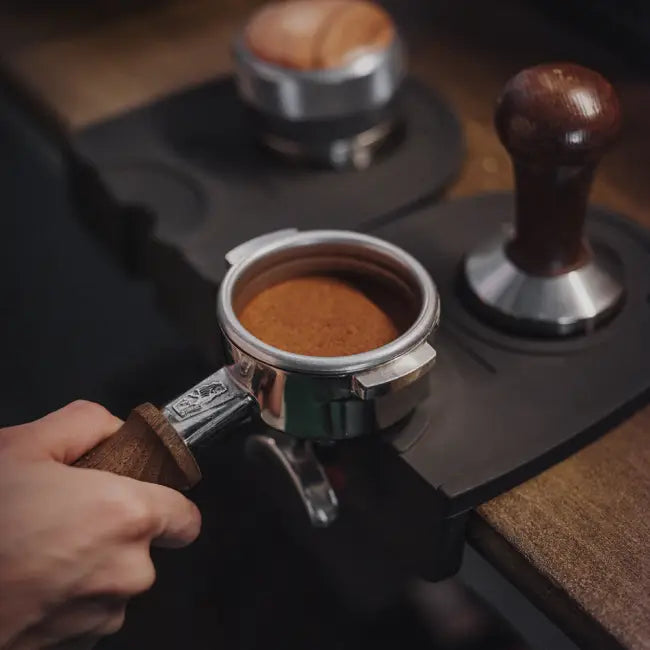
Here's our most up-to-date recipe. It's important to remember that this recipe is a reference and that many variables will influence the final result of the espresso in your cup: from the condition of your machine and grinder, the water you use, the storage/steeping time of your coffee, to the temperature/atmospheric pressure, etc. Therefore, you may need to adjust some parameters to achieve a flavorful and balanced espresso based on your specific needs.

Recipe:

  • Ratio: 1:2.2
  • Dry: 18gr
  • In cup: 41gr
  • Time: 30-36s

Variables:

  • Resting time: minimum 2 weeks
  • Temperature: 94ºC
  • Pressure: 6 bars
  • Pre-infusion: No
  • GH 60 (ppm as CaCO3) KH 30 (ppm as CaCO3)

Machinery and equipment used for this recipe:

  • Espresso machine: La Marzocco KB90 2G
  • Mill: Mythos 1
  • Scoop: 22gr VST (without slot)
  • Extras: Barista Hustle WDT, Push Tamper (flat, 100% level)

Cold brew

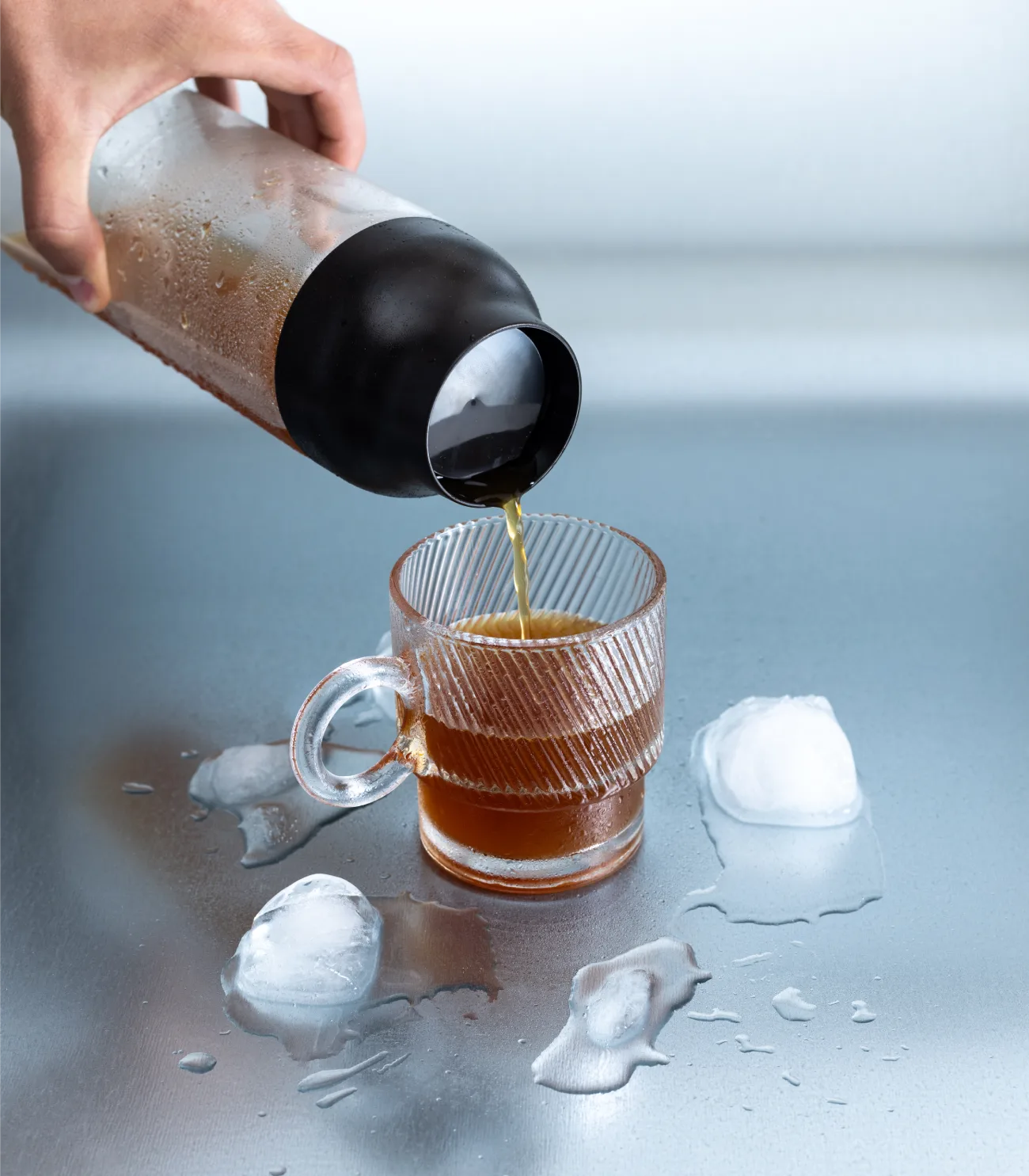
That's the recipe we suggest for making 600ml of cold brew. If you want to make more or less amount, the ratio is 1:15, 1g of coffee for 15g/ml of water.

Recipe and equipment:

  • 40g coffee (Use your preferred coffee depending on your taste. We suggest choosing coffee profiles you like in filter brewing). If it has the "Cold Brew" tag, it's one of our favorites.
  • Grinding: Comandante 16 clicks.
  • Water 600g/ml at room temperature.
  • Water composition: 2 parts Lanjarón and 1 part Bezoya.
  • A mesh or silk.
  • A glass container (preferably with a lid)
  • Let it rest for 22 hours (in the refrigerator).

How to make cold brew:

  • We grind the coffee to a medium ground size (Comandante 16 clicks).
  • We pour the coffee directly into the mesh.
  • We put the mesh into the glass container.
  • We pour the water into the container through the mesh with the coffee.
  • Stir gently to flood all the coffee.
  • We close or cover the container.
  • We leave it rest in the refrigerator (beware of strong smells!).
  • After the resting time, remove the mesh with the coffee and it will be ready.
  • As an extra step, you can filter it again through a V60, Kalita or similar paper filter for a cleaner and clearer result.
  • Keep it refrigerated.
  • This recipe is meant to be undiluted, not even with ice. Adding ice will affect the flavor of your drink, as the water composition will alter the flavor. It's best to make your own ice using the same water composition we suggest. If you do use ice, you might want to lower the ratio (1:9 to 1:12).

Related products

FREE SHIPPING

Spain (Peninsula)

>40€ / Delivery 24/48h LV

Balearics

>40€ / Delivery 3/5 days, LV

Portugal

>40€ / Delivery 3/5 days, LV

Europe

>99€ / Delivery 4/7 days, LV

See more...