
Skip to content

Free Cold Brew ebook with your order

Free shipping on orders over €40 for Spain (Peninsula), Balearic Islands and Portugal. Shipped within 24/48h Mon-Fri

Free shipping to Europe on orders over €99

Cart

Your cart is empty

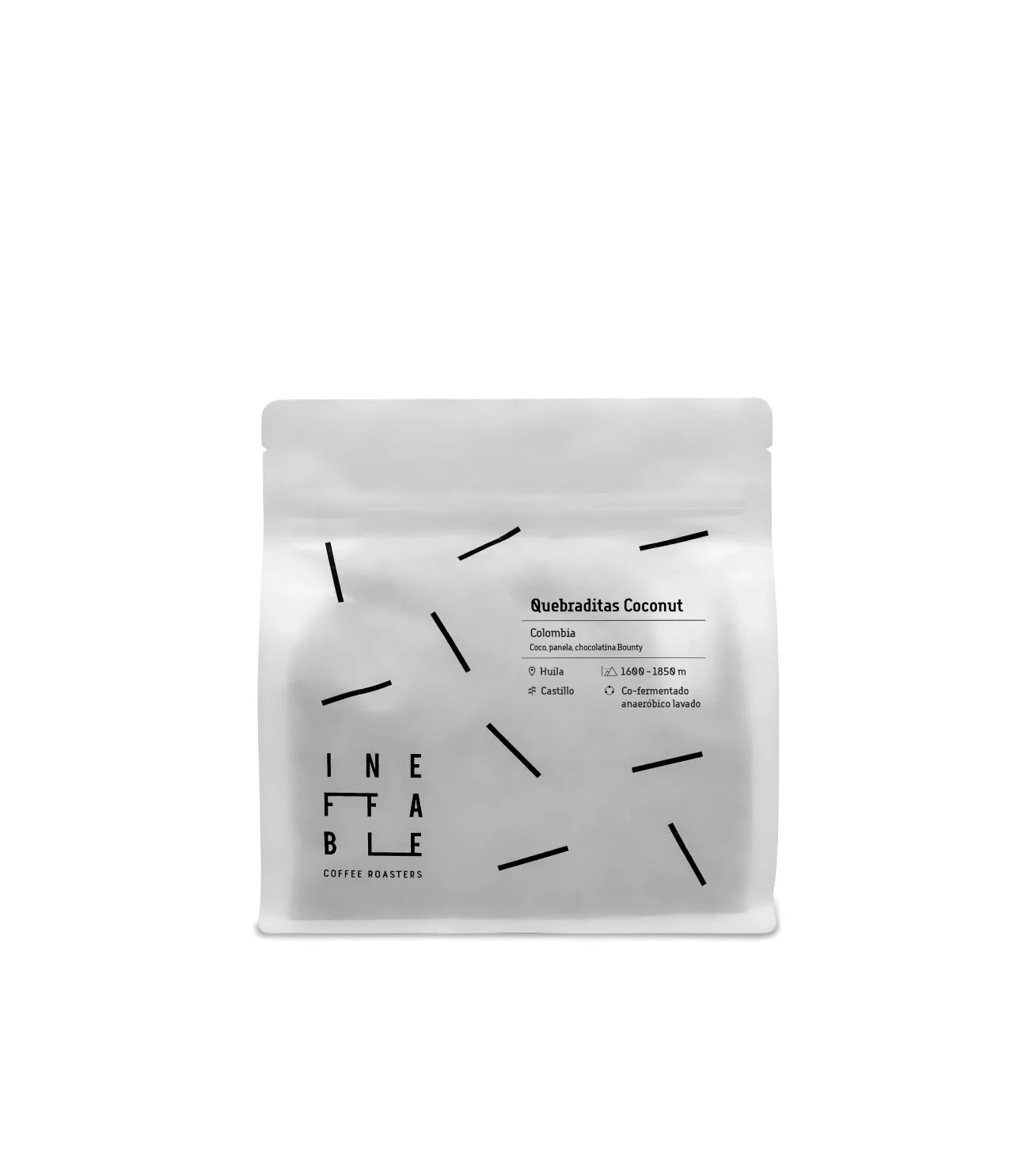
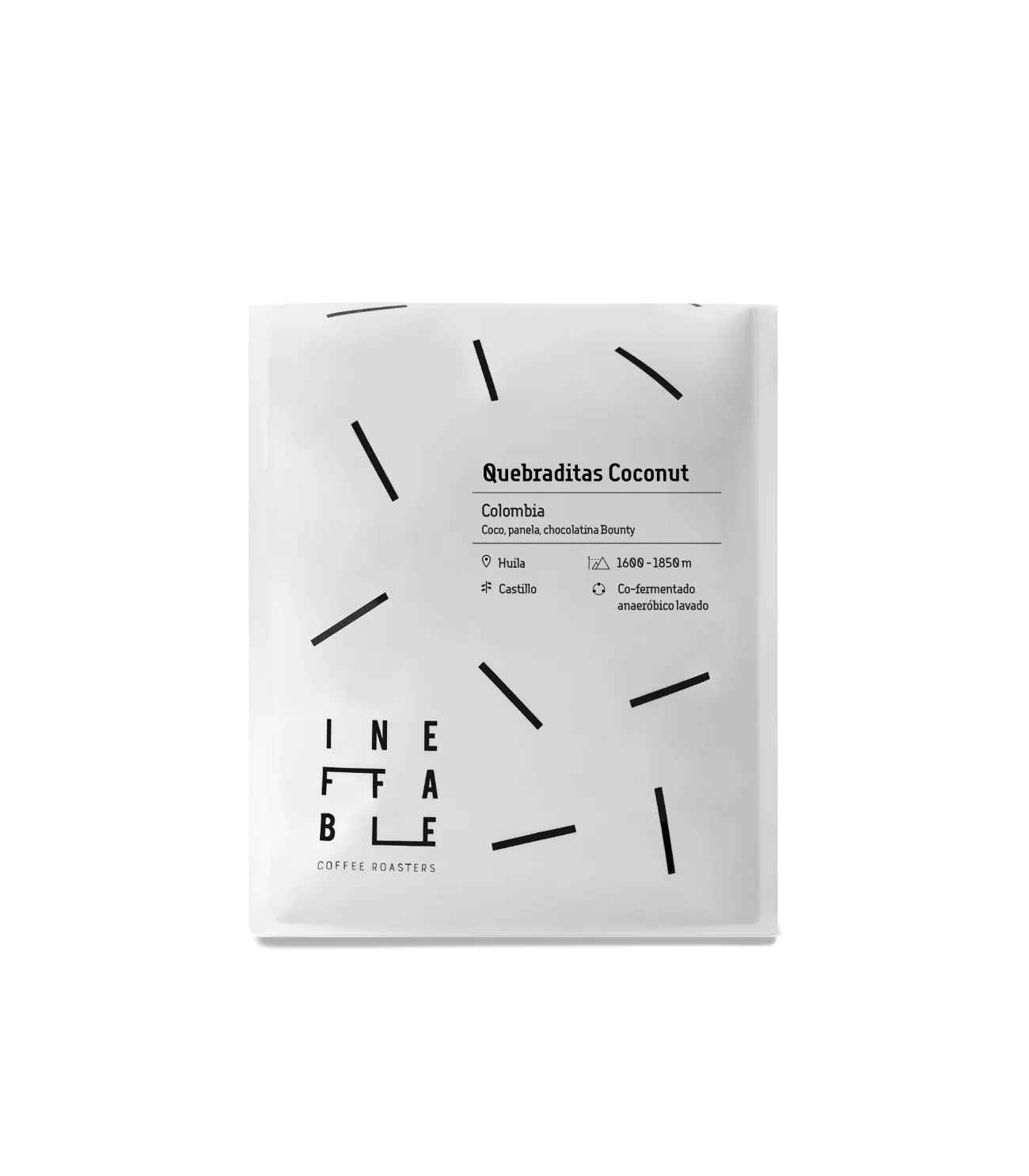
Quebraditas Coconut

Sale price29,00€

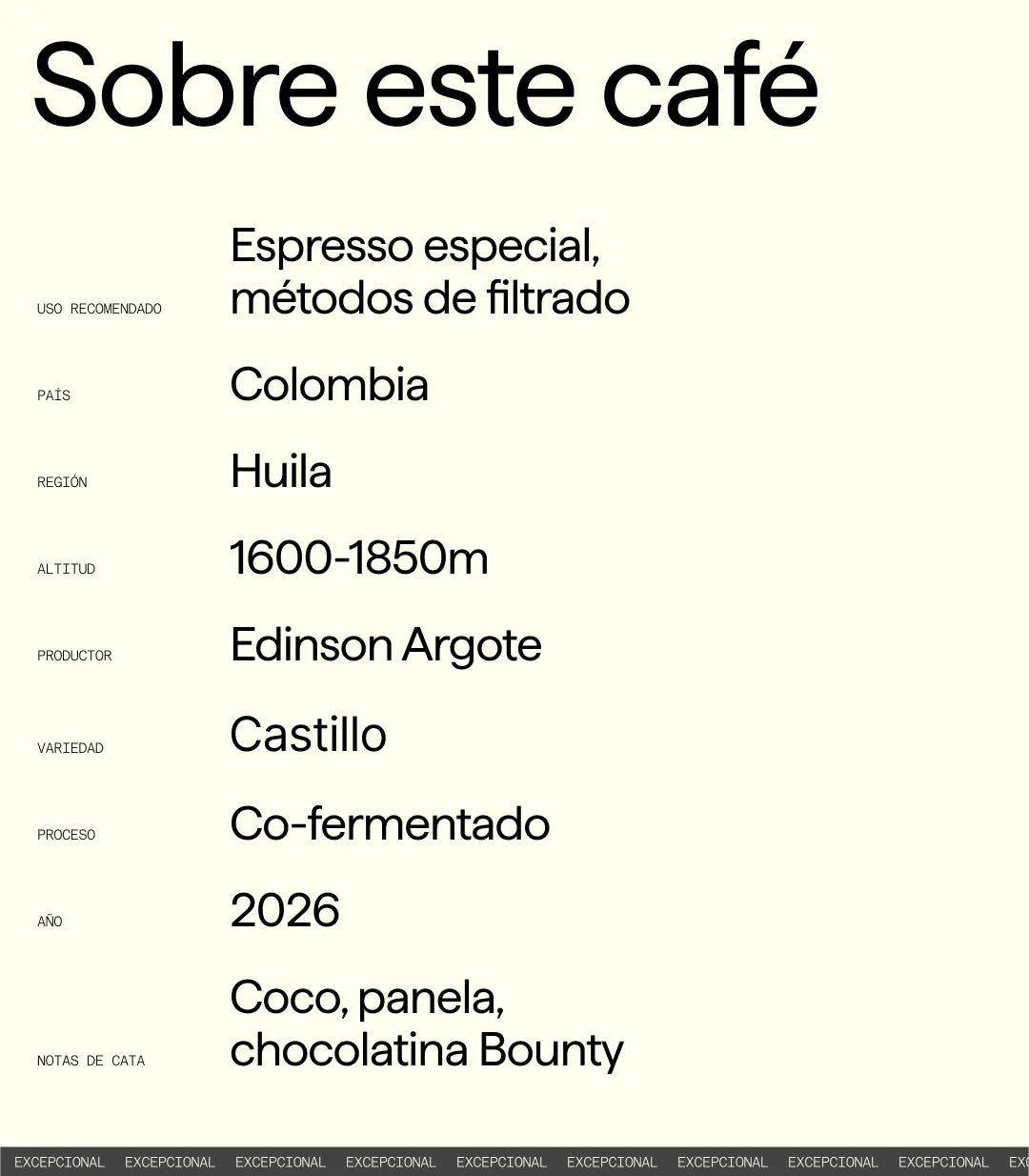
Quebraditas Coffee Farm was founded in Oporapa, Huila, one of Colombia's most renowned coffee-growing regions. There, Edinson Argote and his family have dedicated their lives to coffee, combining tradition and innovation to produce microlots with unique and consistent sensory profiles.

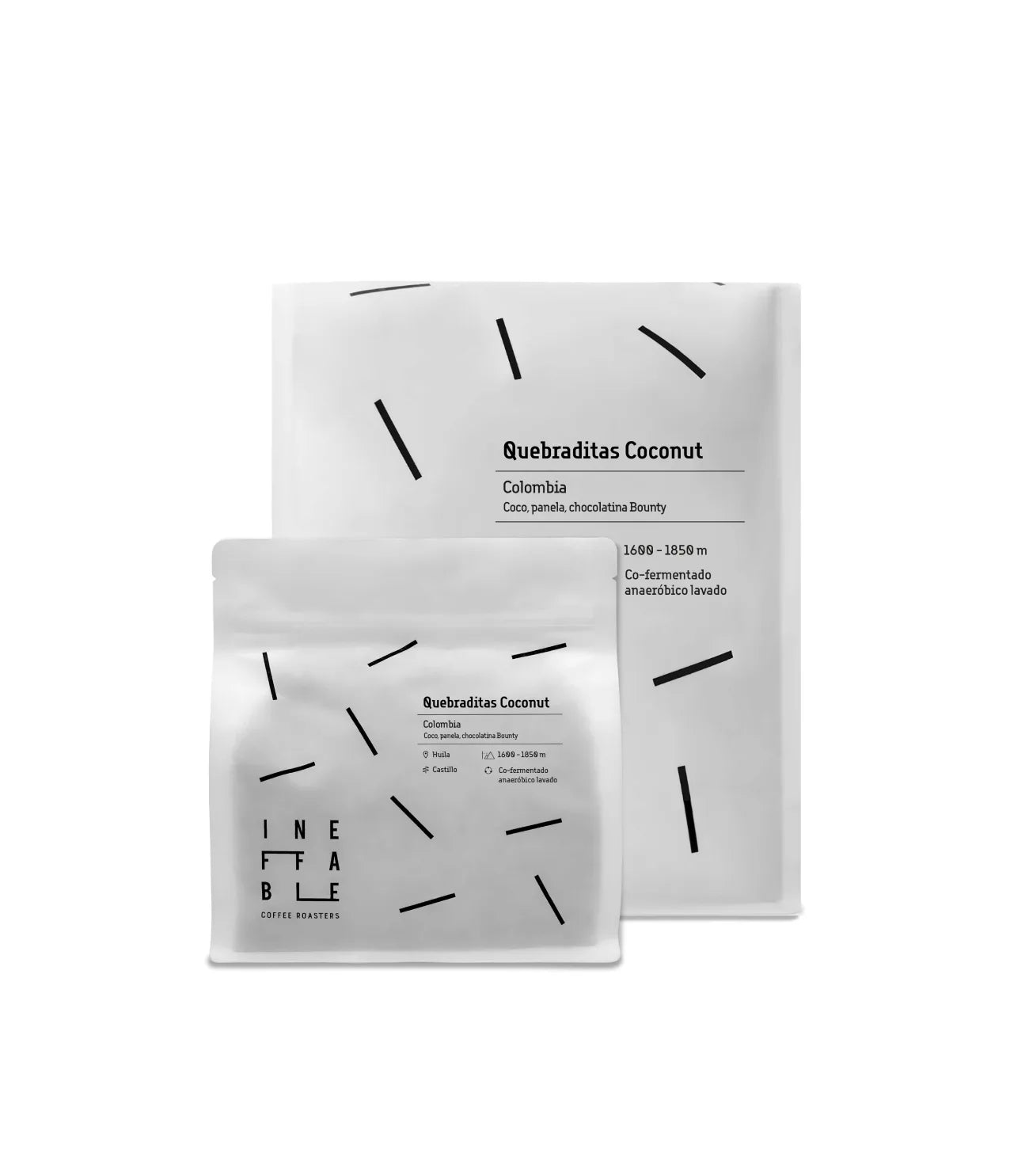
This coffee offers a versatile profile with pronounced sweet notes of coconut and vanilla. A Bounty chocolate base is complemented by rich panela sweetness, leading to a long finish with juicy acidity and a silky body.

Format:

Format:

Whole bean-Ground:

Whole bean-Ground:

Whole bean-Ground:

Cantidad

Quebraditas Coconut
Quebraditas Coconut Sale price29,00€

Reviews of our product

Fresh seasonal coffee

Freshly roasted in Seville

Eco-Friendly Packaging

Fair price

Caution to producers

Traceability from farm to cup

Learn more about the product

Discover this coffee in detail

Quebraditas Coffee Farm was founded in Oporapa, Huila, one of Colombia's most renowned coffee-growing regions. There, Edinson Argote and his family have dedicated their lives to coffee, combining tradition and innovation to produce microlots with unique and consistent sensory profiles.

Their approach is based on advanced controlled fermentation techniques, yeast inoculation and sustainable farm management practices that protect the soil and biodiversity.

This Castillo lot stands out for its co-fermented process, designed to enhance its aromatic intensity and sweetness.

After carefully selecting perfectly ripe cherries, the coffee undergoes a double fermentation: first in the cherry for 24 hours, followed by a 72-hour submerged fermentation with selected yeasts and coconut.

Finally, it is dried under carefully controlled conditions to preserve its full complexity. The result is an exuberant and indulgent cup with notes of coconut, panela and Bounty chocolate.

Meet the producer

When innovation enhances origin

Some coffees stand out for their complexity, while others impress through the clarity with which they express an idea. Quebraditas Coconut belongs to the latter. It is a coffee that embraces innovation without losing sight of its origin, demonstrating that advanced fermentation techniques can be used to enhance the bean's natural qualities rather than mask them.

Behind this lot are Edinson Argote and his family, the producers behind Quebraditas Coffee Farm in Oporapa, Huila. In one of Colombia's most celebrated coffee-growing regions, they have devoted their lives to coffee, growing up among coffee trees and refining a way of working that combines generations of inherited knowledge with a constant pursuit of new possibilities.

Their philosophy is simple: quality begins long before harvest. Every detail on the farm is carefully managed through sustainable practices that protect the soil, encourage biodiversity and allow each harvest to express its full potential. Building on this foundation, they develop microlots with clearly defined sensory profiles, using tools such as controlled fermentation and selected yeast inoculation. Their goal is never to create artificial flavours, but to amplify the coffee's natural characteristics with precision and consistency.

For this Castillo lot, Edinson has chosen a co-fermented process that produces an exceptionally expressive cup. It all begins with the manual selection of cherries at peak ripeness. After an initial fermentation in the cherry, the coffee undergoes a second submerged fermentation with selected yeasts and coconut, a carefully monitored process designed to achieve a clean, intense and perfectly balanced profile. Finally, the coffee is slowly dried under controlled conditions to preserve all the complexity developed during fermentation.

The result is a coffee that is as striking as it is elegant. From the very first aroma, distinct notes of fresh coconut and vanilla immediately evoke a Bounty chocolate bar, while the deep sweetness of panela creates a rich and comforting sensation. What makes this coffee truly special, however, is the way these flavours are balanced by a juicy acidity and a silky body that keep the cup vibrant and harmonious through to the final sip.

Despite its distinctive profile, this coffee never feels overwhelming. The fermentation has been executed with great precision, allowing the origin to remain at the forefront while every nuance finds its place without overpowering the palate. It is precisely this balance between intensity and clarity that makes this lot particularly appealing, both for those who enjoy exploring innovative processing methods and for those seeking something different without sacrificing elegance.

We recommend brewing it both as filter coffee and as espresso. As a filter coffee, it reveals its full aromatic complexity and the delicacy of its tropical notes. As an espresso, it delivers an exceptionally creamy, sweet and lingering cup with a silky texture and a long finish of coconut, panela and chocolate.

Quebraditas Coconut is a perfect example of the current evolution of Colombian coffee: producers who deeply respect tradition while exploring new ways to express the full potential of every harvest. A coffee crafted to surprise from the very first sip and, above all, to demonstrate just how far fermentation can go when it is truly dedicated to quality and origin.

Recetas para este café

Filter

The recipe below is a guideline to follow at home. Results will always vary depending on your own equipment, setup and all the variables that can affect coffee extraction.

Every coffee we roast one of our team will experiment to come up with something we like to drink, below details all the information you need to recreate the recipe, however we always recommend tasting and experimenting to find out what you like, use the following as a guideline and adapt.

It’s the journey not the destination.

Some key things to note: Water is the most important precursor to having a tasty cup of coffee, depending on where you live water composition can vary wildly and for this reason we recommend using filtered water at a minimum, a mixture of Bezoya and Lanjarón water is a better option. When you change any part of the recipe, always change one thing at a time so you know the influence it had on flavour.

Normally we will start by adapting the ratio to our liking first and once we have a brew with a pleasant strength and mouthfeel we can look at the other aspects of the extraction to altar.

Most percolation coffee filter coffees thrive with a ratio between 1:15 and 1:17. Brewed between 2:30 and 4:30.

Kalita/Origami/Orea

We’ve chosen these methods to express our recipes as they are forgiving and easily transferable to other percolation recipes, the flat bottom and crimped sides of the Kalita papers give a large surface area that prevents any major stalling of the flow due to fines migration & clogging.

Kalita/Origami/Orea

Recipe:

  • Ratio: 1:17
  • Coffee: 20gr
  • Water: 340ml/gr
  • Total time: 3:20-4 min
  • Temperature: 94ºC
  • Grinder setting: 21 'clicks' Comandante
  • Measured TDS and extraction yield (EY) of the tested recipe

Variables:

  • Coffee resting time: minimum of 1-2 days peaks after 1-2 weeks
  • Water used: Bezoya 1:2 Lanjarón
  • Paper filter: Kalita 185

Equipment:

Kalita/Origami, Kalita filter, Scales, timer, grinder, mug or decanter, kettle preferably gooseneck.

Method:

  1. Heat the water in the kettle and when hot rinse the paper filter on the origami to remove any paper flavor and preheat the brewer.
  2. Grind the coffee to the recommended size.
  3. Throw away the used water and replace the brewer and distribute the ground coffee in a level bed in the filter, some like to poke a little divit in the top as to aid saturating all the coffee, tare the scales.
  4. Start the stopwatch as you start pouring 60g/ml of water slowly and gently in a circular motion and wait 30-40 seconds for the grounds to degas, being mindful to saturate the entire coffee bed. If the coffee was roasted recently you will notice the bed expanding and you may wish to leave to degas for longer.
  5. Pour the remaining water slowly until you reach 200-250ml/gr, ensure the water never comes above an inch from the top to avoid the water bypassing the coffee and reducing the extraction, pause to let it drain if it comes too high.
  6. Gently and carefully lift and swirl the brewer once to level the bed.
  7. Continue to slowly pour the remaining water and swirl the brewer once to give a good level drawdown.
  8. We are looking for the brew to finish in the time stipulated, adjust the grind size if necessary for the next time you brew.

Espresso

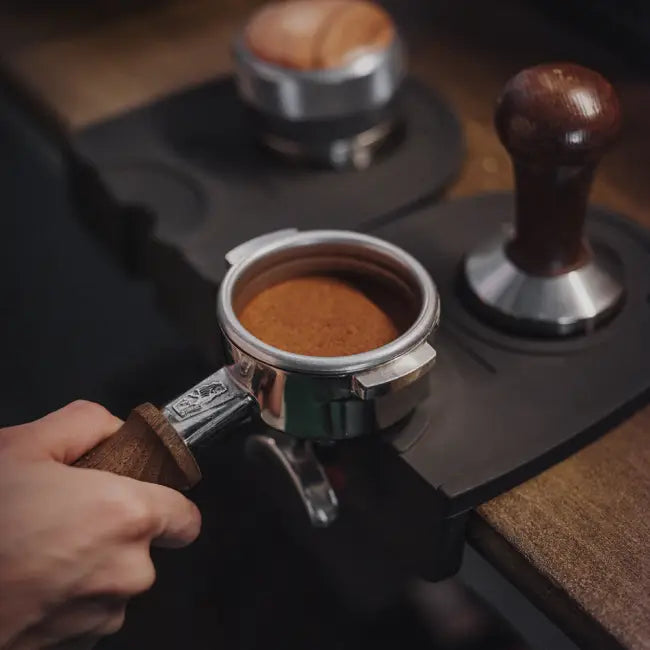
Here's our most up-to-date recipe. It's important to remember that this recipe is a reference and that many variables will influence the final result of the espresso in your cup: from the condition of your machine and grinder, the water you use, the storage/steeping time of your coffee, to the temperature/atmospheric pressure, etc. Therefore, you may need to adjust some parameters to achieve a flavorful and balanced espresso based on your specific needs.

Recipe:

  • Ratio: 1:2.2
  • Dry: 18gr
  • In cup: 41gr
  • Time: 30-36s

Variables:

  • Resting time: minimum 2 weeks
  • Temperature: 94ºC
  • Pressure: 6 bars
  • Pre-infusion: No
  • GH 60 (ppm as CaCO3) KH 30 (ppm as CaCO3)

Machinery and equipment used for this recipe:

  • Espresso machine: La Marzocco KB90 2G
  • Mill: Mythos 1
  • Scoop: 22gr VST (without slot)
  • Extras: Barista Hustle WDT, Push Tamper (flat, 100% level)

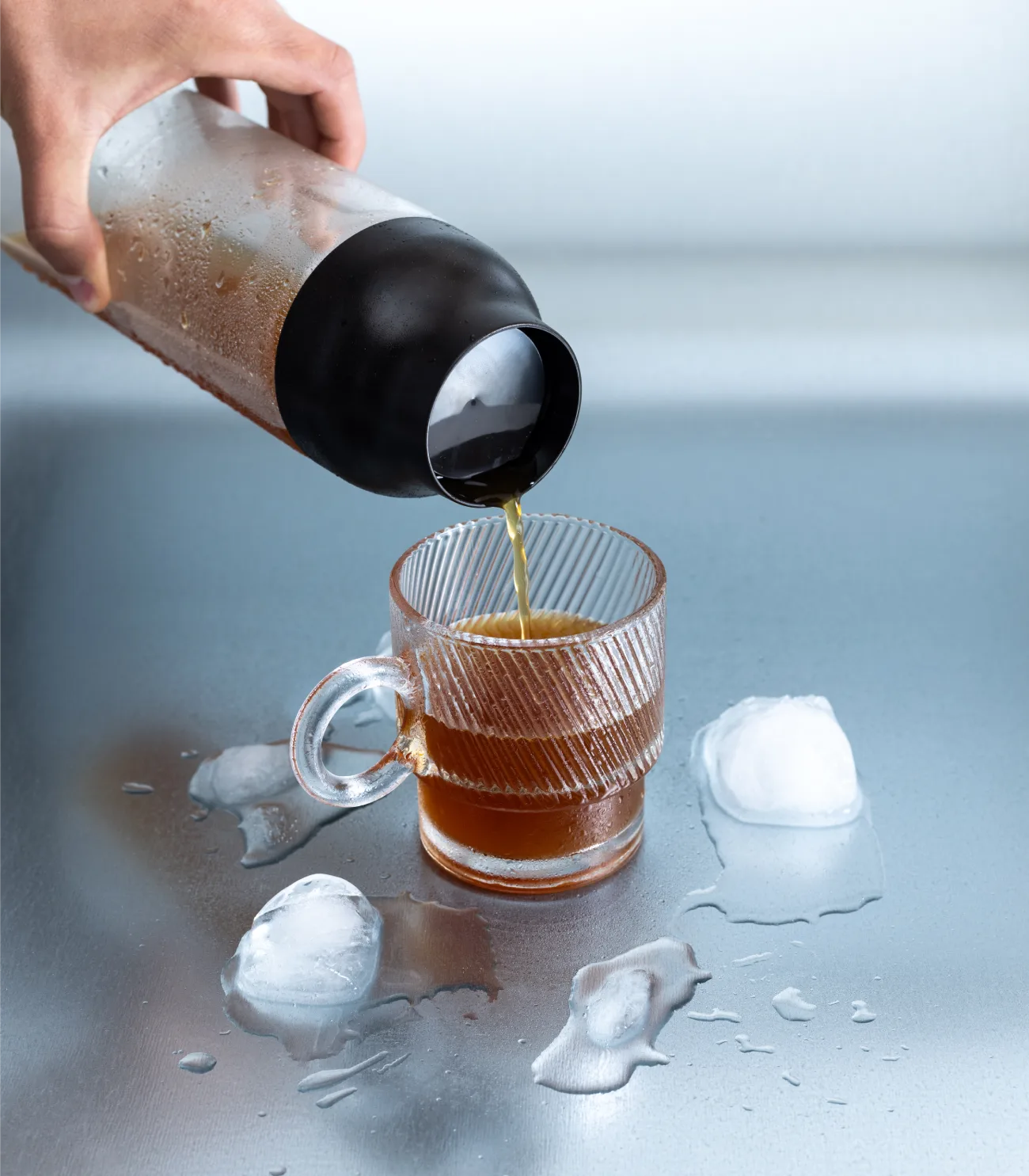
Cold brew

[ Watch the recipe video ]

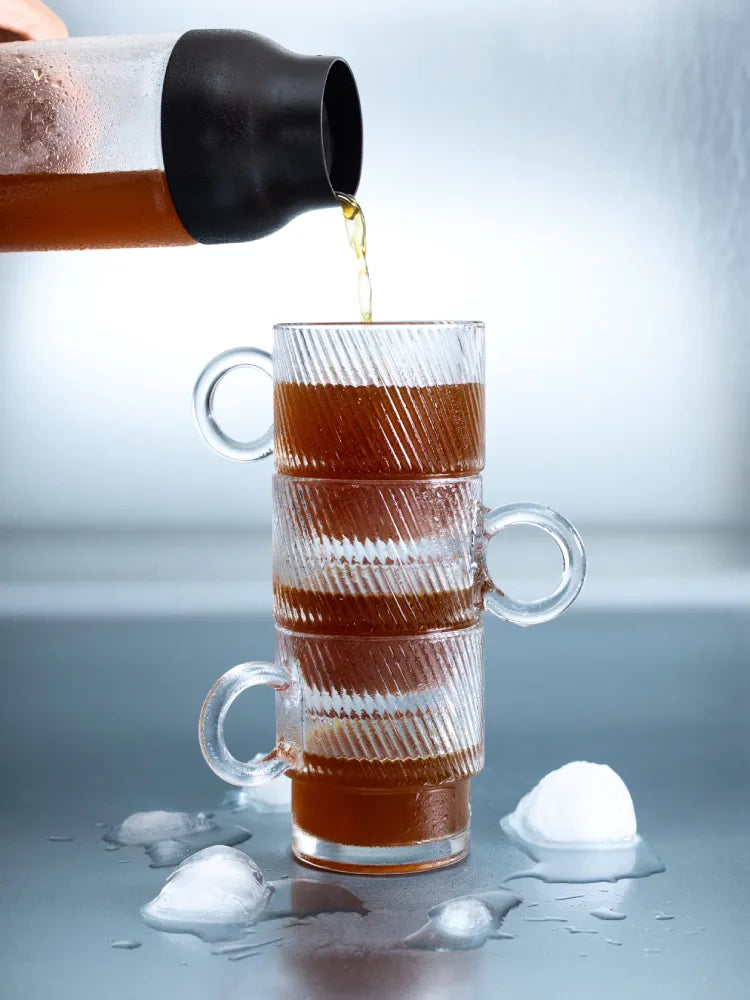
When making Cold Brew, we typically make larger quantities than with other brewing methods. So, we're providing a recipe for one liter of Cold Brew. If you want to make more or less than this amount, the ratio is 1:14; 1g of coffee for every 14g/ml of water.

Recipe and equipment:

Preparation:

  • Grind the coffee to a medium/coarse grind
  • Place the coffee directly into the filter of the pitcher or bottle
  • Pour the pre-weighed water into the pitcher or bottle
  • Stir gently to saturate all the coffee
  • Cover the container
  • Let it steep for 16-24 hours in the refrigerator (be careful with strong odors!)
  • After this steeping time, remove the filter with the coffee, and it's ready.

BONUS:

Bonus 1:You can do an additional filtration with a V60 paper filter, Kalita, cheesecloth, or something similar to get a cleaner and clearer result.

Bonus 2:For the best flavor, consume as soon as it's ready, as it will oxidize over time.

Bonus 3:Do not shake or press the coffee to avoid extracting bitter flavors or sediment.

Bonus 4:You can freeze Cold Brew into ice cubes and use them to chill your Cold Brew or for making other drinks.

Bonus 5:Food safety: wash your hands and utensils properly. Keep for a maximum of 3 days in the refrigerator in a glass container, preferably closed and without additives (sugar, milk, etc.).

Related products

FREE SHIPPING

Spain (Peninsula)

>40€ / Delivery 24/48h LV

Balearics

>40€ / Delivery 3/5 days, LV

Portugal

>40€ / Delivery 3/5 days, LV

Europe

>99€ / Delivery 4/7 days, LV

See more...