Skip to content

Free shipping on orders over €40 to the Peninsula, Balearics and Portugal.

Free shipping on orders over €40 to the Peninsula, Balearics and Portugal.

Cart

Your cart is empty

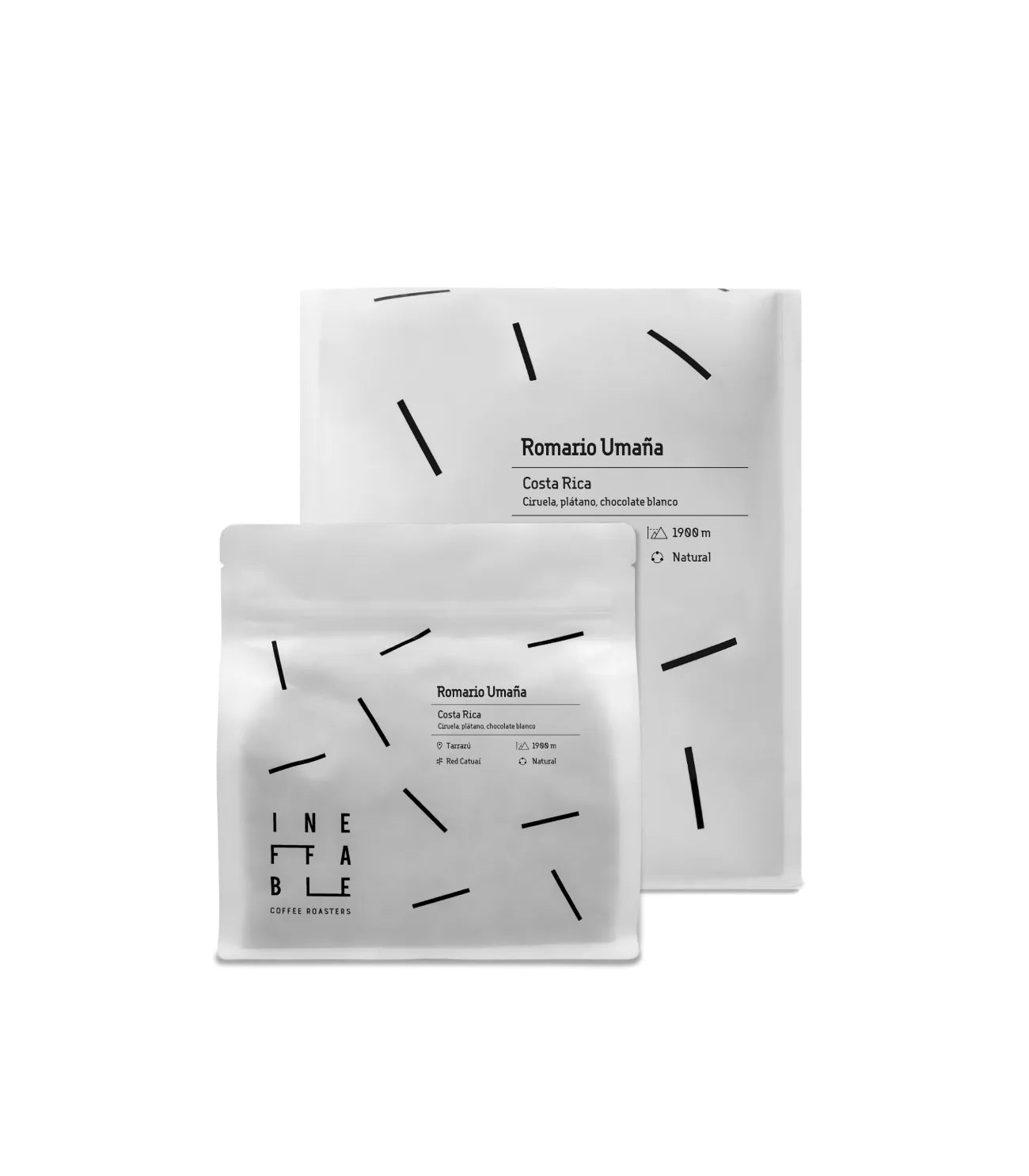
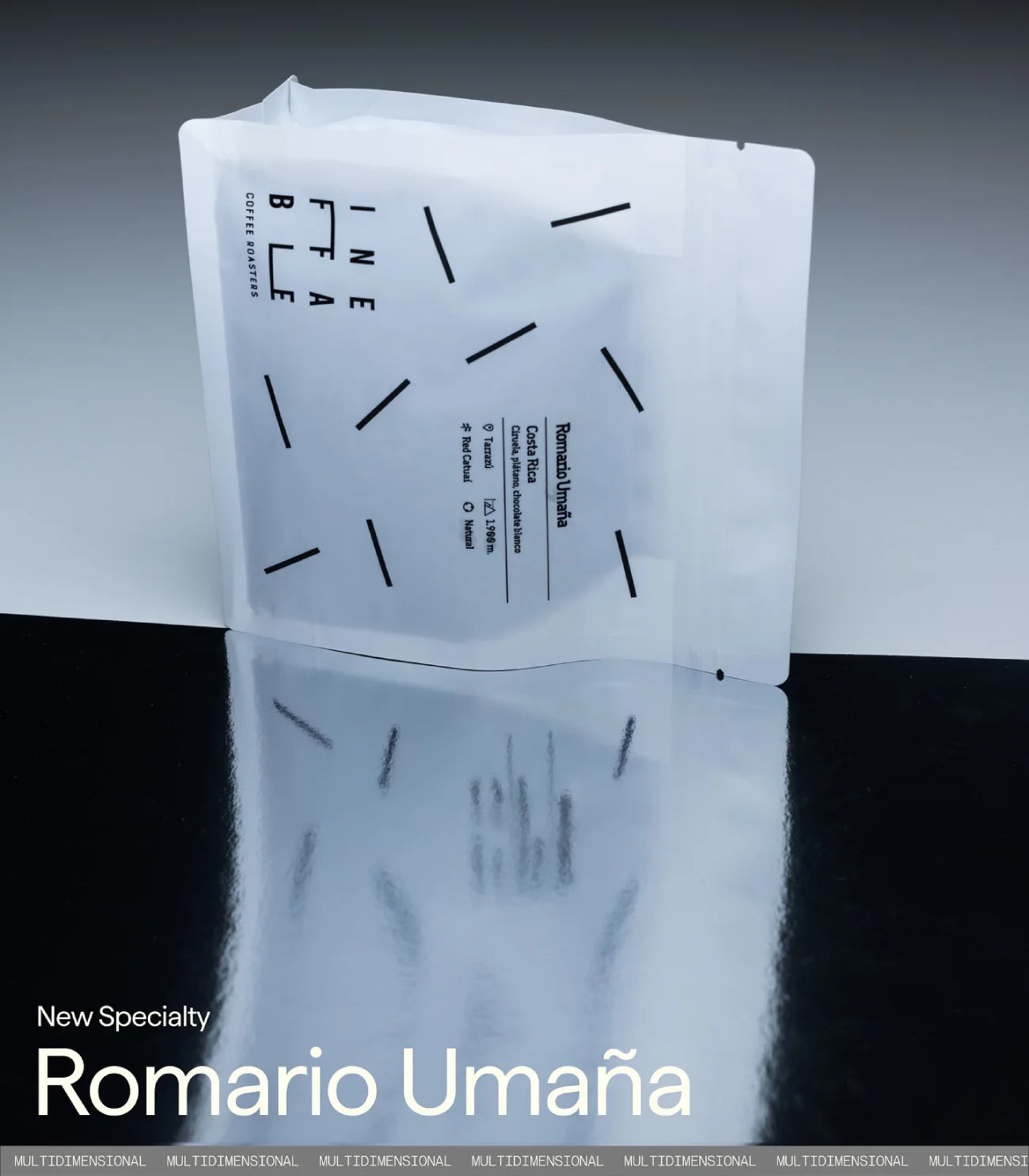
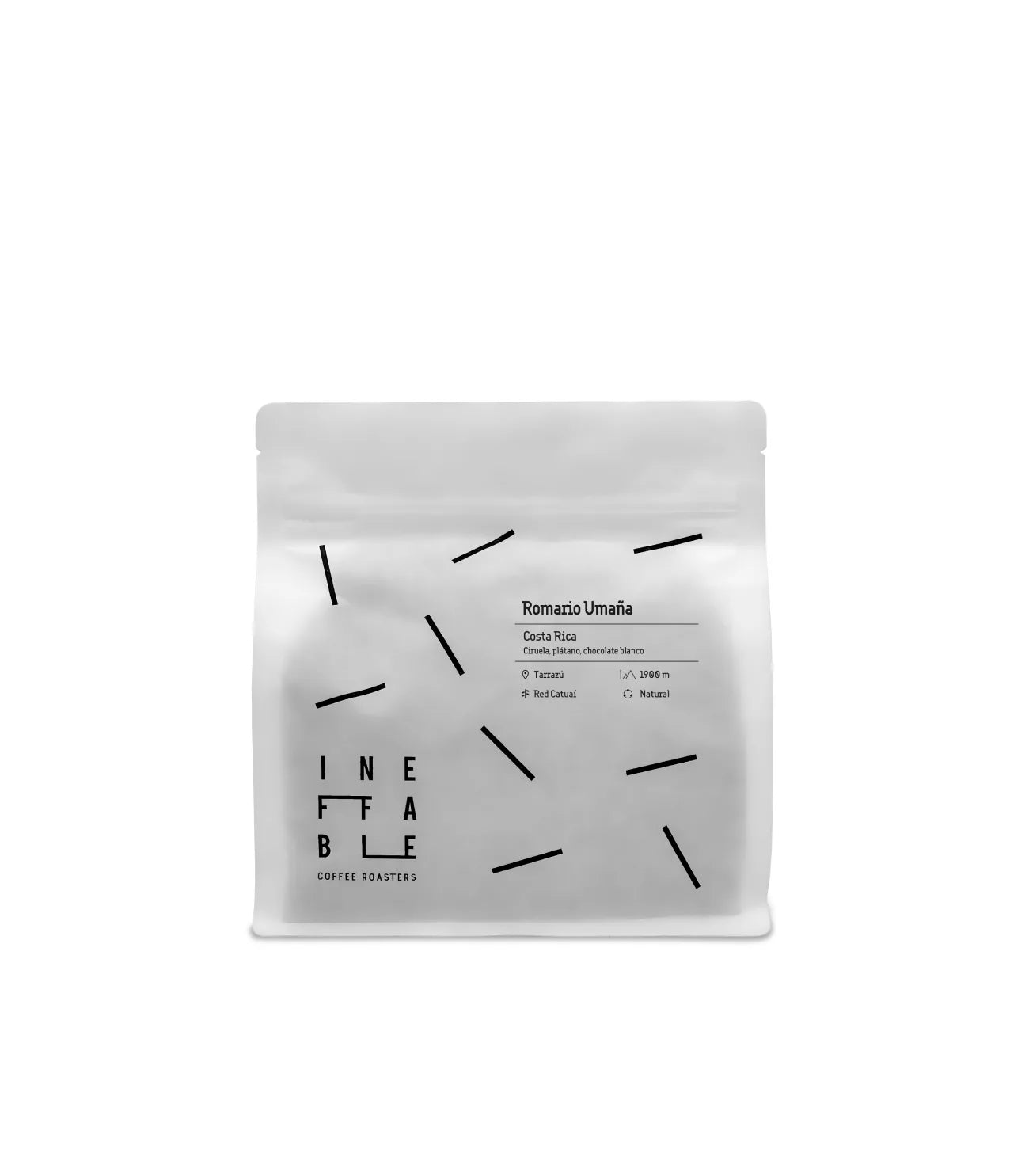
Romario Umaña

Sale price22,00€

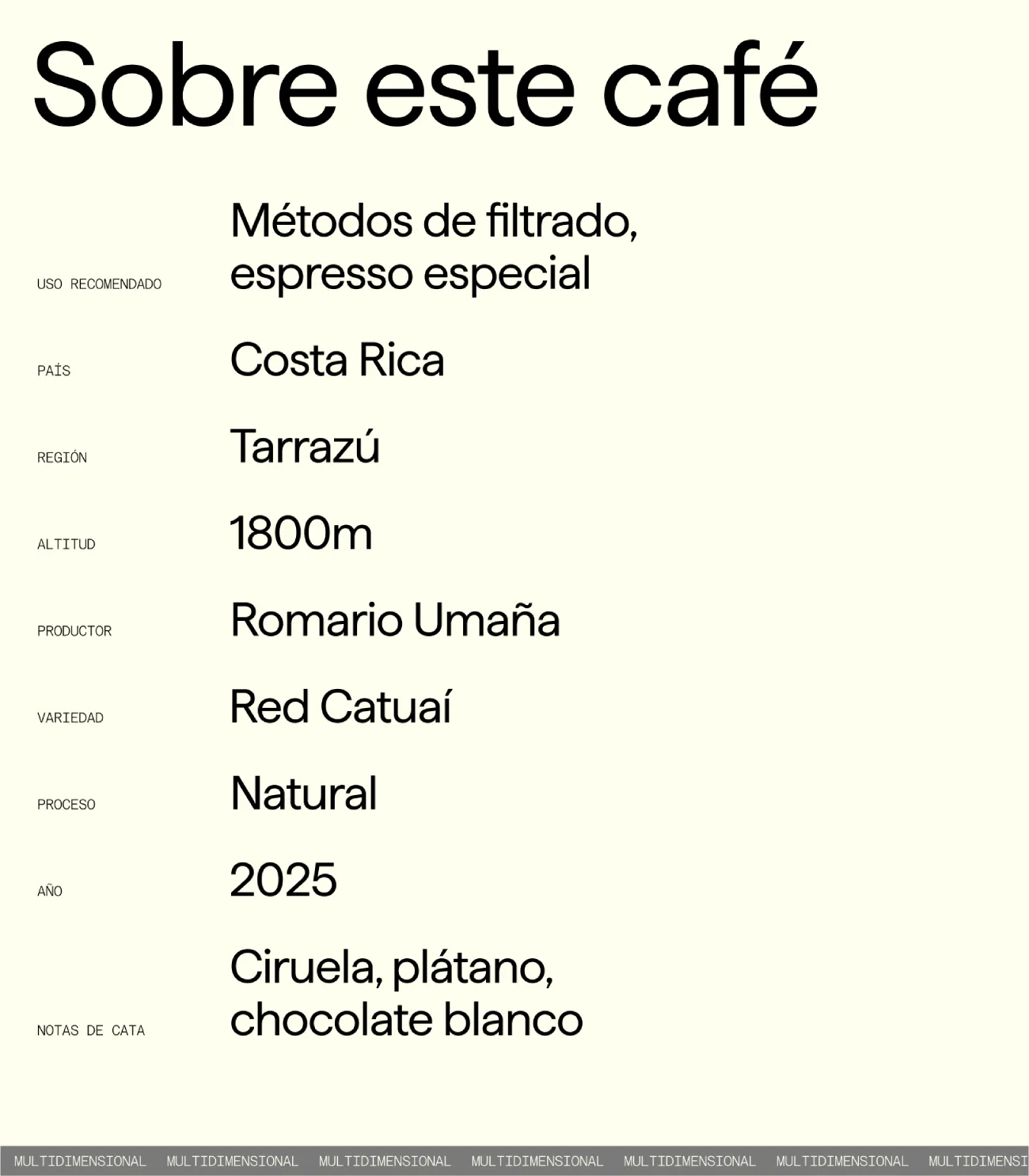
Finca El Centro is located in the Canet micro-region of Tarrazú, at the top of La Cruz mountain, where the combination of climate and soil creates ideal conditions for growing specialty coffee.

This coffee shows a sweet, fruit-forward flavour profile with notes of plum and banana. A base of cola and white chocolate, layered with cocoa and ripe fruit. A long-lasting finish with wine-like acidity and a silky body.

Format:

Format:

Whole bean-Ground:

Whole bean-Ground:

Cantidad

Romario Umaña
Romario Umaña Sale price22,00€

Reviews of our product

Fresh seasonal coffee

Freshly roasted in Seville

Eco-Friendly Packaging

Fair price

Caution to producers

Traceability from farm to cup

Learn more about the product

Learn more about this coffee.

Finca El Centro is located in the Canet micro-region of Tarrazú, at the top of La Cruz mountain, where the combination of climate and soil creates ideal conditions for growing specialty coffee.

Romario Umaña represents the second generation on the farm. In the mid-1990s, his father planted the two hectares that make up the estate with Red Catuai.

Today, the whole family is involved in keeping the coffee trees healthy and well fertilised, while applying environmentally responsible farming practices.

This naturally processed lot is dried on raised beds for 22 days, during which it is regularly turned and closely monitored.

This is the fifth consecutive year we have worked with Romario, and we couldn’t be happier with the results, and with the feedback we continue to receive.

Meet the producer

Romario Umaña: the journey towards a coffee with its own identity in Tarrazú

From family tradition to full control, from farm to cup

In the heart of Tarrazú, one of Costa Rica’s most renowned coffee-growing regions, this natural coffee from Romario Umaña is born — a project that perfectly reflects a family’s transition from commercial coffee to specialty coffee, with a clear identity and full control over every stage of the process.

The story begins long before the name Umacor existed. Romario’s grandfather was already growing and processing coffee, and his father spent many years working on different farms in the area until he saved enough to buy a small micro-plantation of his own. As happens in many coffee-growing families, Romario grew up among coffee trees, helping out on the farm whenever his studies — or his cycling training through the mountainous landscapes of Tarrazú — allowed.

For years, the family’s coffee was delivered to local cooperatives or sold to large multinational washing stations. There, it was blended with other conventional coffees, losing its identity, traceability and any real opportunity to showcase the work done on the farm. Although they were producing good coffee, it ultimately disappeared into anonymous large lots.

The turning point came in 2019, when Romario decided to establish his own washing station: Umacor, a name that combines his parents’ surnames, Umaña and Cordero. This step allowed the family to take full control of their coffee, from seed to final bag. Not only could they guarantee quality, but they could also tell their own story and work with genuine traceability.

The farm and washing station are located in San Marcos de Tarrazú, at around 1,900 metres above sea level, an altitude that clearly defines the character of the coffee. In recent years, Tarrazú has become a true hub of micro-plantations and small washing stations, creating a specialty coffee ecosystem built on tradition, knowledge and a strong focus on quality.

Umacor started in a very simple way. The facility features a reception system using siphons, several washing tanks and raised drying beds. All processing is carried out manually, as access to electricity in this mountainous area is limited and mechanisation requires significant investment. Far from being a drawback, this manual approach allows for close attention and precise control at every stage.

After harvesting, the cherries are placed into a receiving siphon and passed through a simple flotation system, built by the family themselves, to remove lighter, under-ripe fruit and other impurities. The cherries are then spread in thin layers on raised drying beds, where they dry slowly for around 22 days, being regularly turned and moved until optimal moisture levels are reached.

The result is a very clean natural coffee, with a clear but controlled fruit expression. Thanks to the conditions of Tarrazú, the Red Catuai variety and the surrounding environment, fermentation remains minimal, producing a sweet and balanced cup with notes of plum, banana and white chocolate — a tropical, approachable profile with precision and clarity.

Umacor’s first own production, in 2020, amounted to just 10 bags. Since then, the project has grown steadily and thoughtfully, always prioritising quality over volume. This coffee represents that journey: a family that chose to stop selling anonymous coffee and instead produce a coffee with identity, origin and a story worth telling.

Recetas para este café

Filter

The recipe below is a guideline to follow at home. Results will always vary depending on your own equipment, setup and all the variables that can affect coffee extraction.

Every coffee we roast one of our team will experiment to come up with something we like to drink, below details all the information you need to recreate the recipe, however we always recommend tasting and experimenting to find out what you like, use the following as a guideline and adapt.

It’s the journey not the destination.

Some key things to note: Water is the most important precursor to having a tasty cup of coffee, depending on where you live water composition can vary wildly and for this reason we recommend using filtered water at a minimum, a mixture of Bezoya and Lanjarón water is a better option. When you change any part of the recipe, always change one thing at a time so you know the influence it had on flavour.

Normally we will start by adapting the ratio to our liking first and once we have a brew with a pleasant strength and mouthfeel we can look at the other aspects of the extraction to altar.

Most percolation coffee filter coffees thrive with a ratio between 1:15 and 1:17. Brewed between 2:30 and 4:30.

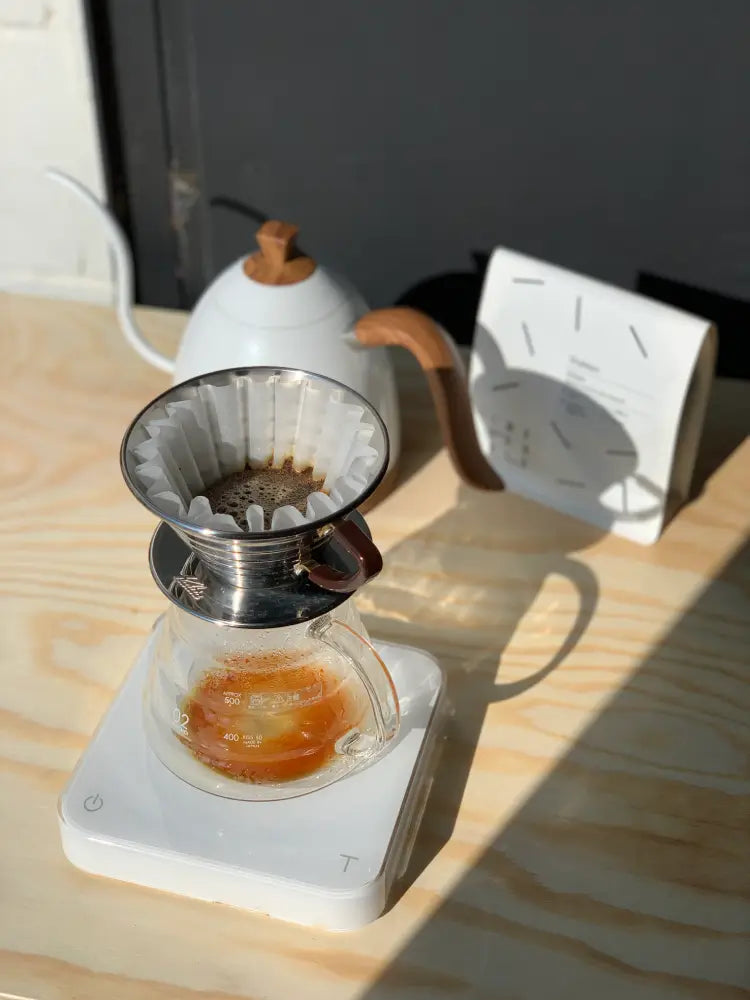
Kalita/Origami/Orea

We’ve chosen these methods to express our recipes as they are forgiving and easily transferable to other percolation recipes, the flat bottom and crimped sides of the Kalita papers give a large surface area that prevents any major stalling of the flow due to fines migration & clogging.

Kalita/Origami/Orea

Recipe:

  • Ratio: 1:17
  • Coffee: 20gr
  • Water: 340ml/gr
  • Total time: 3:20-4 min
  • Temperature: 94ºC
  • Grinder setting: 21 'clicks' Comandante
  • Measured TDS and extraction yield (EY) of the tested recipe

Variables:

  • Coffee resting time: minimum of 1-2 days peaks after 1-2 weeks
  • Water used: Bezoya 1:2 Lanjarón
  • Paper filter: Kalita 185

Equipment:

Kalita/Origami, Kalita filter, Scales, timer, grinder, mug or decanter, kettle preferably gooseneck.

Method:

  1. Heat the water in the kettle and when hot rinse the paper filter on the origami to remove any paper flavor and preheat the brewer.
  2. Grind the coffee to the recommended size.
  3. Throw away the used water and replace the brewer and distribute the ground coffee in a level bed in the filter, some like to poke a little divit in the top as to aid saturating all the coffee, tare the scales.
  4. Start the stopwatch as you start pouring 60g/ml of water slowly and gently in a circular motion and wait 30-40 seconds for the grounds to degas, being mindful to saturate the entire coffee bed. If the coffee was roasted recently you will notice the bed expanding and you may wish to leave to degas for longer.
  5. Pour the remaining water slowly until you reach 200-250ml/gr, ensure the water never comes above an inch from the top to avoid the water bypassing the coffee and reducing the extraction, pause to let it drain if it comes too high.
  6. Gently and carefully lift and swirl the brewer once to level the bed.
  7. Continue to slowly pour the remaining water and swirl the brewer once to give a good level drawdown.
  8. We are looking for the brew to finish in the time stipulated, adjust the grind size if necessary for the next time you brew.

Espresso

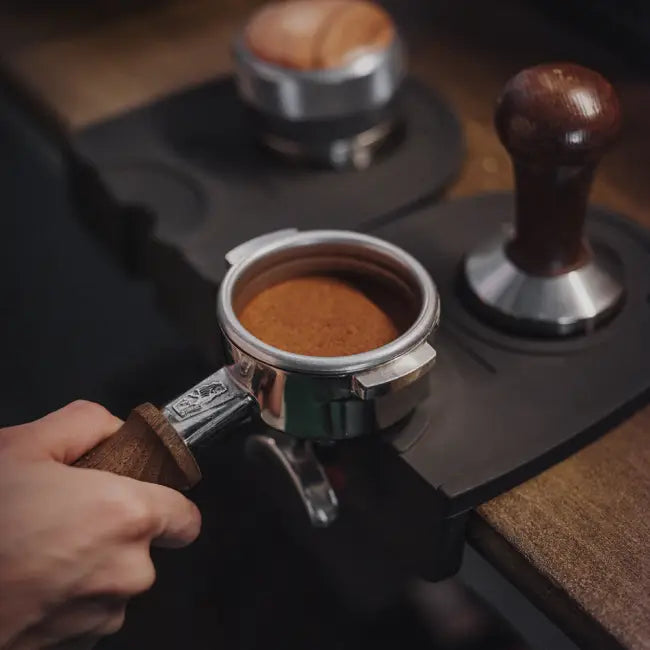
Here's our most up-to-date recipe. It's important to remember that this recipe is a reference and that many variables will influence the final result of the espresso in your cup: from the condition of your machine and grinder, the water you use, the storage/steeping time of your coffee, to the temperature/atmospheric pressure, etc. Therefore, you may need to adjust some parameters to achieve a flavorful and balanced espresso based on your specific needs.

Recipe:

  • Ratio: 1:2.2
  • Dry: 18gr
  • In cup: 41gr
  • Time: 30-36s

Variables:

  • Resting time: minimum 2 weeks
  • Temperature: 94ºC
  • Pressure: 6 bars
  • Pre-infusion: No
  • GH 60 (ppm as CaCO3) KH 30 (ppm as CaCO3)

Machinery and equipment used for this recipe:

  • Espresso machine: La Marzocco KB90 2G
  • Mill: Mythos 1
  • Scoop: 22gr VST (without slot)
  • Extras: Barista Hustle WDT, Push Tamper (flat, 100% level)

Cold brew

Esta es la receta de café cold brew que te proponemos para que elabores 600ml de cold brew. El ratio, en caso de que quieras elaborar más o menos de esta cantidad, es 1:15, 1gr de café por cada 15gr/ml de agua.

Receta y equipamiento:

  • Café 40gr. (Usa el café que prefieras dependiendo de tus gustos. Nuestra sugerencia sería elegir perfiles de café que te gusten en elaboraciones de filtro). Si tiene el tag “Cold Brew” es de nuestros favoritos.
  • Molienda: Comandante 16 clics.
  • Agua 600gr/ml a temperatura ambiente.
  • Composición del agua: 2 partes de Lanjarón por 1 de Bezoya.
  • Una malla o seda.
  • Un recipiente de cristal (preferiblemente con tapa)
  • Dejar reposar 22 horas (en el frigorífico).

La forma de hacer el cold brew:

  • Molemos el café con una molienda media (Comandante 16 clics).
  • Echamos el café directamente en la malla.
  • Introducimos la malla en el recipiente de cristal.
  • Vertemos el agua en el recipiente a través de la malla con el café.
  • Removemos suavemente para saturar todo el café.
  • Tapamos el recipiente.
  • Lo dejamos reposar en el frigorífico (¡atención a los olores fuertes!).
  • Después de este tiempo de reposo, retiramos la malla con el café y estará listo.
  • Como paso extra, puedes volver a filtrarlo por un filtro de papel V60, Kalita o similar para obtener un resultado más limpio y cristalino.
  • Mantenlo refrigerado.
  • Esta receta es para no diluir. Ni siquiera con hielo. En caso de ponerle hielo la composición del agua del hielo afectará al sabor de tu bebida. Mejor hacer tu propio hielo con la misma composición de agua que proponemos. Si usas hielo, quizás quieras bajar el ratio (1:9 a 1:12).

Related products

FREE SHIPPING

Spain (Peninsula)

>40€ / Delivery 24/48h LV

Balearics

>40€ / Delivery 3/5 days, LV

Portugal

>40€ / Delivery 3/5 days, LV

Europe

>99€ / Delivery 4/7 days, LV

Ver más...

Información de envíos

España (Península), Baleares y Portugal

  • Envío gratuito a partir de 40€ para Península, Baleares y Portugal
  • Para pedidos inferiores a 40€ los gastos de envío son 4€.
  • No hacemos ningún tipo de envío a Canarias, Ceuta, Melilla y Gibraltar.
  • En todos los envíos recibirás email de seguimiento.
  • Los tiempos de entrega se cumplen en el 99% de los envíos. Hay que tener en cuenta que estamos sujetos al buen funcionamiento externo de nuestros colaboradores logísticos.
  • Los días festivos nacionales y/o regionales pueden afectar a los tiempos de entrega estimados.
  • Entrega a Península en 24/48 horas, L-V.
  • Entrega a Baleares en 3/5 días, L-V.
  • Entrega a Portugal en 3/5 días, L-V.


Europa

  • Envío gratuito a partir de 99€, para todos los pedidos que incluyan café.
  • Países incluidos: Alemania, Austria, Bélgica, Bulgaria, Croacia, Dinamarca, Eslovaquia, Eslovenia, Estonia, Francia, Finlandia, Grecia, Hungría, Irlanda, Italia, Letonia, Lituania, Luxemburgo, Mónaco, Países Bajos, Polonia, República Checa, Rumanía y Suecia.
  • Para pedidos inferiores a 99€ los gastos de envío se calculan automáticamente al introducir tu dirección de envío en el carrito de compra.
  • Entrega en 4/7 días, L-V.
  • En todos los envíos recibirás email de seguimiento.
  • Los tiempos de entrega se cumplen en el 99% de los envíos. Hay que tener en cuenta que estamos sujetos al buen funcionamiento externo de nuestros colaboradores logísticos.
  • Los días festivos nacionales y/o regionales pueden afectar a los tiempos de entrega estimados.
  • No hacemos ningún tipo de envío a Reino Unido, Suiza, Estados Unidos ni al resto del mundo.