


Skip to content

Free shipping on orders over €40 for Spain (Peninsula), Balearic Islands and Portugal. Shipped within 24/48h Mon-Fri

Free shipping to Europe on orders over €99

Cart

Your cart is empty

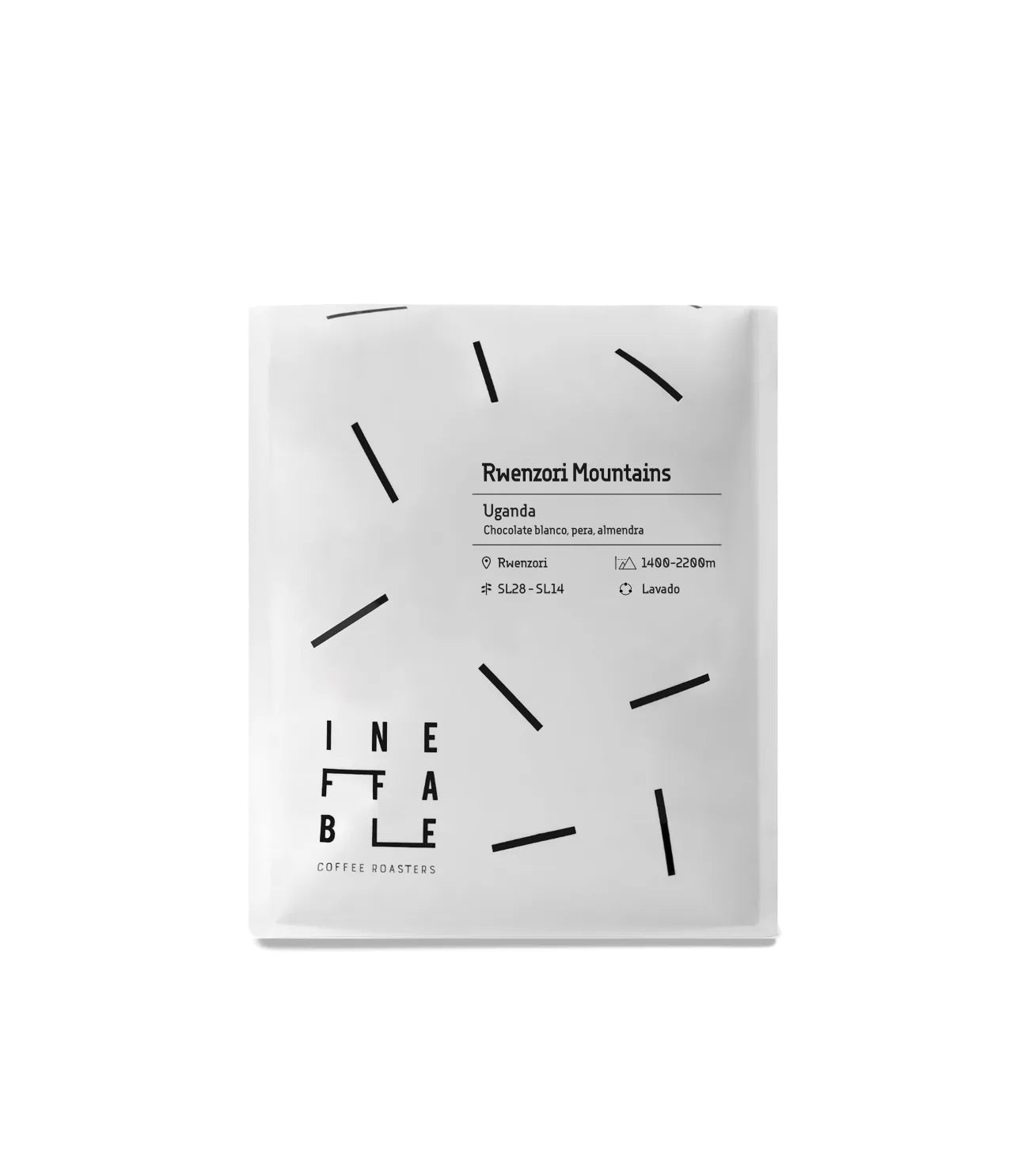
Rwenzori Mountains

Sale price15,00€

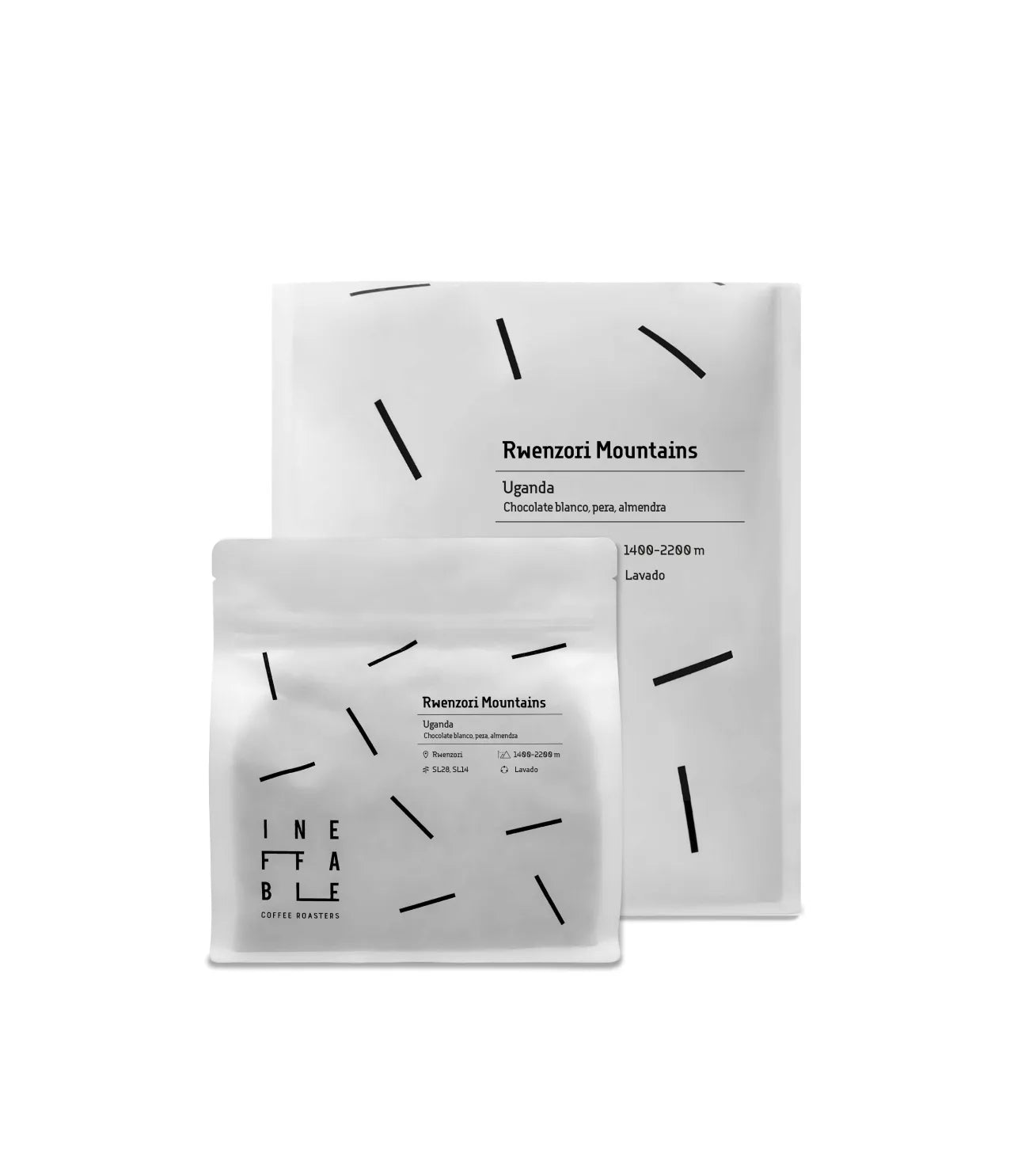
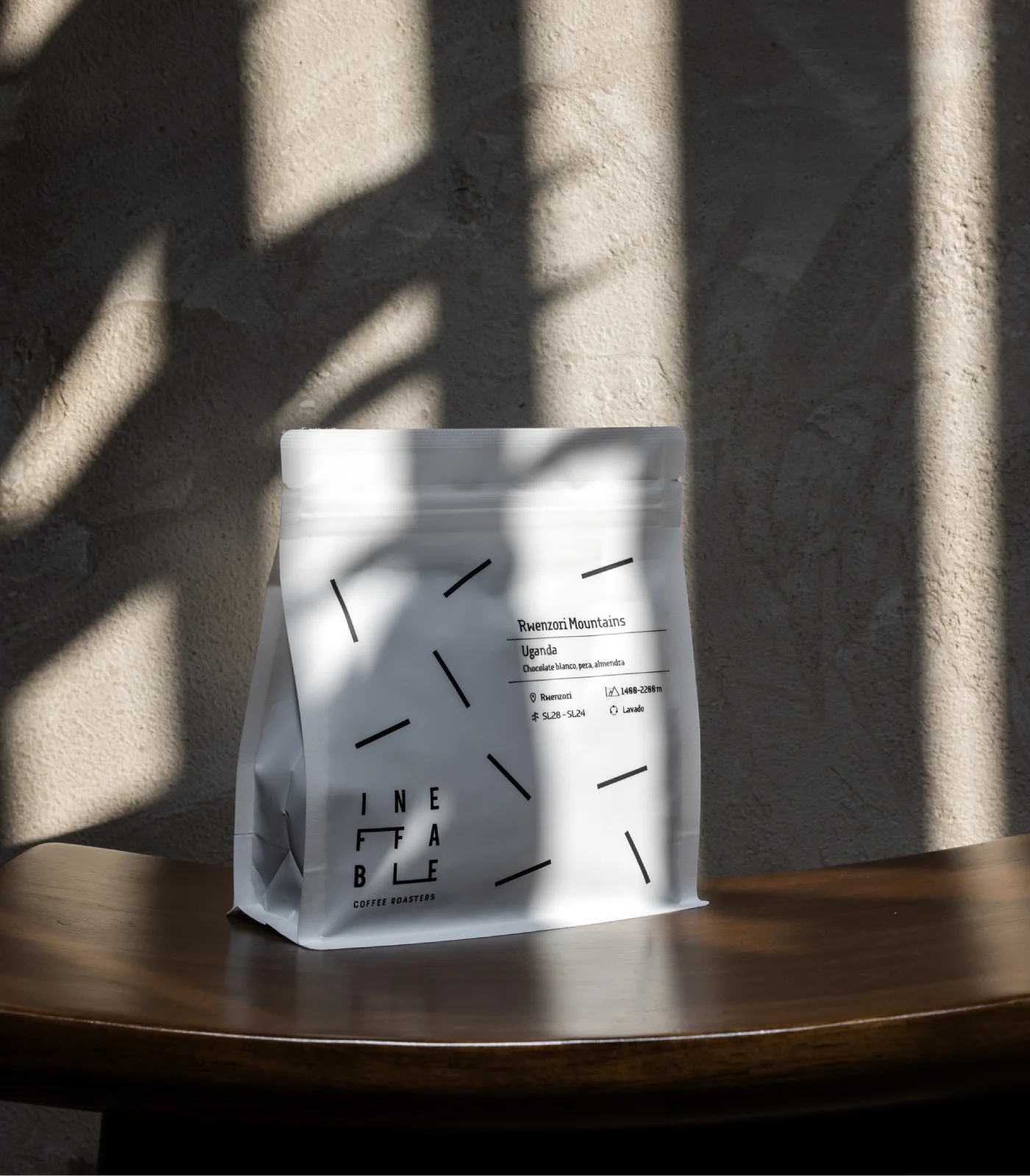
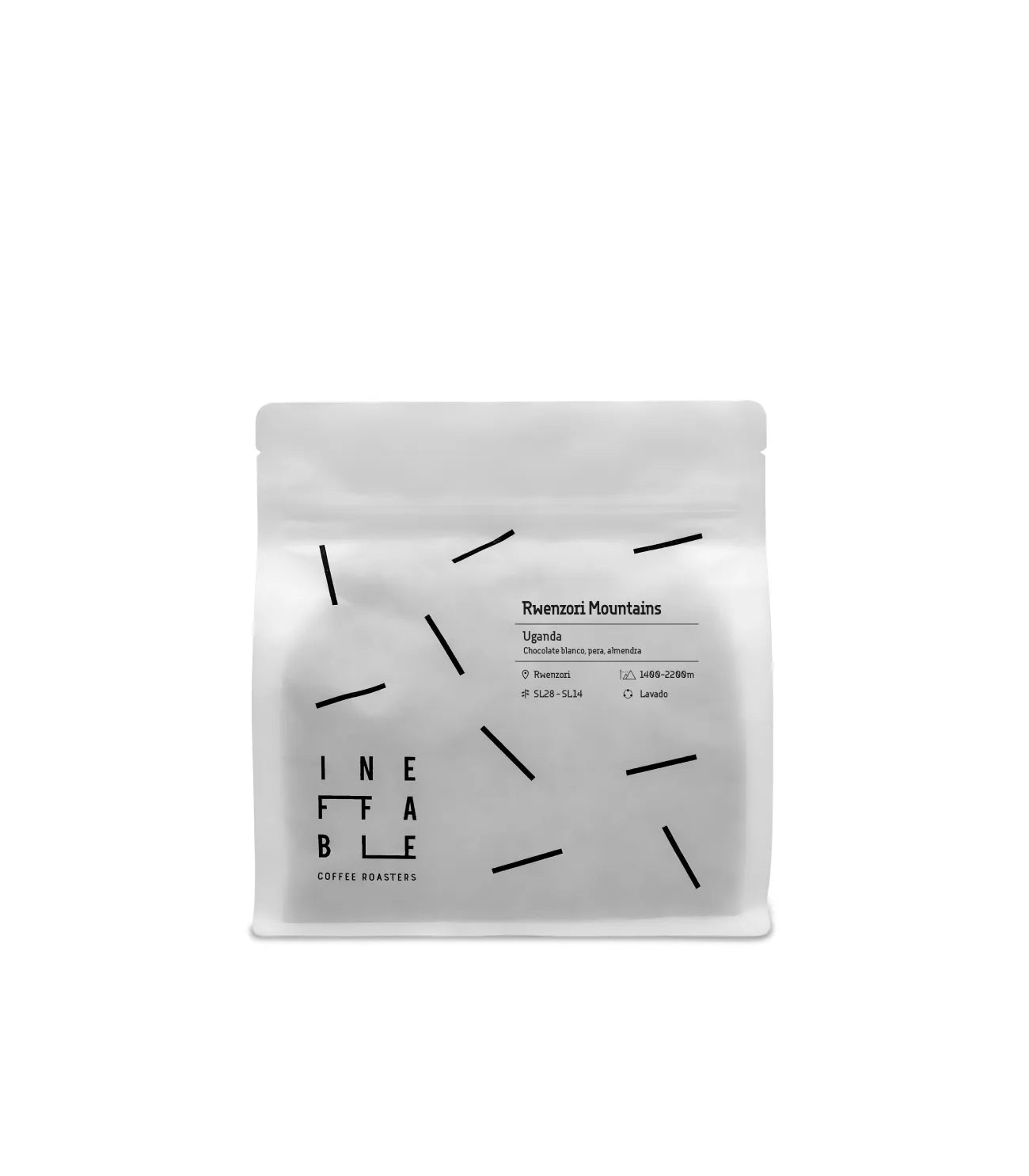
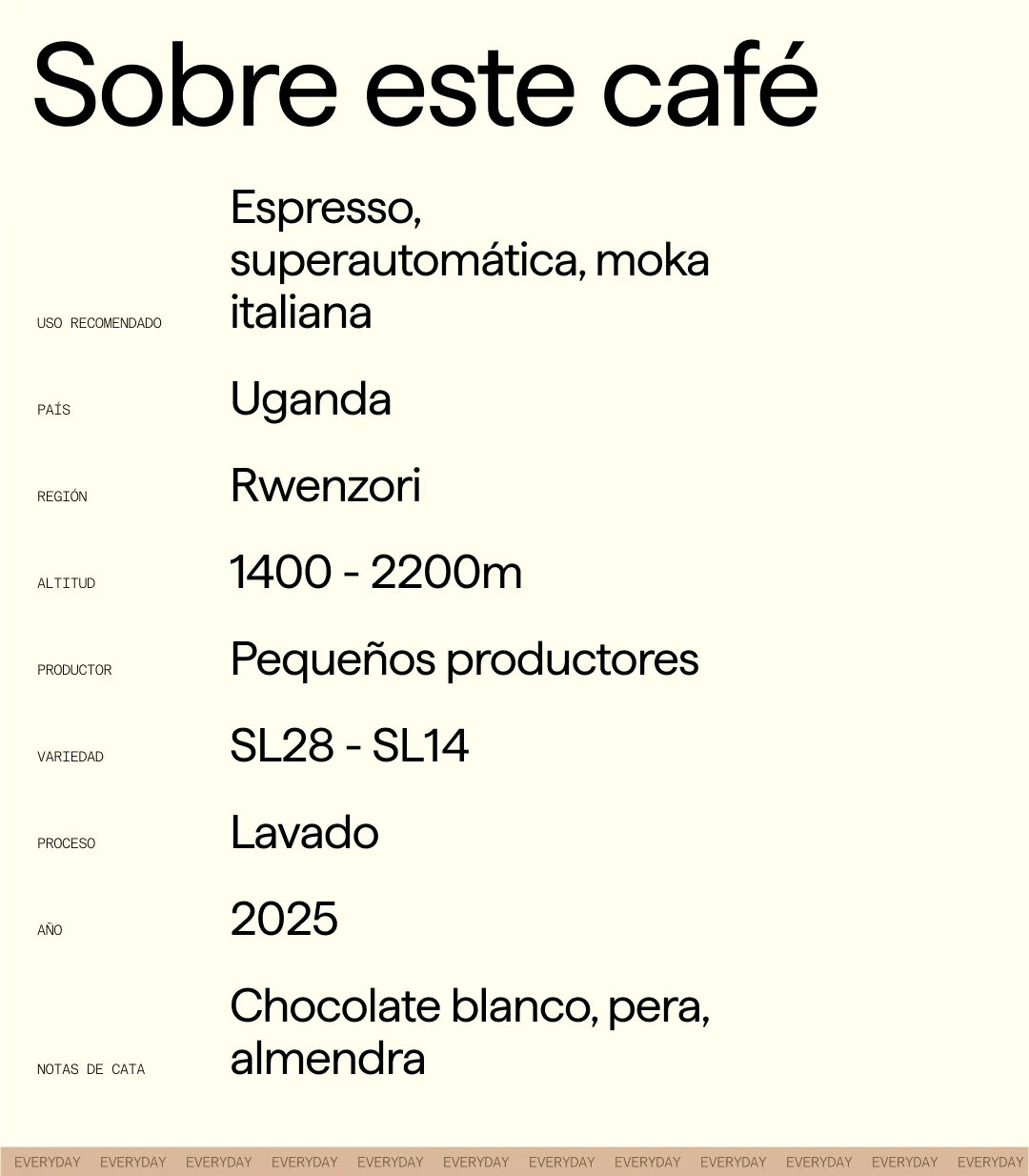
In the Rwenzori Mountains, known as the “Mountains of the Moon”, this high-altitude coffee is grown between 1,400 and 2,200 metres by smallholders from the Bakonzo community.

This coffee has a fruity and sweet flavour profile with notes of pear and vanilla. A base of white chocolate and almond with a honeyed finish. Long-lasting aftertaste with juicy acidity and a creamy body.

Format:

Format:

Whole bean-Ground:

Whole bean-Ground:

Whole bean-Ground:

Cantidad

Rwenzori Mountains
Rwenzori Mountains Sale price15,00€

Reviews of our product

Fresh seasonal coffee

Freshly roasted in Seville

Eco-Friendly Packaging

Fair price

Caution to producers

Traceability from farm to cup

Learn more about the product

Learn about this coffee in detail

IIn the Rwenzori Mountains, known as the “Mountains of the Moon”, this high-altitude coffee is grown between 1,400 and 2,200 metres by smallholders from the Bakonzo community.

Volcanic soils, extreme altitude and constant rainfall create an exceptional environment for the SL28 and SL14 varieties, renowned for their complexity and elegance in the cup.

Cherries are selectively hand-picked, following traditional farming practices passed down through generations.

The coffee is fully washed, enhancing its clean and refined profile with notes of white chocolate, pear and almond.

The Nyabirongo washing station, managed by Agri Evolve, enables precise quality control and genuine traceability, connecting thousands of small producers with the speciality coffee market through an ethical, sustainable and community-focused model.

Meet the producer

Rwenzori Mountains: high-altitude coffee born in the "Mountains of the Moon"

An extraordinary origin among mist, volcanoes and sacred mountains

In western Uganda, along the border with the Democratic Republic of the Congo, rises one of Africa’s most spectacular and lesser-known mountain ranges: the Rwenzori Mountains. Historically known as the “Mountains of the Moon”, these peaks stretch for around 120 kilometres and are home to some of the continent’s most dramatic landscapes, with snow-capped summits, tropical forests, glacial rivers and remarkable biodiversity.

It is within this extraordinary environment that Rwenzori Mountains coffee is grown, at elevations between 1,400 and 2,200 metres above sea level by smallholder farmers from the local communities. The combination of altitude, constant rainfall and fertile volcanic soils creates exceptional conditions for coffee cultivation, allowing the cherries to mature slowly and develop greater complexity in the cup.

The main varieties cultivated in the region are SL14 and SL28, two historic East African selections renowned for producing elegant, expressive and complex coffees.

The Bakonzo people and their connection to the mountains

Much of the coffee produced in Rwenzori comes from small farmers belonging to the Bakonzo community, a Bantu-speaking people whose lives have been connected to these mountains for generations. For them, the Rwenzori are far more than a place to live and farm — they are sacred mountains, deeply tied to their cultural and spiritual identity.

Agriculture here remains largely small-scale and family-run. Many farms grow coffee alongside traditional crops such as millet, beans and bananas, maintaining diverse farming systems that work in harmony with the surrounding environment. Coffee harvesting is carried out entirely by hand, with cherries selectively picked only when fully ripe.

This traditional approach, together with generations of inherited knowledge, gives the region’s coffees a particularly distinctive character and reflects a slower, more connected relationship with agriculture and nature.

A unique terroir that shapes the cup profile

The flavour profile of this coffee is deeply influenced by the environment in which it grows. The high elevations, cool temperatures and mineral-rich volcanic soils help create coffees that are clean, sweet and layered with complexity.

In this washed lot, notes of white chocolate, pear and almond are supported by juicy acidity and a creamy mouthfeel. The washed process enhances clarity and definition in the cup, allowing both the varietal character and the terroir to shine with transparency.

One of the most fascinating aspects of coffee from Rwenzori is its diversity. Depending on altitude, microclimate and processing method, the region can produce profiles ranging from delicate and floral to intensely fruity or even boozy coffees.

Specialty coffee with real impact

Behind this coffee are thousands of smallholder farmers who see specialty coffee as an opportunity to improve their livelihoods and bring greater value to their work. In a region where access to international markets has historically been limited, projects focused on quality, traceability and ethical trade are helping to build a more sustainable and transparent coffee supply chain.

Rwenzori Mountains is far more than a coffee origin. It is the expression of an extraordinary landscape, a culture deeply rooted in the mountains, and the remarkable potential emerging from one of Africa’s most captivating coffee-producing regions.

Recetas para este café

Espresso

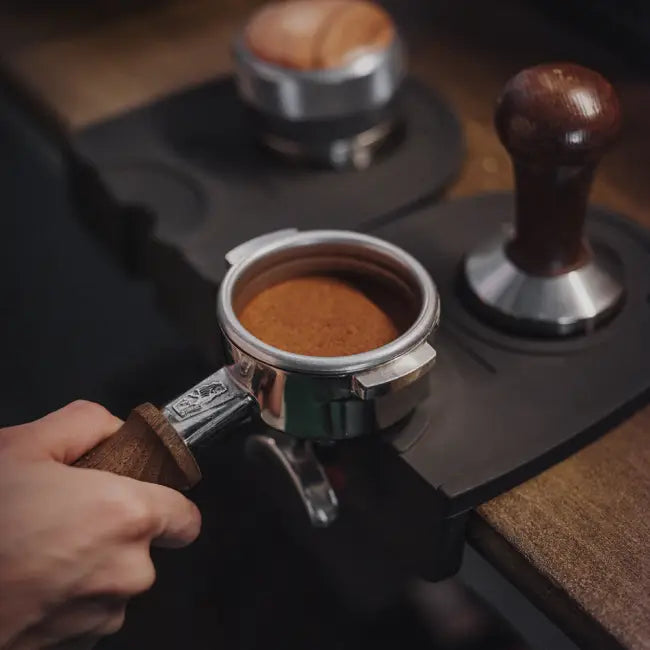
Here's our most up-to-date recipe. It's important to remember that this recipe is a reference and that many variables will influence the final result of the espresso in your cup: from the condition of your machine and grinder, the water you use, the storage/steeping time of your coffee, to the temperature/atmospheric pressure, etc. Therefore, you may need to adjust some parameters to achieve a flavorful and balanced espresso based on your specific needs.

Recipe:

  • Ratio: 1:2.2
  • Dry: 18gr
  • In cup: 41gr
  • Time: 30-36s

Variables:

  • Resting time: minimum 2 weeks
  • Temperature: 94ºC
  • Pressure: 6 bars
  • Pre-infusion: No
  • GH 60 (ppm as CaCO3) KH 30 (ppm as CaCO3)

Machinery and equipment used for this recipe:

  • Espresso machine: La Marzocco KB90 2G
  • Mill: Mythos 1
  • Scoop: 22gr VST (without slot)
  • Extras: Barista Hustle WDT, Push Tamper (flat, 100% level)

Cold brew

That's the recipe we suggest for making 600ml of cold brew. If you want to make more or less amount, the ratio is 1:15, 1g of coffee for 15g/ml of water.

Recipe and equipment:

  • 40g coffee (Use your preferred coffee depending on your taste. We suggest choosing coffee profiles you like in filter brewing). If it has the "Cold Brew" tag, it's one of our favorites.
  • Grinding: Comandante 16 clicks.
  • Water 600g/ml at room temperature.
  • Water composition: 2 parts Lanjarón and 1 part Bezoya.
  • A mesh or silk.
  • A glass container (preferably with a lid)
  • Let it rest for 22 hours (in the refrigerator).

How to make cold brew:

  • We grind the coffee to a medium ground size (Comandante 16 clicks).
  • We pour the coffee directly into the mesh.
  • We put the mesh into the glass container.
  • We pour the water into the container through the mesh with the coffee.
  • Stir gently to flood all the coffee.
  • We close or cover the container.
  • We leave it rest in the refrigerator (beware of strong smells!).
  • After the resting time, remove the mesh with the coffee and it will be ready.
  • As an extra step, you can filter it again through a V60, Kalita or similar paper filter for a cleaner and clearer result.
  • Keep it refrigerated.
  • This recipe is meant to be undiluted, not even with ice. Adding ice will affect the flavor of your drink, as the water composition will alter the flavor. It's best to make your own ice using the same water composition we suggest. If you do use ice, you might want to lower the ratio (1:9 to 1:12).

Related products

FREE SHIPPING

Spain (Peninsula)

>40€ / Delivery 24/48h LV

Balearics

>40€ / Delivery 3/5 days, LV

Portugal

>40€ / Delivery 3/5 days, LV

Europe

>99€ / Delivery 4/7 days, LV

See more...