Skip to content

Free shipping on orders over €40 for Spain (Peninsula), Balearic Islands and Portugal. Shipped within 24/48h Mon-Fri

Free shipping to Europe on orders over €99

Cart

Your cart is empty

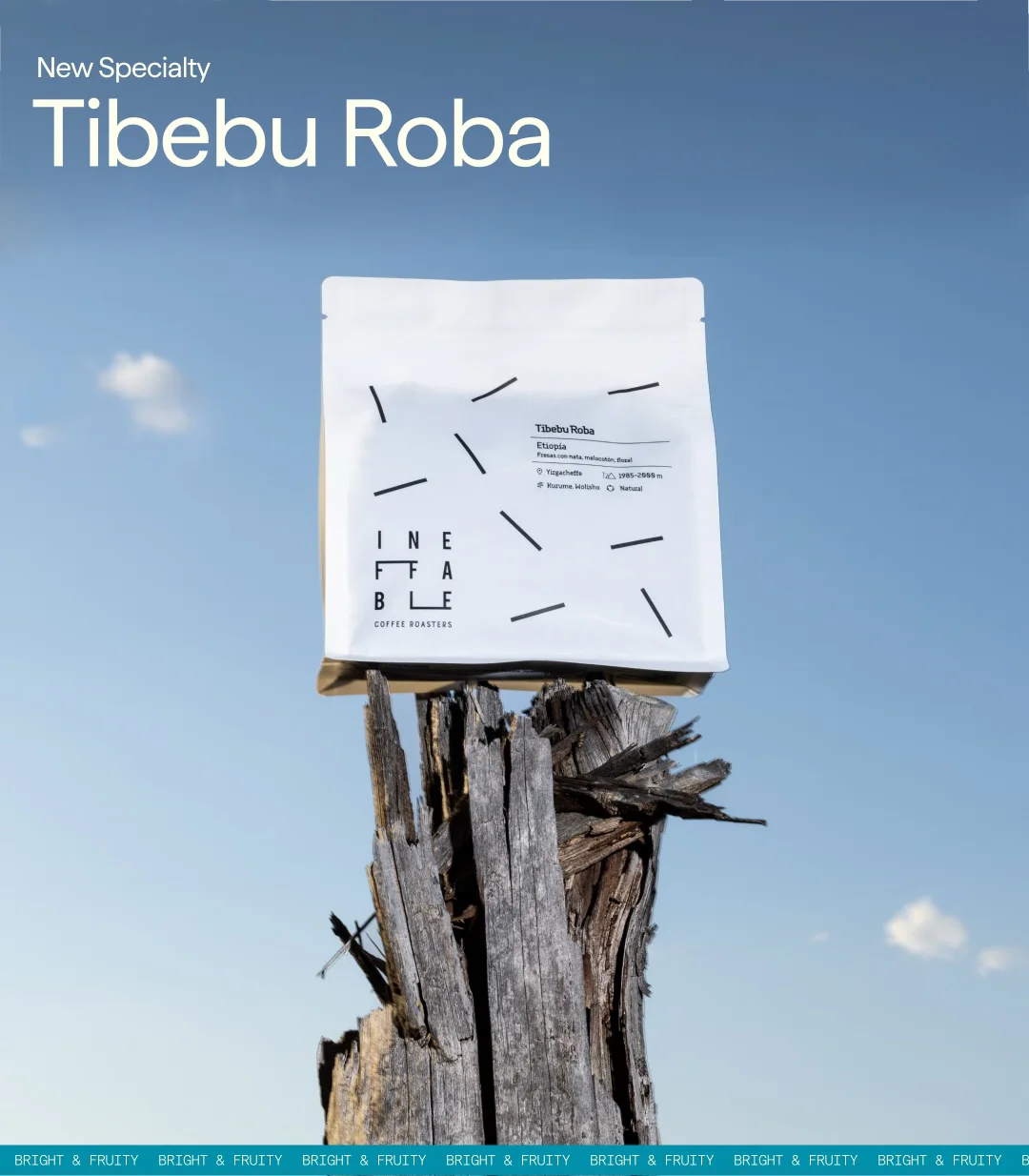
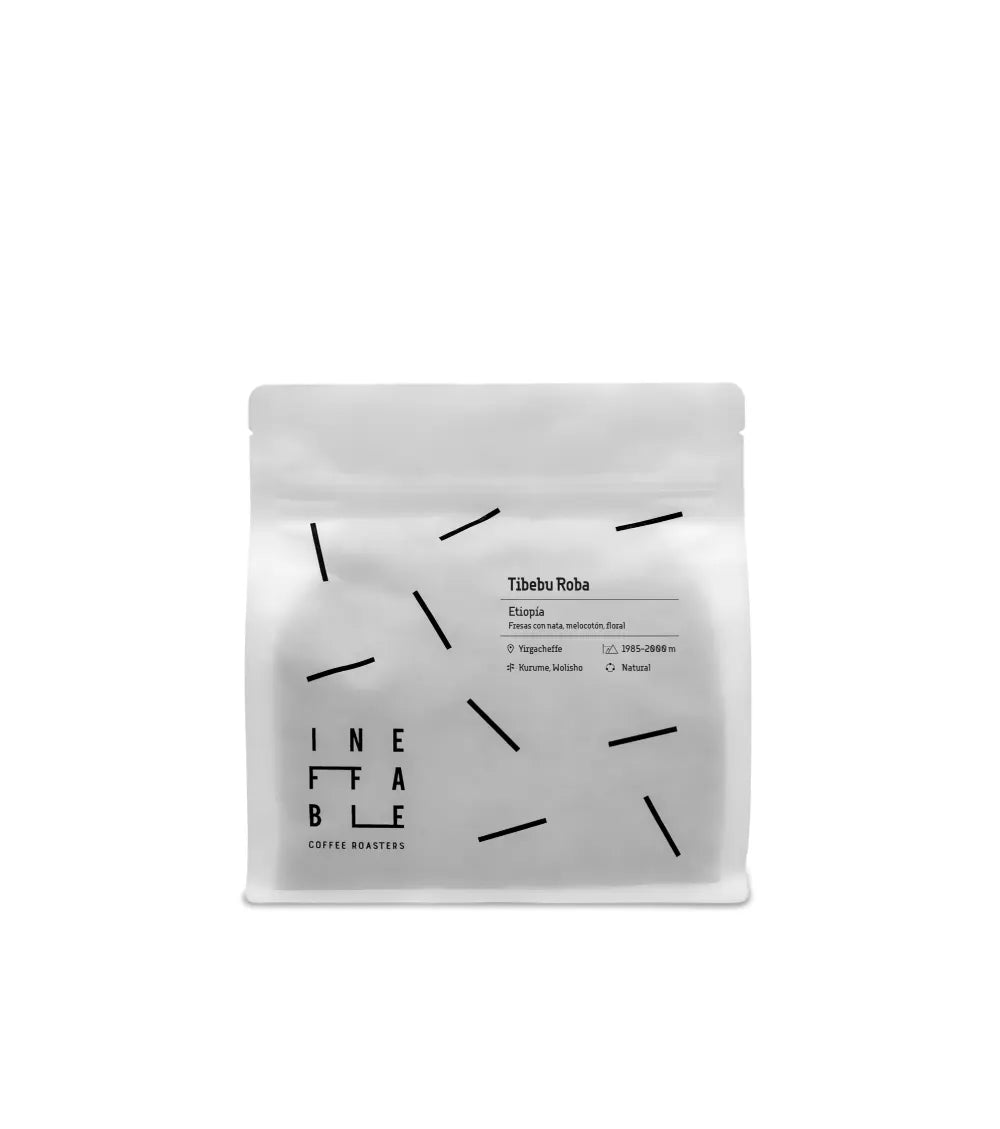
Tibebu Roba

Sale price16,00€

Tibebu Roba is a benchmark in specialty coffee in Yirgacheffe, Ethiopia. His story began in 1982 when he acquired 8,298 hectares in Chelchele, an area of fertile soils and altitudes between 1,985 and 2,000 m.

This coffee offers a sweet and floral flavor profile with notes of strawberries and cream. A base of peach and vanilla with an undertone of ripe fruit. A fruity and floral finish with juicy acidity and a creamy body.

Format:

Format:

Whole bean-Ground:

Whole bean-Ground:

Whole bean-Ground:

Cantidad

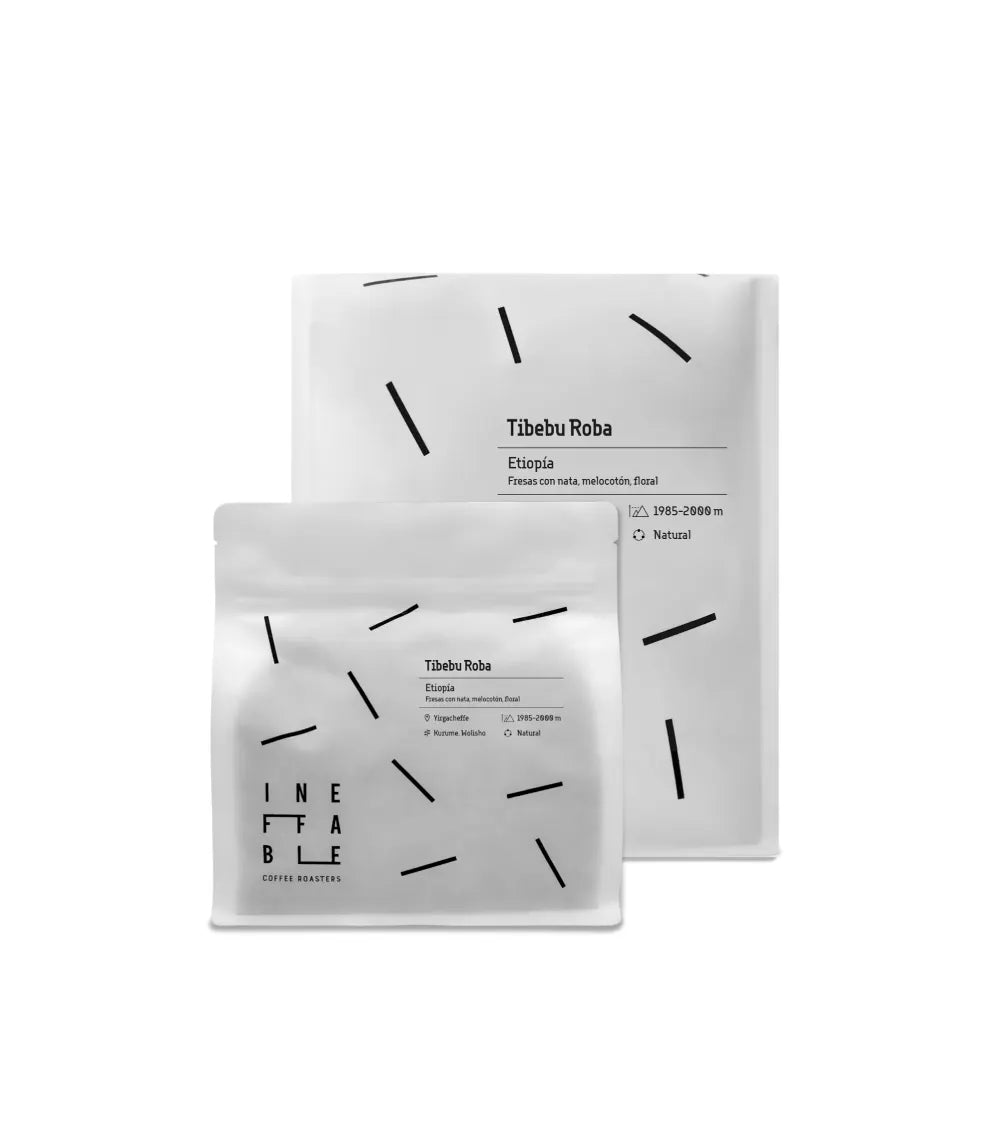
Paquete de 250 gramos de Tibebu Roba de Etiopía tostado por Ineffable Coffee Roasters
Tibebu Roba Sale price16,00€

Reviews of our product

Fresh seasonal coffee

Freshly roasted in Seville

Eco-Friendly Packaging

Fair price

Caution to producers

Traceability from farm to cup

Learn more about the product

Get to know this coffee in detail

Tibebu Roba is a benchmark for specialty coffee in Yirgacheffe, Ethiopia.

Its history began in 1982, when it acquired 8,298 hectares in Chelchele, an area of fertile soils and altitudes between 1,985 and 2,000 m.

Its natural coffee, grown with Kurume and Wolisho varieties, stands out for its floral notes, peach, and strawberries with cream.

In 2019, his coffee earned 91 points at a local auction. His farm employs sustainable practices, including homemade compost and raised bed drying.

Maintaining a responsible approach to the environment. In addition to being a producer, Tibebu is a community leader and evangelical preacher, promoting good practices in the region.

Their coffee is a testament to Yirgacheffe's potential and commitment to quality and specialty coffee.


Meet the producer

The Story of Tibebu Roba: Master of the Natural Process in the Heart of Yirgacheffe

In the picturesque Chelchele kebele, in the legendary coffee region of Yirgacheffe, Ethiopia, lies a farm that epitomizes hard work, dedication, and passion for coffee: the Tibebu Roba farm. This producer has not only grown exceptional beans, but has also left an indelible mark on the coffee community with his unwavering commitment to quality and sustainability.

A Legacy of Passion and Perseverance

The story of Tibebu Roba and his farm begins in 1982, when his family acquired 8,298 hectares of land in the fertile Chelchele region. However, his connection with coffee dates back to his childhood, when he helped his father on a farm near the town of Dilla. Although at one point in his life he decided to follow a religious path as an evangelical preacher, his love for coffee led him back to the land, where he found his true calling.

Today, Tibebu is not only a successful coffee farmer but also continues his work as a preacher and is a pillar of support for the local community. His wife, whom he describes as the backbone of the farm, runs a small fashion business that contributes to the livelihood of the family and the coffee project.

World-Class Coffees

The Tibebu estate specializes in high-quality natural coffees grown at an optimal altitude of between 1,985 and 2,000 meters above sea level. This altitude, combined with the region's fertile red soil, creates the perfect conditions for developing coffees with unique sensory profiles. The varieties grown include Kurume and Wolisho, which contribute floral, peach, and red berry notes to the cup.

One of Tibebu's greatest achievements was its participation in the Trabocca auction in 2019, where it presented a lot of natural coffee that obtained a score of 91 points. This recognition earned it a prize of $33,500 and cemented its reputation as a producer of excellence.

Commitment to Quality and Sustainability

Tibebu's approach to coffee production goes beyond simply harvesting beans. Their farming philosophy is based on sustainable practices, utilizing compost made on the farm and avoiding the use of synthetic chemicals. Although their coffee is no longer certified organic, their commitment to responsible agriculture remains steadfast.

Harvesting on their farm takes place between November and mid-January, with export scheduled for March. To ensure the highest quality, the beans are carefully dried on raised beds, a method that preserves their sweetness and complexity in the cup.

An Impact Beyond the Farm

Tibebu's impact is not limited to his own production. His success story has inspired other small producers in the region to improve their practices and strive for quality. His example demonstrates that the combination of passion, knowledge, and respect for the land can yield extraordinary results.

In a world where specialty coffee is increasingly appreciated, Tibebu Roba's story is a reminder that behind every exceptional cup lies a story of hard work and love for coffee. His farm, nestled in the heights of Yirgacheffe, continues to produce some of Ethiopia's most exquisite coffees, bringing the flavor and tradition of his land to the most discerning palates around the world.

Recetas para este café

Filter

The recipe below is a guideline to follow at home. Results will always vary depending on your own equipment, setup and all the variables that can affect coffee extraction.

Every coffee we roast one of our team will experiment to come up with something we like to drink, below details all the information you need to recreate the recipe, however we always recommend tasting and experimenting to find out what you like, use the following as a guideline and adapt.

It’s the journey not the destination.

Some key things to note: Water is the most important precursor to having a tasty cup of coffee, depending on where you live water composition can vary wildly and for this reason we recommend using filtered water at a minimum, a mixture of Bezoya and Lanjarón water is a better option. When you change any part of the recipe, always change one thing at a time so you know the influence it had on flavour.

Normally we will start by adapting the ratio to our liking first and once we have a brew with a pleasant strength and mouthfeel we can look at the other aspects of the extraction to altar.

Most percolation coffee filter coffees thrive with a ratio between 1:15 and 1:17. Brewed between 2:30 and 4:30.

Kalita/Origami/Orea

We’ve chosen these methods to express our recipes as they are forgiving and easily transferable to other percolation recipes, the flat bottom and crimped sides of the Kalita papers give a large surface area that prevents any major stalling of the flow due to fines migration & clogging.

Kalita/Origami/Orea

Recipe:

  • Ratio: 1:17
  • Coffee: 20gr
  • Water: 340ml/gr
  • Total time: 3:20-4 min
  • Temperature: 94ºC
  • Grinder setting: 21 'clicks' Comandante
  • Measured TDS and extraction yield (EY) of the tested recipe

Variables:

  • Coffee resting time: minimum of 1-2 days peaks after 1-2 weeks
  • Water used: Bezoya 1:2 Lanjarón
  • Paper filter: Kalita 185

Equipment:

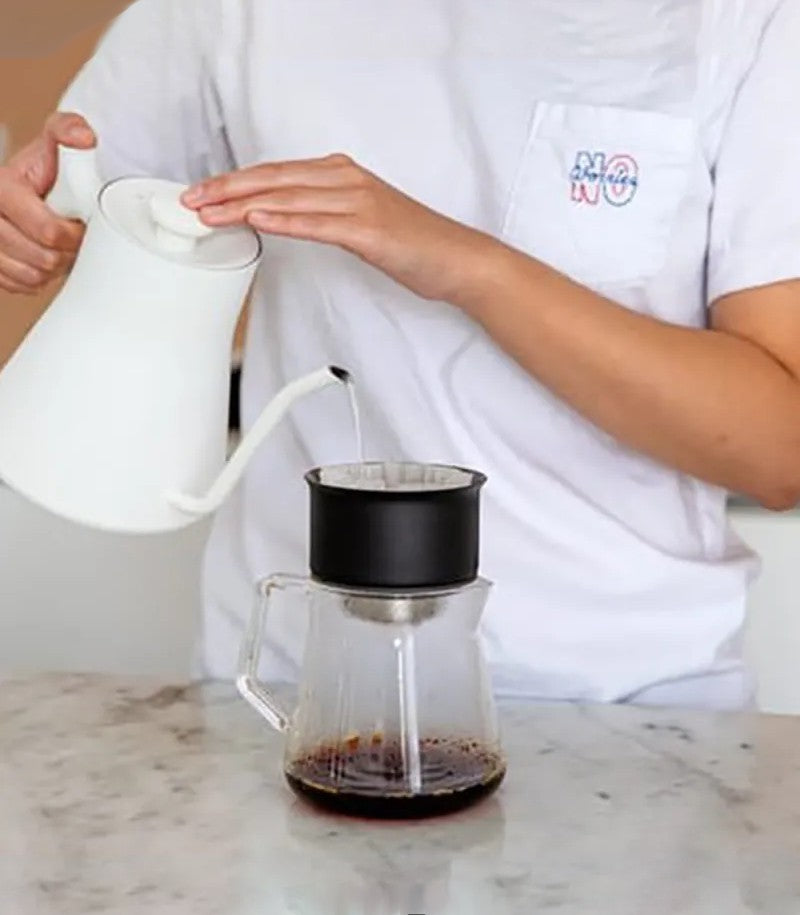
Kalita/Origami, Kalita filter, Scales, timer, grinder, mug or decanter, kettle preferably gooseneck.

Method:

  1. Heat the water in the kettle and when hot rinse the paper filter on the origami to remove any paper flavor and preheat the brewer.
  2. Grind the coffee to the recommended size.
  3. Throw away the used water and replace the brewer and distribute the ground coffee in a level bed in the filter, some like to poke a little divit in the top as to aid saturating all the coffee, tare the scales.
  4. Start the stopwatch as you start pouring 60g/ml of water slowly and gently in a circular motion and wait 30-40 seconds for the grounds to degas, being mindful to saturate the entire coffee bed. If the coffee was roasted recently you will notice the bed expanding and you may wish to leave to degas for longer.
  5. Pour the remaining water slowly until you reach 200-250ml/gr, ensure the water never comes above an inch from the top to avoid the water bypassing the coffee and reducing the extraction, pause to let it drain if it comes too high.
  6. Gently and carefully lift and swirl the brewer once to level the bed.
  7. Continue to slowly pour the remaining water and swirl the brewer once to give a good level drawdown.
  8. We are looking for the brew to finish in the time stipulated, adjust the grind size if necessary for the next time you brew.

Espresso

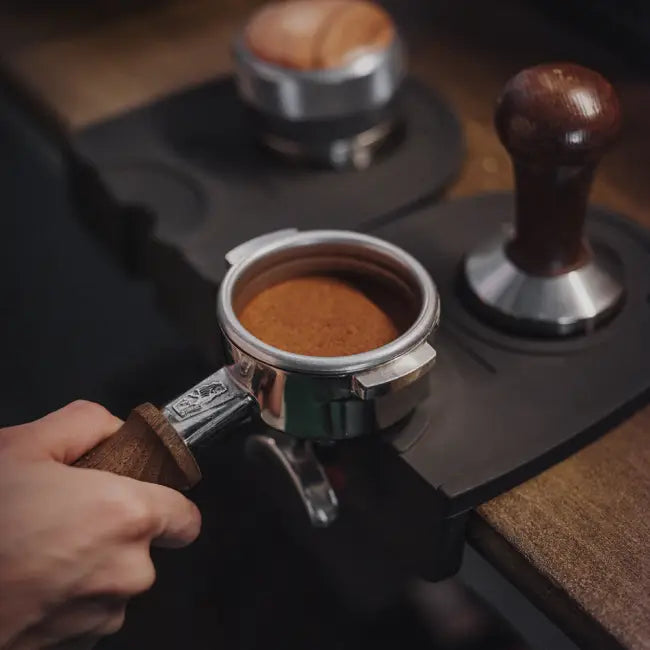
Here's our most up-to-date recipe. It's important to remember that this recipe is a reference and that many variables will influence the final result of the espresso in your cup: from the condition of your machine and grinder, the water you use, the storage/steeping time of your coffee, to the temperature/atmospheric pressure, etc. Therefore, you may need to adjust some parameters to achieve a flavorful and balanced espresso based on your specific needs.

Recipe:

  • Ratio: 1:2.2
  • Dry: 18gr
  • In cup: 41gr
  • Time: 30-36s

Variables:

  • Resting time: minimum 2 weeks
  • Temperature: 94ºC
  • Pressure: 6 bars
  • Pre-infusion: No
  • GH 60 (ppm as CaCO3) KH 30 (ppm as CaCO3)

Machinery and equipment used for this recipe:

  • Espresso machine: La Marzocco KB90 2G
  • Mill: Mythos 1
  • Scoop: 22gr VST (without slot)
  • Extras: Barista Hustle WDT, Push Tamper (flat, 100% level)

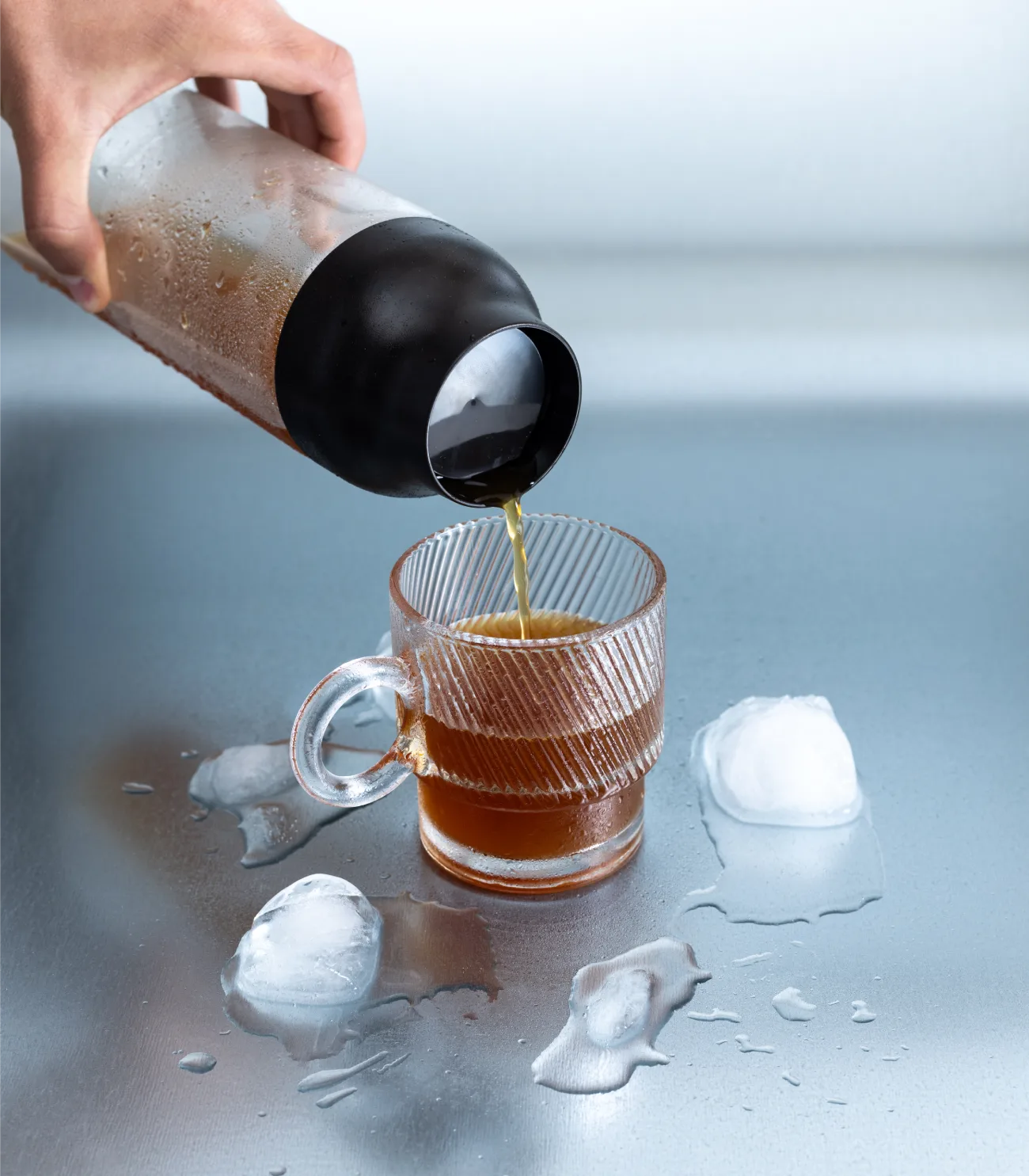
Cold brew

That's the recipe we suggest for making 600ml of cold brew. If you want to make more or less amount, the ratio is 1:15, 1g of coffee for 15g/ml of water.

Recipe and equipment:

  • 40g coffee (Use your preferred coffee depending on your taste. We suggest choosing coffee profiles you like in filter brewing). If it has the "Cold Brew" tag, it's one of our favorites.
  • Grinding: Comandante 16 clicks.
  • Water 600g/ml at room temperature.
  • Water composition: 2 parts Lanjarón and 1 part Bezoya.
  • A mesh or silk.
  • A glass container (preferably with a lid)
  • Let it rest for 22 hours (in the refrigerator).

How to make cold brew:

  • We grind the coffee to a medium ground size (Comandante 16 clicks).
  • We pour the coffee directly into the mesh.
  • We put the mesh into the glass container.
  • We pour the water into the container through the mesh with the coffee.
  • Stir gently to flood all the coffee.
  • We close or cover the container.
  • We leave it rest in the refrigerator (beware of strong smells!).
  • After the resting time, remove the mesh with the coffee and it will be ready.
  • As an extra step, you can filter it again through a V60, Kalita or similar paper filter for a cleaner and clearer result.
  • Keep it refrigerated.
  • This recipe is meant to be undiluted, not even with ice. Adding ice will affect the flavor of your drink, as the water composition will alter the flavor. It's best to make your own ice using the same water composition we suggest. If you do use ice, you might want to lower the ratio (1:9 to 1:12).

Related products

FREE SHIPPING

Spain (Peninsula)

>40€ / Delivery 24/48h LV

Balearics

>40€ / Delivery 3/5 days, LV

Portugal

>40€ / Delivery 3/5 days, LV

Europe

>99€ / Delivery 4/7 days, LV

See more...